Darkness and Dust: Two Cities, One Morning of Loss
The sun rose over Zaporizhzhia and Chernihiv on a fragile Thursday morning, and by mid-morning both cities were grappling with the same ugly calculus: how to measure damage when the lights go out and the ground still trembles from explosions.
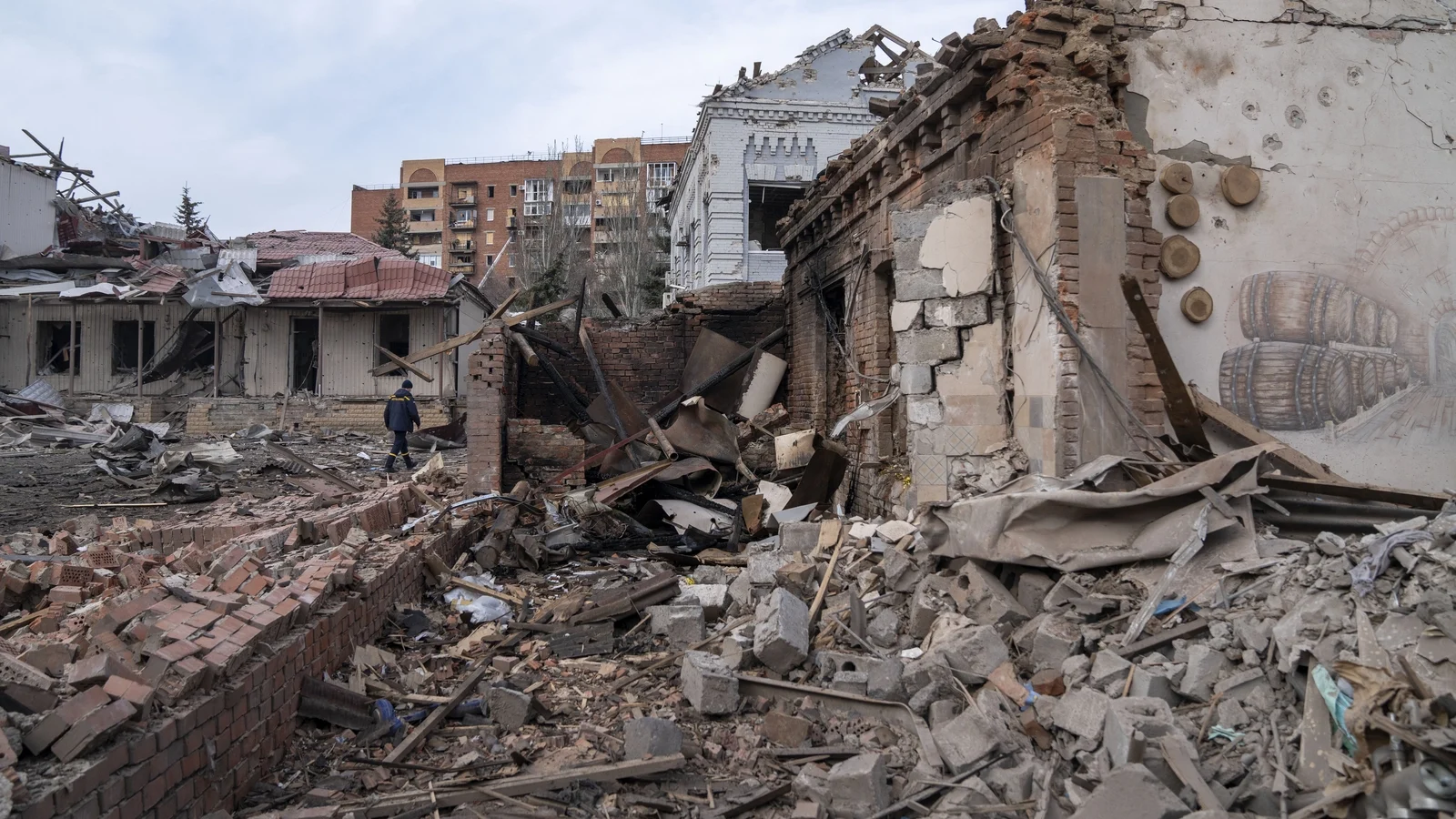
In Zaporizhzhia, Governor Ivan Fedorov reported that a morning strike killed a man and a woman and wounded six others, among them two children. In Chernihiv region, Governor Viacheslav Chaus said a drone strike hit an energy facility, leaving most of the region without power as crews scrambled to repair the damage.
These are not isolated incidents. They are the latest beats in a long campaign that has repeatedly targeted Ukraine’s energy arteries—transformers, substations, and power lines—leaving towns and villages to navigate the cold, the dark, and the aching uncertainty of civilian life under fire.
On the Ground: Small Scenes, Big Heartache
Walk through the neighborhoods near Zaporizhzhia’s shattered block and you will find a dozen ordinary things rendered strange: a child’s sneaker under a fallen window frame, a grocery bag frozen mid-fall, neighbors passing casseroles to one another while paramedics knot up gauze in the hallway.
“The bang woke us, then the ceiling dust,” a neighbor told me as she wrapped a blanket around a boy with a grazed forehead. “We came out in our slippers. There was smoke, and—we didn’t expect to see that body on the street.”
In Chernihiv, an administrative city ringed by ancient churches and birch-lined streets, the lights went out like someone had closed the curtains on winter. The city administration said the capital of the region was fully without power.
“We have soup on the stove and no way to keep it warm,” said a volunteer working at a community center now doubling as a warming point. “People line up for hot tea, and for a charger. You realize how many decisions depend on electricity.”
Immediate Consequences
Blackouts are more than inconvenience. Hospitals, water pumping stations, pharmacies, and schools all rely on steady power. When power falters, the ripple touches the most vulnerable first: the elderly on oxygen, the children whose routine was already fractured by four years of conflict, the small businesses that live hand to mouth.
Repair teams are working “around the clock,” officials say, but this is a race against weather, logistics and repeated strikes. A damaged substation is not a quick fix; replacements are heavy, specialized, and often sit behind supply chains interrupted by war.
Why Energy Became a Target
Since the full-scale invasion in 2022, Russia has frequently struck Ukrainian energy infrastructure. The strategy is straightforward and brutal: degrade the country’s ability to function and force a human-level crisis through cold, darkness, and disrupted services.
Experts call these efforts part of a “critical infrastructure campaign,” a tactic that international law and humanitarian organizations scrutinize for its impact on civilians. Whether the aim is tactical military advantage, psychological pressure, or a mixture of both, the outcome is often the same—civilian suffering and a long, costly rebuild.
Numbers and Context
Before the war, Chernihiv region had a population nearing one million people. Now, many residents have fled, others have returned, and the ones who remain are learning to count the cost of each blackout in real time. Across Ukraine, energy attacks have produced rolling blackouts, days-long outages in winter months, and an infrastructure repair bill that runs into the tens of billions of dollars.
“It takes one precise strike to cascade into hours, sometimes days, of blackouts,” said an independent energy analyst based in Kyiv. “Grid networks are interconnected; hit the wrong node and a whole region can go dark.”
People First: Stories of Resilience and Small Kindnesses
When systems fail, communities oftentimes weave new ones. In Chernihiv, church basements turned into warming stations. Volunteers ferried batteries and power banks to families with infants. An elderly woman used her wood-burning stove to heat a staircase landing where six neighbors gathered to charge phones and exchange news.
“You learn to share everything,” said a volunteer coordinator. “We have neighbors with generators, neighbors with hot water, neighbors who can cook. People who never spoke to each other before are now asking, ‘Do you need bread? Do you need a blanket?’”
Such moments are small but essential. They undercut the narrative that the state of the war is only about troop movements and diplomacy; it is also about human improvisation and dignity under pressure.
Broader Questions: Warfare, Civilians, and the Fragility of Systems
How do societies protect civilians when conflict increasingly targets infrastructure rather than frontlines? How do humanitarian actors deliver aid when electricity-dependent distribution systems falter? These are not only tactical problems; they are ethical and legal ones, sitting at the intersection of military strategy and human rights.
International law tries to draw boundaries—distinguishing between legitimate military targets and civilian objects—but technology and tactics have blurred those lines. Attacks by drones and precision-guided munitions complicate accountability and put repair crews and first responders at heightened risk.
“Humanitarian access depends on predictable services,” observed a policy researcher who studies crises. “When the lights go out, the clock on children’s health and community resilience starts speeding up.”
What Comes Next?
Repair teams in Chernihiv have begun work on the damaged facility, authorities said, but full restoration may take time. Meanwhile, Zaporizhzhia tends to its wounded, buries the dead, and assesses how to keep schools and healthcare functioning in the face of recurring strikes.
For everyday people, resilience is a daily practice—charging devices at neighbors’ homes, pooling food, and sharing diesel. For the state and international partners, the challenge is larger: to bolster infrastructure, provide humanitarian and technical assistance, and press for the protections that keep civilian systems out of harm’s way.
What would it take to stop an entire civilian life from hinging on whether a transformer survives the night? Is strengthening infrastructure enough, or must the rules of war—and enforcement of them—be retooled for fifty-first century conflicts?
Standing With Cities
When I walked away from the warming station in Chernihiv, the horizon showed the silhouette of a town that had seen centuries of upheaval—church domes, scaffolds, a playground with a lone swing creaking in the wind. The people I met were wary, direct, and, above all, resolute.
“We will fix what we can, and we will keep living,” said a woman who had come to collect a stack of donated blankets. “But we need the rest of the world to remember us—not just as a headline, but as neighbors.”
That plea is a small, powerful reminder: behind each statistic and repair estimate are human lives—families rearranging bedtime rituals, nurses improvising with flashlights, volunteers routing warmth through the city like a secret electrical grid of compassion.
How will the global community reckon with a war that reaches into the sockets of ordinary life? For the residents of Zaporizhzhia and Chernihiv today, the answer matters in the most immediate way possible—a bulb that stays on, a child who recovers, a winter that does not feel endless.