When the Azaleas Held Their Breath: A Day of Aces, Anxious Walks and the Strange Alchemy of Augusta
There are moments at Augusta National that feel less like golf and more like ritual: the hush as a player stands over a putt on the back nine, the sudden bloom of conversation as a ball finds a green, the way the crowd — the “patrons” — seem to move as one organism along the fairways. Saturday delivered one of those moments and one of those slow-motion unspools, both in a single afternoon.
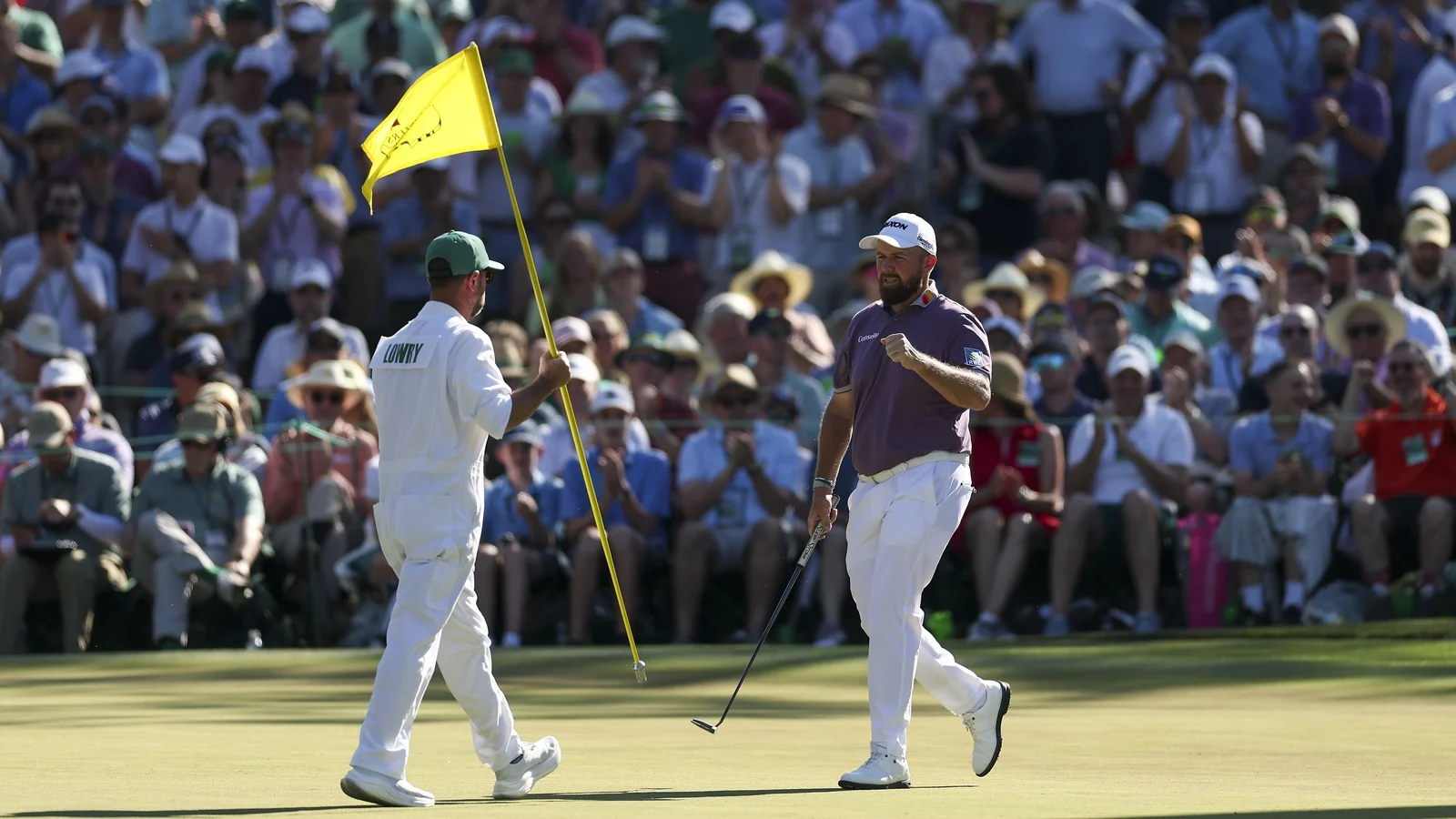
Shane Lowry, the easygoing Irishman from Offaly with a famously calm demeanor, produced a shot that made the Masters crowd gasp and then whoop like a choir slapping its palms. From 190 yards on the par-3 sixth, his tee ball landed and vanished with the merciless cheer of inevitability: ace. In that single instant, Lowry leapt from six under to eight under, his face breaking into something between disbelief and delight.
“That’s wild, isn’t it?” Lowry said afterward, the kind of understatement that belies the rarity of what he’d just done. “You don’t ever expect to make a hole-in-one. I just couldn’t believe it.”
Not Just Another Hole — A Small, Brilliant History
This was no ordinary hole-in-one. Lowry’s ace at the sixth made him the first player ever to record two holes-in-one at Augusta National; his other came at the 16th in the final round of 2016. It was the latest jewel in a hat that now includes aces at Sawgrass’ notorious 17th (2022) and Pebble Beach’s seventh (January 2025). For a professional golfer, these moments are rare—part skill, part nerve, part that intangible element we call luck.
“The walk down the sixth hole with everyone around — the sixteenth and the sixth was very special,” Lowry said, capturing the sense of theater that Augusta so masterfully stages. “It gives you a huge boost. You go from six under to eight under and then all of a sudden you’re only four back. It’s getting real now.”
By the end of his round he had signed for a 69 and stood at nine under, just two strokes shy of the clubhouse lead. For a player who already carries the weight of an Open Championship on his resume, the ace felt like destiny nudging its elbow.
Drama at Amen Corner: Rory McIlroy’s Afternoon Unwinds
If Lowry’s day was a bright comet, Rory McIlroy’s Saturday at Augusta was a lesson in gravity. The two-time world number-one entered the famed Amen Corner — the crucible of holes 11, 12 and 13 — at 13 under and with a 36-hole margin that had set records. By the time he climbed out, the maths had shifted and his lead had evaporated into vulnerability.
McIlroy’s trouble began with a pulled seven-iron into the water at the 11th, followed by a missed green at 12 and a drive that found trees at 13. The three holes combined into a double-bogey, bogey, par sequence that turned a comfortable advantage into a chase. He closed with a 71 — one over — and wasted no time heading for the range to try to patch what ailed his swing.
“There’s a lot of guys in with a chance tomorrow,” McIlroy said candidly, his voice a mixture of frustration and pragmatic focus. “I’m still tied for one of the top scores going into tomorrow… but I know I’m going to have to be better if I want to have a chance to win.”
It’s a reminder that Augusta will not be tamed by any one man. Amen Corner has a way of exposing small weaknesses and magnifying them into narrative turning points. A gust of wind, a misread lie, the burly dogleg that forces a layup — these things can unravel the neatest of scripts. McIlroy’s slide from an unprecedented 36-hole lead into a fight to stay relevant is exactly the kind of drama that keeps legions of fans glued to the leaderboard.
The Numbers, Plain and Stark
Some facts that sharpen the picture:
- Lowry: Finished Saturday at nine under after a 69; his ace came at the 190-yard par-3 sixth.
- McIlroy: Opened the day with the biggest 36-hole lead in Masters history but shot a 71 on Saturday to see his advantage shrink dramatically.
- Cameron Young: Carded a tournament-best 65 on Saturday to climb to 11 under and take a lead that others have to chase.
These numbers tell a story of momentum: one man vaults up the leaderboard with a singular act of brilliance, another sees a lead erode under the weight of one afternoon’s mistakes.
Patrons, Pressure and the Pulse of a Tournament
Walk around Augusta on a Saturday and you hear the course’s living folklore: whispers about Hogan and Palmer, younger caddies swapping anecdotal gold, older patrons recounting the times the wind turned a championship upside down. There’s also the aesthetic — magnolias and azaleas in riotous bloom, the verdant severity of the greens, the strict silence that descends moments before a swing — all of which give the Masters its theatrical power.
“You could feel the electricity,” said a marshal who’d been stationed near the sixth green. “When Lowry’s ball disappeared, the noise was like a dam breaking. Then, when Rory got into trouble at Amen, the crowd went from exultant to very still, very quickly. Everyone knows the storylines; everyone feels them.”
That duality — elation and tension — is one reason the Masters is watched the world over. It’s not just a tournament; it’s a microcosm of everything sport asks of us: to celebrate the improbable, to endure the heartbreak, to hope for redemption.
Tomorrow’s Forecast: What to Watch
If you’re tuning in Sunday, consider these threads as you watch the leaders tee off:
- How will Lowry parlay momentum? An ace is a glorious moment, but sustaining that energy across 18 holes at Augusta is a very different test.
- Will McIlroy find a repair on the range that steadies his driver and irons? He’ll need precision off the tee and composed putting to reverse the afternoon’s slide.
- Can Cameron Young, who shot the day’s best round, maintain his form under the pressure of leading a major?
Each has a narrative thread worth following, and each represents a different truth about competitive golf: brilliance, fragility, and timing.
Beyond the Green: Why This Matters
This is more than a leaderboard update. It’s a living lesson in momentum and humility, a reminder that sporting glory is often cyclical and always fragile. It’s also a window into shared human emotion — the way triumph and setback play out in real time before thousands of fans and millions more watching at home.
So what will you remember from this Masters? A hole-in-one that felt almost mythic, a champion’s stumble on Amen Corner, or the way the crowd held its breath and then exhaled? Which of these images will linger: the flash of Lowry’s grin, the solitary figure of McIlroy on the range, the slow, steady march of patrons between holes?
As the final round approaches, sit back and watch how small decisions — a line chosen on a tee shot, a read on a green — can become the architecture of a legend. And if you’re lucky enough to be there in person, hold your breath when the hush falls: you never know when history will make itself felt, loud as applause and quiet as a dropped ball on velvet green.