A mosque turned to rubble: a Friday in Homs that will not be easily forgotten
On an ordinary Friday afternoon, when the call to prayer threads through the narrow lanes of Wadi al-Dahab, something ruptured in a way that will echo for a long time. A blast tore through the Ali Bin Abi Talib Mosque on Al-Khadri Street, killing six worshippers and wounding at least 21 others, Syrian authorities said. For residents here — a patchwork quarter in a city scarred by conflict — life tilted again toward fear and uncertainty.
“We were praying. Then everything went quiet, then there was a sound like thunder,” an elderly woman who lives two streets away told me, her voice trembling. “People were on the floor. I can still smell smoke.” She asked to remain anonymous, afraid of reprisals. Her words are the kind that persist: small, intimate, and unbearably human.
The immediate scene: smoke, chaos, and unanswered questions
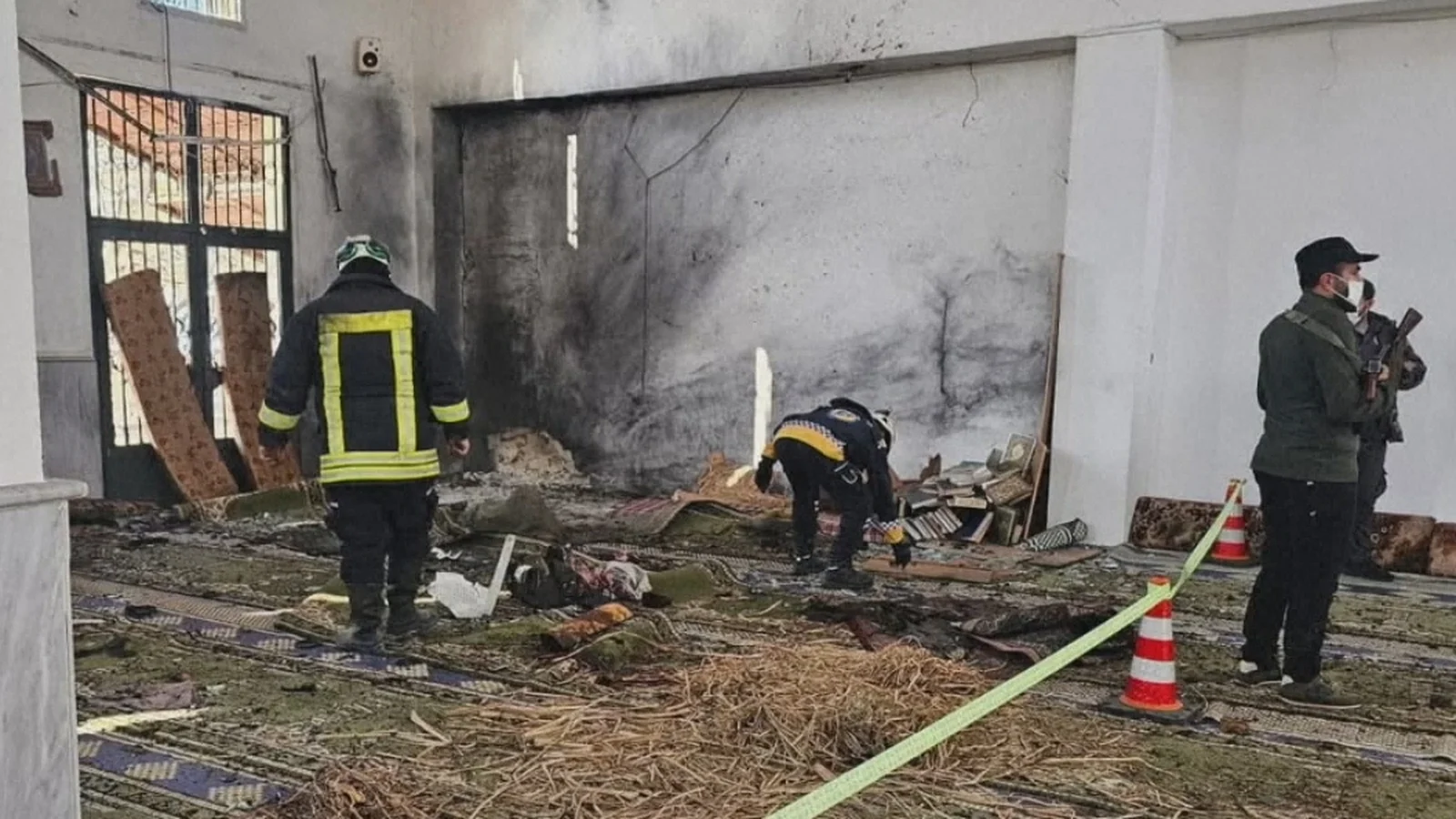
Syria’s Interior Ministry described the incident as a “terrorist explosion” during the mid-day prayers. State media SANA published stark images: a gaping hole in a wall, blackened beams, prayer carpets strewn with books. Ambulances wailed through the streets. Neighbours peered from doorways, some with tears on their faces, others with phones held high, capturing what they could for the world to see.
Investigators are still trying to determine the exact cause. The Britain-based Syrian Observatory for Human Rights said it was not immediately clear whether the blast was a suicide attack or an explosive device. A Homs-based security source, speaking on condition of anonymity, suggested the device may have been placed inside the mosque. For now, the truth sits behind barricades and forensic gloves.
Why this place matters: Homs, memory, and fault lines
Homs has long been a city of converging histories: pre-war, it was a commercial hub of central Syria, its markets and neighborhoods thick with memory. Today, the city bears the ghost of Syria’s civil war — checkpoints, empty houses, and the scars of sectarian violence that erupted as the country fractured. While the city as a whole has a Sunni majority, several neighbourhoods are predominantly Alawite, the religious minority from which President Bashar al-Assad draws his roots.
That demographic mosaic is not academic; it has been weaponized before. The synagogue of sectarian reprisals and tit-for-tat violence reopened repeatedly during the conflict. In March of this year, coastal regions — home to many Alawite communities — witnessed mass killings. A national commission of inquiry reported at least 1,426 Alawite civilians killed during that wave of violence; the Syrian Observatory for Human Rights put the figure higher, at more than 1,700.
Voices from Wadi al-Dahab: fear, anger, and fragile resilience
“We are a neighborhood of prayer and tea and children running in the courtyard,” said Sheikh Omar al-Bassam, the imam at a small nearby mosque who came to offer condolences. “This attack is not just on a building. It is on the little things that hold us together.”
A local shopkeeper, Ahmed, described the scene outside the mosque in blunt, simple terms. “People opened their shops to help carry the injured. Then the sirens came. We are tired. Tired of always fearing what will happen next,” he said, hands still stained with ash.
A volunteer doctor who rushed in with a private ambulance had a different kind of weariness. “There were six bodies and more than twenty wounded,” she said. “Most of the injured were men in their 30s and 40s. We have seen these wounds before but every time it feels new.” She too asked not to be named, fearing for her safety.
Quick facts about the attack and its context
- Casualties reported: 6 dead, 21 wounded.
- Location: Ali Bin Abi Talib Mosque, Al-Khadri Street, Wadi al-Dahab, Homs.
- Investigation status: Cause — whether suicide attack or planted device — remains under investigation by security services and monitoring groups.
- Broader context: Homs has witnessed intense sectarian and armed conflict during Syria’s decade-long war; recent years have seen renewed attacks on minority communities.
What this attack reveals about a fragile peace
Attacks on places of worship are not only acts of immediate violence; they are symbolic strikes aimed at eroding trust between communities. Whether the goal is to provoke retaliation, to intimidate a minority, or to destabilize a tenuous post-war equilibrium, the psychological impact is massive. People do not just mourn the dead; they grieve the loss of normalcy.
Think about that for a moment: how does a society rebuild when the sanctuaries of daily life — mosques, schools, markets — become targets? How do neighbors resume their small kindnesses if walking to the bakery feels dangerous?
Local response, international attention, and the limits of protection
Authorities have pledged to pursue the perpetrators. “We will find those responsible and bring them to justice,” a regional official declared, speaking in a televised statement. Yet, statements rarely replace the immediate needs of survivors: medical care, trauma counseling, and the sense that their daily routines are safe again.
Humanitarian groups working in Syria warn that attacks like this complicate relief efforts and deepen mistrust. “When places of worship become battlegrounds, humanitarian access becomes more fragile,” said Leila Haddad, an analyst with a regional NGO. “Aid flows are already constrained; security incidents make vulnerable communities even harder to reach.”
Broader implications: sectarianism, displacement, and cycles of violence
Syria’s war has not been purely military; it has also been social and demographic. Attacks that single out a religious or ethnic community accelerate patterns of displacement, segregation, and the hardening of identities. Over time, neighborhoods that were once mixed become homogeneous, and memories of coexistence fade.
Those changes matter beyond Syria’s borders. They echo in the geopolitics of the region, in the policies of neighboring states, and in the stories refugees take with them into exile. They also raise questions about accountability and reconciliation: who will investigate? Who will remember?
Can healing begin here?
After the sirens have faded and investigators have gone through the ash, the work of rebuilding trust begins in small ways: a neighbor bringing tea, a volunteer helping a family rebuild broken windows, an imam offering a prayer for peace. These gestures do not erase loss, but they are the first, fragile stitches.
So I ask you, the reader: when news like this arrives as a headline, how do you respond? With a click, a scroll, a passing sympathy? Or with sustained curiosity — learning the names of neighborhoods, the histories of people, the ripple effects that reach far beyond a single street?
Incidents like the attack on the Ali Bin Abi Talib Mosque are more than moments in a news cycle. They are tests of a community’s resilience and the international community’s willingness to engage beyond slogans. If there is a lesson in Wadi al-Dahab’s rubble, it is this: peace requires more than declarations; it needs protection, investigation, and the patience to rebuild the ordinary rituals of life.
For now, Homs waits. It counts its dead, tends its wounded, and holds its breath — while the rest of the world watches and wonders what comes next.