Nightfall over the port: what France’s municipal votes really tell us
In Marseille, the salt wind still carries the smell of fish and diesel the day after the votes. Market stalls along the Old Port were quieter than usual on Monday, but the conversations were anything but. “We wanted to show who we are,” said Amélie, a bouillabaisse cook who wiped her hands on her apron as she spoke. “We voted to keep our city for the people who live here, not for a political slogan.”
Across the country, from the pebble beaches of Nice to the shipyards of Toulon, a tapestry of municipal results has begun to knit a new — and sometimes surprising — picture of French politics. For the hard-right National Rally (Rassemblement National, RN), the night was a mixed bag: victories in places they had not previously controlled, a major win in Perpignan and the capture of Nice under Eric Ciotti, but stinging defeats in the cities they coveted most — Marseille and Toulon. For the left, the Socialist Party found reason to smile in France’s two biggest cities, where they clawed back control and with it a potent symbol: Paris, pedaled into by its newly elected mayor on a bicycle, remains left-wing.
Local ballots, national heartbeat
To the casual observer, hundreds of municipal contests might look parochial: a hundred issues about parking, school façades, and zoning. But France’s roughly 35,000 communes are where politics breathes, where alliances are forged and reputations are either burnished or eroded. These results are not a postal vote for 2027’s presidential race, but they are a thermometer. They show where parties can form coalitions, where voters are ready to flirt with the far right — and where they recoil.
“Municipal elections are the country’s political barometer,” said Lucie Martel, a political scientist in Lyon. “They reveal momentum and limits. The RN’s gains show it’s moving beyond protest votes into the local fabric. But its failures in big, diverse cities demonstrate a persistent ceiling.”
What happened in the big places
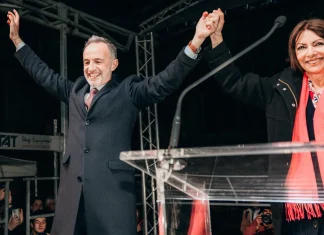
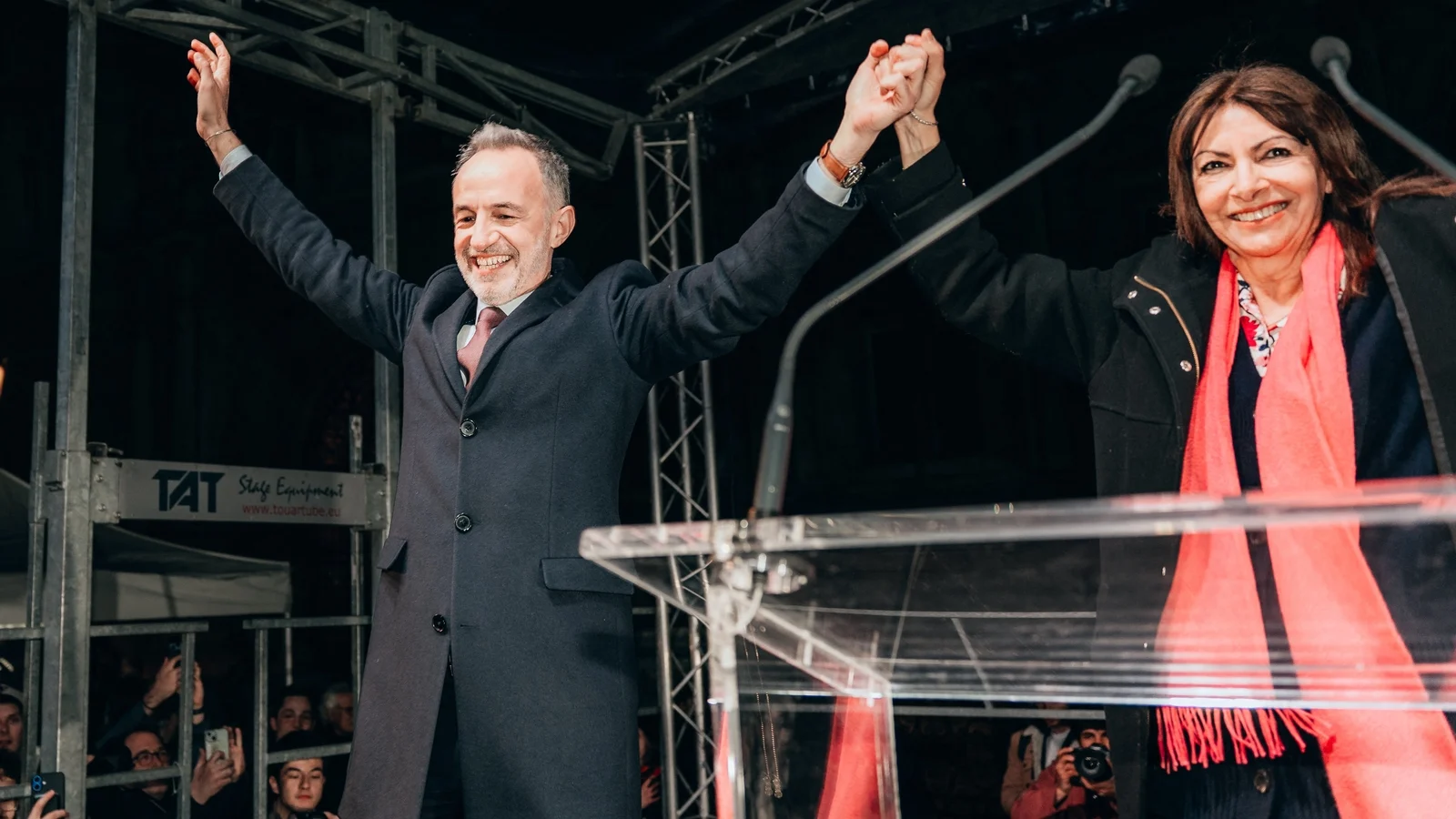
Paris, often treated as France’s political stage, delivered a reassuring scene for the left. Emmanuel Grégoire, the Socialist mayoral candidate, clinched the capital, defeating Rachida Dati and keeping Paris in left-leaning hands. There was theater to his victory: Grégoire cycled across the city in an almost symbolic return to the green policies he champions. “Paris will be the heart of the resistance,” he declared, speaking of a bulwark against any mainstream-right and far-right electoral marriage.
Down on the Mediterranean, Marseille — France’s second city — resisted an RN takeover. Incumbent Socialist Mayor Benoît Payan won re-election with just under 54% of the vote in runoff tallies reported by an Elabe poll for BFM TV. Payan’s victory was consolidated when his hard-left rival withdrew from the runoff to avert splitting the anti-RN vote. “This city, which some believed lost, showed its most beautiful face,” Payan said. “It proved it can resist narratives that seek to divide us.”
Toulon, however, was a sore point for the RN. The party had pinned much of its hopes on the port city but failed to take it — a result that some in the party dismissed as a temporary setback and others saw as evidence of limits to their appeal.
Wins, losses, and the RN’s narrative
The RN’s leadership framed the night differently. “The National Rally and its candidates have achieved tonight, in this municipal election, the biggest breakthrough in its entire history,” said Jordan Bardella, the party’s leader, pointing to dozens of new local offices won in places where the RN previously had little to no presence. Perpignan, held by the RN in the first round, and Nice — captured under the campaign of Eric Ciotti — were troves of symbolic value.
But the party’s mixed outcome also exposed a strategic tension: it can mobilize in less urbanized or economically distressed towns and gain footholds in small and medium cities, yet it struggles to carry major, heterogeneous metropolises with deep immigrant communities and diverse political ecosystems.
“You can see the map of France’s inequalities in these results,” offered Yann Serrat, a sociologist in Montpellier. “Where the RN won, people feel left behind — not just economically but culturally. Where it lost, there are stronger civic networks, more cross-party cooperation, and often a younger, more diverse electorate.”
Centre and right: unity, or fragmentation?
The mainstream right took comfort where it could. Edouard Philippe, the center-right former prime minister and mayor of Le Havre, won re-election, a result that will inevitably prompt speculation about a 2027 presidential bid. “There were reasons to be hopeful,” Philippe said, invoking values and an optimism that the extremes can be beaten if the center holds firm.
But even as Philippe celebrated, his camp acknowledged a lesson: unity matters. Several conservative voices insisted that only a united front could prevent the RN from converting local gains into a presidential edge. “If we split, we fall,” one local councilor in Bordeaux told me. “If we unite on ideas — not just personalities — we have a shot.”
Leftward threads and local surprises
For the left, there were bright spots beyond Paris and Marseille. In Roubaix, a city of nearly 100,000 in northern France, France Unbowed (La France Insoumise, LFI) looked set for victory, a signal that a party more associated with national agitation is planting roots locally. “Traditional parties are losing ground,” Manuel Bompard of LFI said, noting that local momentum could translate into a renewed national voice.
The Socialist Party also touted smaller but meaningful wins: pockets like Pau, where they say they bested centrist competitors. “We’re rebuilding, ward by ward,” one Socialist canvasser in Pau told me, the creases around her eyes crinkling as she named each local school, market and park as proof of the slow, granular work that produced this night.
Why this matters beyond France
These municipal snapshots offer lessons for democracies worldwide. They reveal how local governance becomes a proving ground for national ambitions, how economic dislocation, immigration debates and cultural anxieties morph into votes, and how coalitions and tactical withdrawals can shape outcomes as much as ideology.
They also demonstrate the paradox of modern politics: parties can expand rapidly but still hit glass ceilings where cities are denser, more diverse, more cosmopolitan. And they underline that the battle for hearts and minds is fought not only on television or in national debates, but in municipal halls, primary schools and local markets.
Questions to carry forward
As you read this, ask yourself: which vision of community do you want to see win — one that emphasizes borders and identity, or one that invests in local services and pluralism? How do national narratives change when tested in the mundane — the bus route, the trash-collection schedule, the park bench?
France’s municipal contests are over, but their echoes will travel to the presidential stage. The RN’s footprint has widened, but so has the determination of opponents to build alliances. The next election is a long way away; the stories that begin now — of partnership, of exclusion, of daily governance — will shape how people vote when the stakes are highest.
For residents like Amélie in Marseille, the result was personal. “It’s about the kids on my street,” she said, tying her apron. “Politics must fix the little things. If it doesn’t, what’s the point?” Her voice held hope, fatigue and a stubborn faith in democracy’s smallest units: the blocks, the markets, the municipal votes that together make a nation.