Morning after the ballots: France’s cities exhale, divide and prepare
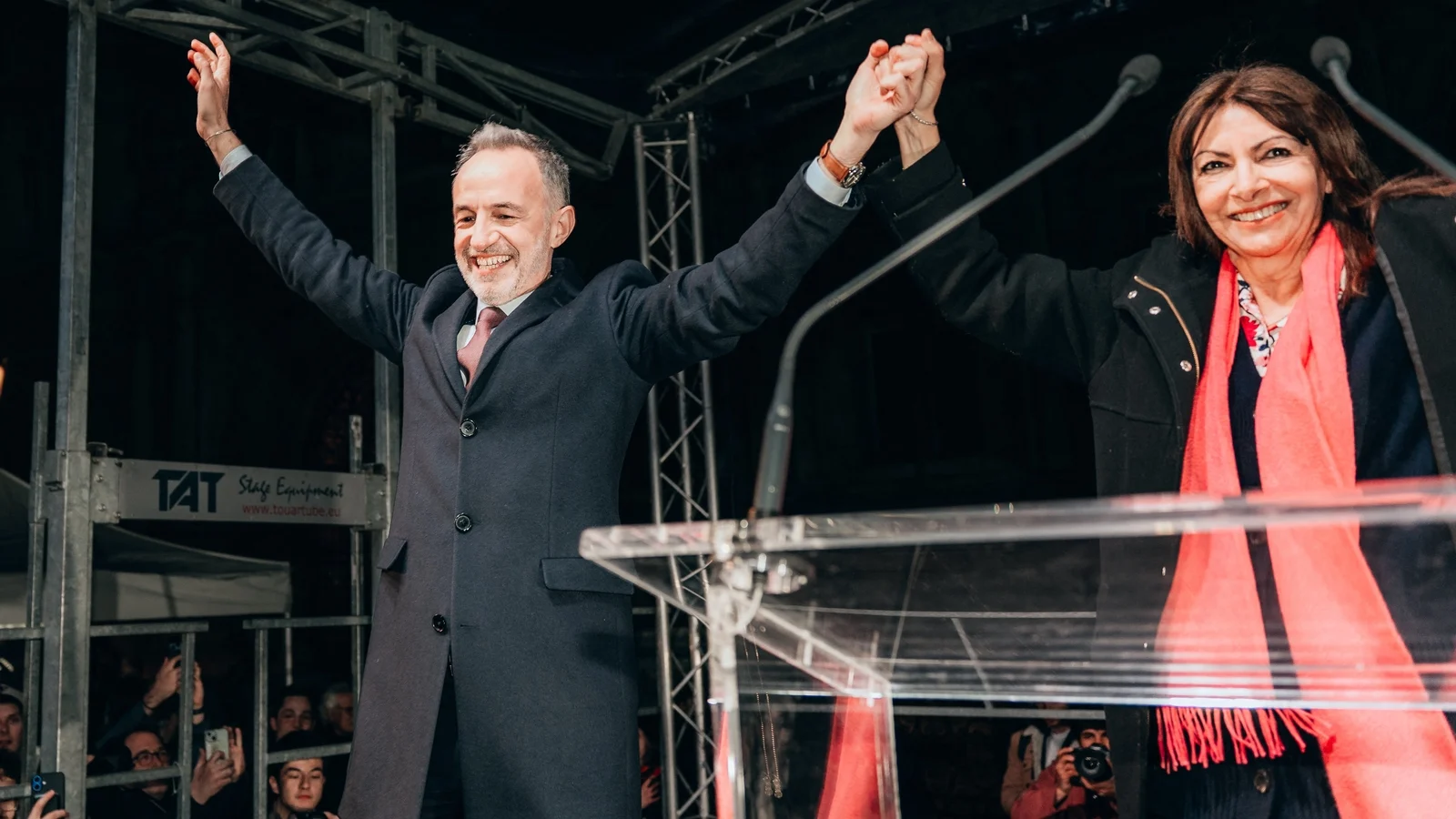
The sun rose over Paris as if nothing had changed — cyclists wove through the boulevards, boulangeries filled with the warm scent of croissants — and yet the city felt different. On the pedaled shoulders of Emmanuel Grégoire, who celebrated his win on two wheels, Paris affirmed a politics of coalition, green roofs and social programmes. Across the Mediterranean, Marseille’s narrow victory for Socialist incumbent Benoît Payan felt like a local triumph against a national tremor: in the southern port city, voters chose familiarity over the anti-immigration message that has been buoyant elsewhere.
These municipal ballots, played out across roughly 35,000 communes that make up France’s administrative map, are intimate by design — about potholes, school timetables and urban gardens. Yet the results ripple far beyond town halls: they are being read like tea leaves for 2027, when the country will elect a president and when the far-right National Rally (Rassemblement National, RN) has increasingly looked like a formidable contender.
Winners, losers, and the stubbornness of place
It was a mixed night for the RN. Jordan Bardella, the party’s leader, struck a tone of triumph in the face of high-profile misses, calling these municipal rounds “the biggest breakthrough in its entire history.” The party did indeed notch important wins: Perpignan returned to RN control in the first round, and the party consolidated gains in smaller cities and towns where it had previously been absent. In Nice, political heavyweight Éric Ciotti — a figure who has migrated toward the RN orbit — secured the mayoralty of France’s fifth-largest city.
But the narrative is not one of unimpeded ascent. The RN failed to take Marseille and Toulon, two prize cities where victory would have translated into powerful symbolic capital. In Marseille, Payan’s reported 54% — according to an Elabe poll for BFM TV — felt, to many locals, less like a mandate than an act of communal refusal.
“We’re a port, a city of neighborhoods,” said Simone, who has run a small café near Old Port for twenty years. “People here care about having a voice at the council table. They don’t want someone who will make us a headline for all the wrong reasons.”
Meanwhile, the Socialist Party had a night to savor. Emmanuel Grégoire’s victory in Paris — holding off a strong challenge from conservative Rachida Dati — keeps the capital in left-wing hands and gives center-left forces a showpiece victory to brandish ahead of national contests.
Small ballots, big implications
It’s easy to dismiss municipal elections as parochial. In one sense, they are: much of the campaigning was about tree-lined boulevards, housing renovations and the maintenance of municipal pools. But they also map the alliances and fault-lines that could decide a presidential race.
“Municipalities are the laboratories of French politics,” observed Claire Montfort, a political scientist at the Institut d’Études Politiques in Lyon. “Here you see who can build coalitions — left with greens, centrists with conservatives — and where the RN’s national rhetoric translates into local power or fails at the doorstep.”
What the RN gains in Perpignan and in some smaller towns is tangible: administrative control, local visibility, the practical enactment of policy that can then be tallied and broadcast as competence. But in larger, more diverse urban centers — where municipal coalitions can consolidate against a single-party surge — the RN’s appeal shows limits. In Marseille and Paris, alliances and tactical withdrawals by rival left and centre-left forces played decisive roles.
Faces in the crowd: snapshots from the cities
In Paris, Grégoire’s campaign leaned into the visible: bollards for safer streets, expanded bike lanes and a promise to make the mayor’s office more accessible. “Paris will be the heart of the resistance,” he said after his victory, invoking unity against what he and supporters call an alarming drift toward far-right governance.
At a tram stop in Marseille’s working-class 3rd arrondissement, Ahmed, a municipal bus driver, shrugged. “We looked at the issues — schools, garbage collection, lighting — and for us, it wasn’t about grand speeches. It was about who takes out the trash and fixes the streetlights,” he said. “Sometimes people forget that.”
In Roubaix, a northern post-industrial town where France Insoumise (LFI) made significant inroads, young organiser Léa described the campaign as a long-haul community project. “People are tired of being told they don’t matter,” she said. “When you put a candidate who actually listens, turnout changes. It’s not just ideology — it is recognition.”
A city mayor’s ripple: Edouard Philippe and Le Havre
On the other side of the political spectrum, Edouard Philippe — the former prime minister and a centre-right figure who once served under Emmanuel Macron — was re-elected mayor of Le Havre. His victory is being watched not for its municipal implications alone but for what it might mean in national leadership contests. Philippe’s ability to win locally gives him a steady platform should he decide to pursue national ambitions in 2027.
“His re-election says something about the centre-right’s resilience,” Montfort added. “It suggests that unity and a moderate, managerial approach still have traction, particularly in cities that prize stability.”
What the results say — and what they don’t
These elections do not, and cannot, deliver a forecast of the presidential vote. Municipal ballots are atomised: nearly every town and village runs its own race; local personalities matter as much as national narratives. But they do sketch trends: the RN’s growing footprint in local government; the ability of left-wing urban coalitions to resist it; the urgent need for the centre-right to reconcile internal divisions and build broader alliances.
Some commentators suggest the RN has run into a “glass ceiling” — a metaphor for the party’s difficulty converting regional momentum into victories in large, multi-ethnic, cosmopolitan cities. RN officials reject that framing, while opponents see the municipal map as proof that broad-based coalitions can blunt the party’s surge.
- Key facts: France has roughly 35,000 communes; Paris has about 2.1 million residents; Marseille roughly 860,000.
- RN won Perpignan and made gains in smaller cities; failed to capture Marseille and Toulon.
- Socialists held Paris and Marseille, providing momentum for left-leaning networks.
Where do we go from here?
As France’s political classes digest these results, voters across Europe will be watching. The continent is watching how local ballots translate into national storylines, and whether political systems can respond to the grievances that feed populism without eroding democratic norms.
Ask yourself: what matters more — the charisma of a national leader, or the daily competence of the person who fixes your pothole? In 2027, French voters will have to reconcile those two scales of politics. This municipal cycle shows they are not willing to hand over entire cities without a fight, but neither are they content to keep doing the same.
In the café in Marseille, Simone wiped a table, smiled and said, “Politics here is messy. It’s loud. But it’s ours. We vote for the people who feed us and clear our streets. Maybe that’s how change will win — quietly, one neighbourhood at a time.”
Whatever the national narratives, France’s towns and cities have issued a reminder: democracy is lived, not just polled. The real measure of political strength will not be how loudly a party argues on TV, but how it governs on the ground.