Facing mounting anger at home and rising concern across the region, South Africa’s president has urged neighbouring governments to join forces on migration after a backlash against foreign nationals drove tens of thousands to leave the country.
Populist groups staged weeks of demonstrations demanding that undocumented foreign nationals depart by 30 June. The pressure, and the unrest that followed, prompted more than 176,000 people to leave in recent weeks, according to an AFP tally based on figures from the African governments involved.
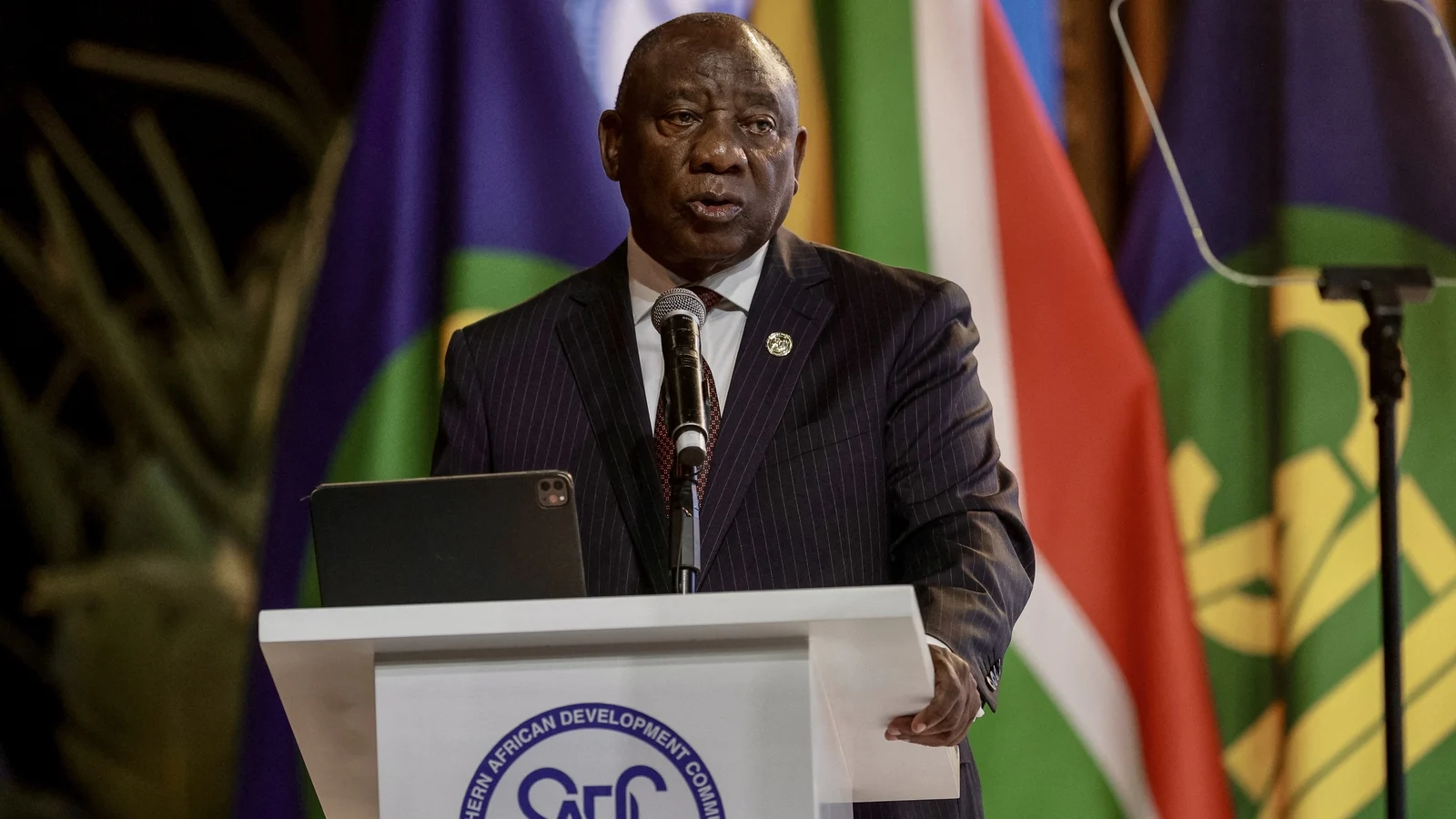
Speaking in Durban as he closed a summit of the 16-nation Southern African Development Community (SADC), President Cyril Ramaphosa said South Africa had briefed leaders on the growing “challenge of migration”.
Leaders from across Africa met at the summit
“We thanked countries in our region for their understanding of the challenges that we faced and, in some respects, continue to face,” the South African leader said.
“We also expressed regret at what has befallen us as a country.
“We expressed a wish that we should all work together to address the challenge of migration,” he said.
South Africa, the continent’s wealthiest nation, has long attracted migrants seeking work and opportunity. But it is grappling with unemployment above 30 percent and stark inequality, pressures that have fuelled resentment and sharpened political rhetoric.
Anti-migrant protests
Earlier yesterday, roughly 300 anti-migrant protesters marched to the summit venue, calling on the leaders inside to “fetch their people”.
Police kept the relatively small crowd to the perimeter of the venue as a helicopter and drones circled overhead, while officers on horseback and motorbikes monitored the demonstration.
“We are here to tell you to come and fetch your people who are here in South Africa illegally,” said march leader Jacinta Ngobese-Zuma, one of the figures behind the recent wave of protests.
Ms Ngobese-Zuma singled out Malawi, Mozambique and Zimbabwe, countries whose citizens accounted for most of the thousands who have departed.
Some migrants left voluntarily, while others were deported or assisted through government repatriation schemes.
March and March Movement leader Jacinta Ngobese-Zuma protests outside the summit
In a public lecture on Friday, Mr Ramaphosa said South Africa was “deeply concerned and ashamed that nationals from other countries have in recent months been subjected to discrimination and ill-treatment”.
South African police say at least four migrants were killed in the violence, although some foreign governments insist the toll is higher.
Other African nations have criticised the government’s response to the protests and attacks, with Ghana and Nigeria—neither of them members of SADC—among the most outspoken.
South Africa, which assumed the rotating chairship of SADC at the summit, has also pushed for an Africa-wide conference focused on migration.