
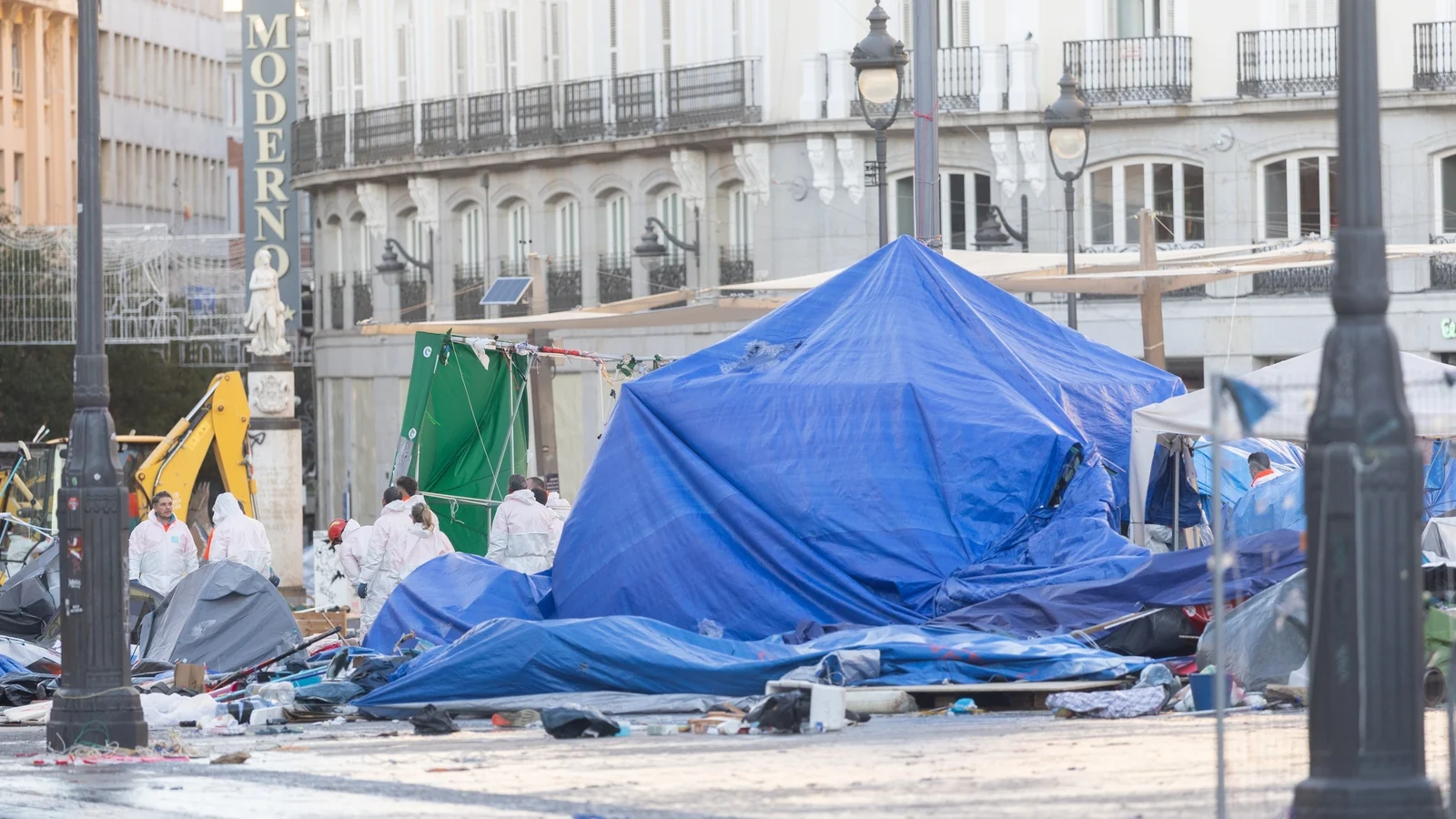
Before dawn on Puerta del Sol, police moved in to clear the tent city that had turned Madrid’s most recognisable square into the epicentre of protests over Spain’s housing crisis for more than a month — a movement that helped set the stage for early national elections, according to police and activists.
Large sections of the landmark square were cordoned off this morning as municipal cleaning crews removed debris and dismantled tents and tarpaulin that had become fixtures of the encampment.
The protest camp first took shape in September, after Spain’s long-running housing problems surged to the forefront of public debate following the eviction of an 87-year-old woman from the Madrid home where she had lived all her life.
That eviction ignited demonstrations across the country against spiralling housing costs and what protesters describe as weak tenant protections, drawing tens of thousands of people into the streets.
In Madrid, the gathering quickly expanded into a dense maze of tents and plastic sheeting, sheltering hundreds of people in a makeshift mini-city that included a canteen, a clinic and meeting spaces.
The central government’s delegation in the Madrid region said the clearance was carried out overnight “without incident or episodes of violence”, adding that 334 people were removed and two were arrested.
Firefighters, social services and 400 national and municipal police officers were involved in the operation, the delegation said.
The operation began overnight in Puerta del Sol
Organisers painted a starkly different picture. In a Telegram message, they described “a violent police operation” and said several people were injured, either after being struck or due to tear gas.
One homeless woman who said she had been part of the camp since the beginning recalled being jolted awake as hundreds of riot police entered the square in the early hours.
“They dragged us out, they hit us. They didn’t let us take away anything,” she said, adding that “all my documents, my phone” were left behind.
After the Madrid encampment was established, similar camps appeared in other cities, including Barcelona, Seville and Valencia.
As anger over housing mounted, Socialist Prime Minister Pedro Sanchez’s government put forward two housing decrees aimed at easing pressure, including limits on evictions and automatic renewals of tenant contracts.
However, the minority coalition failed to secure parliamentary approval for the measures last month, leading Mr Sanchez to move a general election forward to 29 November from its planned date in 2027.
The Bank of Spain estimates the country is short 700,000 homes
The Puerta del Sol camp also sharpened political tensions between the leftist national government and the conservative-led city and regional authorities, who argued that the occupation of a central square usually packed with tourists and commuters was harming Madrid’s image.
Housing prices have climbed sharply in recent years, and in Madrid, rent often eats up more than half of the average wage for modest households.
The Bank of Spain estimates that the country, with a population of around 50 million, faces a shortfall of 700,000 homes based on the gap between demand and new construction.
Analysts say Spain’s limited stock of public housing has left renters exposed as demand has risen — fuelled in part by tourism and population growth linked to immigration.
In high-demand destinations such as Barcelona, residents also say short-term tourist rentals have squeezed the long-term market, shrinking supply and pushing prices higher.