Downing Street at Dusk: A Party in Turmoil and a Country Holding Its Breath
The lamps along Downing Street threw long, sober pools of light as the prime minister’s motorcade slipped into the courtyard. Journalists huddled under umbrellas. A few tourists lingered, phones raised like small vessels of witness. Inside, the air was taut with argument; outside, the city tried on its usual manners and moved on.
Keir Starmer, who only weeks ago stood as the unquestioned steward of a retooled Labour project, has weathered a political storm that left four ministers packing their desks and at least 80 of his own MPs publicly asking him to step aside. The numbers alone are jarring — for a party used to internal rows, this feels like a reset forced by the electorate and enforced by colleagues.
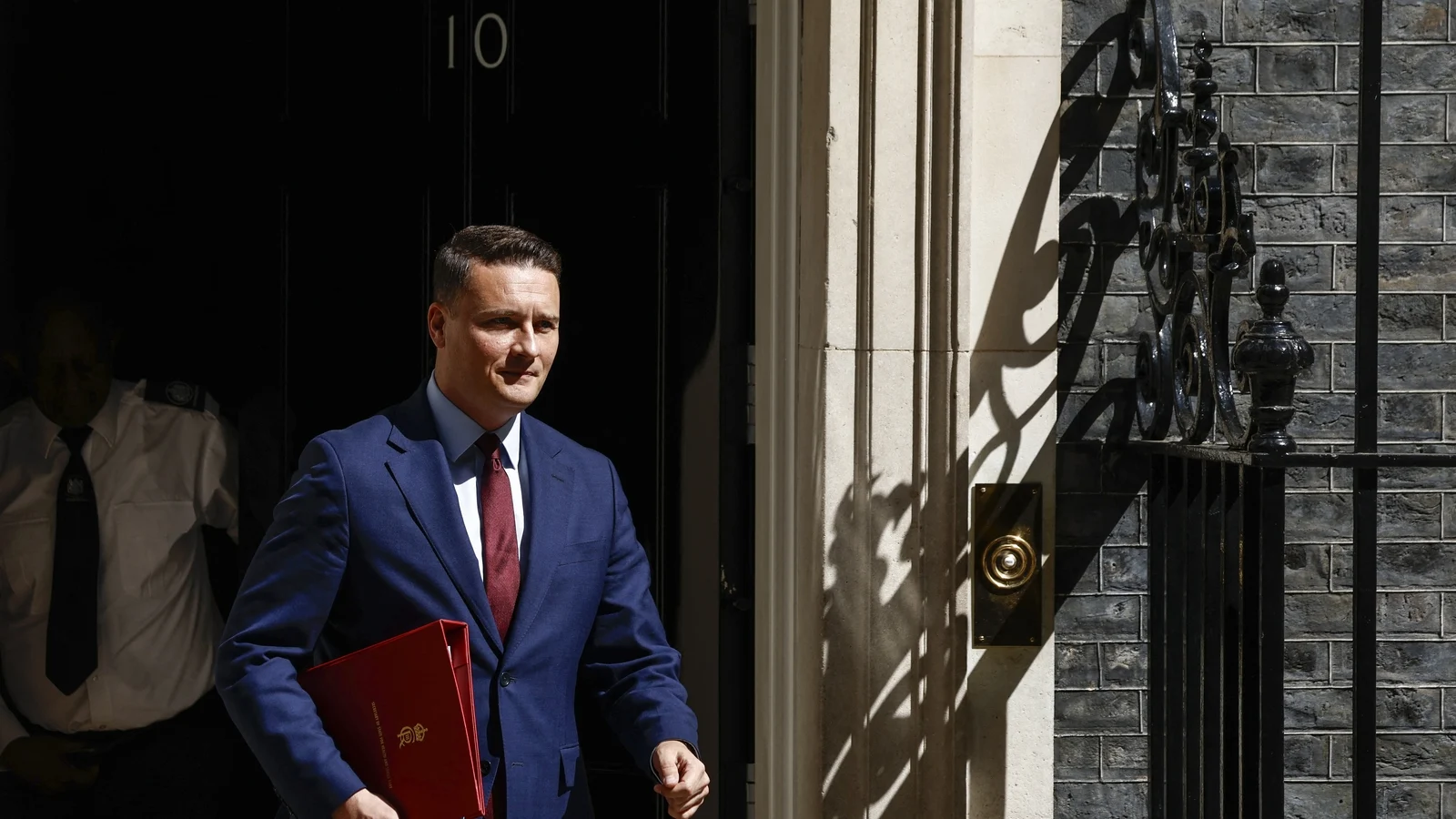
Into that charged silence slipped Health Secretary Wes Streeting, the man many on the party’s right have eyed as a potential leader. He was inside Number 10 for less than 20 minutes, a handshake, a conversation, and then back out into a Downing Street still littered with umbrellas. He answered no questions; the cameras swallowed him whole.
What just happened — and why it matters
One can map the immediate shock to three converging pressures. First, the raw political arithmetic: recent local and parliamentary results — described by unions and senior figures as “devastating” — have shaken confidence in the direction of the party. Second, a bruising round of resignations, including senior MPs who publicly called for change, signalled a rupture in trust. Third, the trade unions that built Labour have stepped in with a chorus for new leadership and a reorientation back toward working-class priorities.
“This isn’t factional theatre,” said a union official who insisted on anonymity. “It’s an existential moment. People who stood on picket lines and in factories for this party need to know we’ll fight for them. Electorates can smell drift. They punished us for it.”
The TULO group — the Trade Union and Labour Organisation that speaks for 11 unions such as Unite, Unison and the GMB — released a terse statement insisting the party “cannot continue on its current path.” They argued it was clear Starmer would not lead Labour into the next election, and that a formal plan for leadership succession had to be mapped out. In a room in the heart of Westminster, old alliances began to whisper about new bargains.
Faces in the Frame: Potential Contenders and the Art of the Pause
Wes Streeting, who left Number 10 with his collar turned up against the drizzle, is widely regarded by colleagues as a centrist option who can reach voters in suburban Britain. Yet, the Guardian and other outlets reported that Streeting was stepping back from launching an immediate leadership bid. Whether that pause is tactical or reflective remains to be seen.
On the soft left, Greater Manchester mayor Andy Burnham is a familiar presence on the national stage — compassionate, a canny retail politician — but he is not currently an MP and would need an MP to step aside to fight a by-election. Then there is Ed Miliband, another soft-left figure whose office has reportedly denied plans to run. All the while, the party’s internal map feels like a game of musical chairs, and someone will inevitably be left without a seat.
“If you look at our recent electoral map, there’s a clear message,” said a former cabinet colleague. “We lost touch with the people who built this movement. It’s not about personalities, it’s about whether Labour can again be the party of practical change for working people.”
Unions, Identity and the New Battlefront
Labour’s unions have not only issued public demands — they are mobilising to shape policy and strategy. Joanne Thomas, chair of TULO and general secretary of USDAW, framed the moment starkly: “Our members need a party that will govern in their interests. Increased minimum wages and Employment Rights Act changes are steps forward, but they alone won’t fix the loss of trust.”
Unions see their role as a corrective. They accept some policy progress but argue the narrative is lost. “You can legislate for fairness on paper,” said a union organiser in Sheffield, “but if people still can’t pay the bills and don’t feel listened to, it doesn’t count.”
The Wider Stakes: A Party, a Country, a Global Question
These shifts in Labour’s corridors are not merely an intra-party quarrel. They reflect a larger global pattern: voters weary of technocratic promises, hungry for tangible improvements in wages, housing and public services, and sceptical of elites who seem far removed from everyday struggles.
Right-wing populists and single-issue movements have filled the vacuums offered by centrist parties around the world. In the UK, the spectre of Reform UK and its leader Nigel Farage has been invoked as a motivator for some MPs: better to fix Labour from within than to hand power to a figure who “disrupts and divides”, as one York MP put it in a radio interview. “I will do anything to safeguard our communities,” she said, the words ringing like a plea and a warning.
This is where the stakes sharpen. Will Labour recalibrate around a clear, tangible economic programme that ties public investment to social solidarity? Or will it continue on a path that pleases markets but leaves the party vulnerable at the ballot box?
Small Scenes, Big Signals
Walk through a northern market and you will hear the human contours of the crisis: a butcher in stocky boots talking about energy bills, a teacher in a laminate-floored staff room fretting about workload, a nurse who says her shift patterns make life a scramble. These are the threads voting decisions are woven from.
“People are asking simple questions again,” said a campaigner in Leeds. “How will this help me? How will this help my kids? If you can’t answer that plainly, you will lose people.”
- House of Commons: 650 seats — a small swing in key areas can change outcomes dramatically.
- Local elections: recent poor results for Labour in some regions have been cited by unions as a wake-up call.
- Unions: Organisations like Unite and Unison remain pillars of Labour’s base, with millions of members combined.
What Comes Next — and What This Means for You
Starmer told his cabinet he would “get on with governing.” He refused to turn the cabinet room into an audition stage for rivals, and he declined to discuss his leadership in detail during the meeting. Yet the demand for a plan — not for drama but for direction — grows louder.
For the public, the immediate consequence is uncertainty. For Labour, it is a choice between reinvention and retrenchment. For the country, it is a test of whether mainstream parties can renew themselves in a political moment that rewards clarity and punishes ambiguity.
So I ask you, reader: what would you want from a party that claims to represent you? A new leader with a fresh rhetorical edge? A clear economic programme that puts wages and services front and centre? Or a Labour that risks alienating its roots to chase a broader, but shallower, electoral base?
Politics often returns to the simple arithmetic of trust. Rebuilding it will take policy, persuasion and, crucially, time — and perhaps a little humility. For now, Downing Street at dusk is full of people bargaining for the future. Outside, the city carries on, indifferent to the urgent, human work of remaking a party for the next era.