In the Dock and on the Frontline: Ukraine’s Two Unfinished Stories
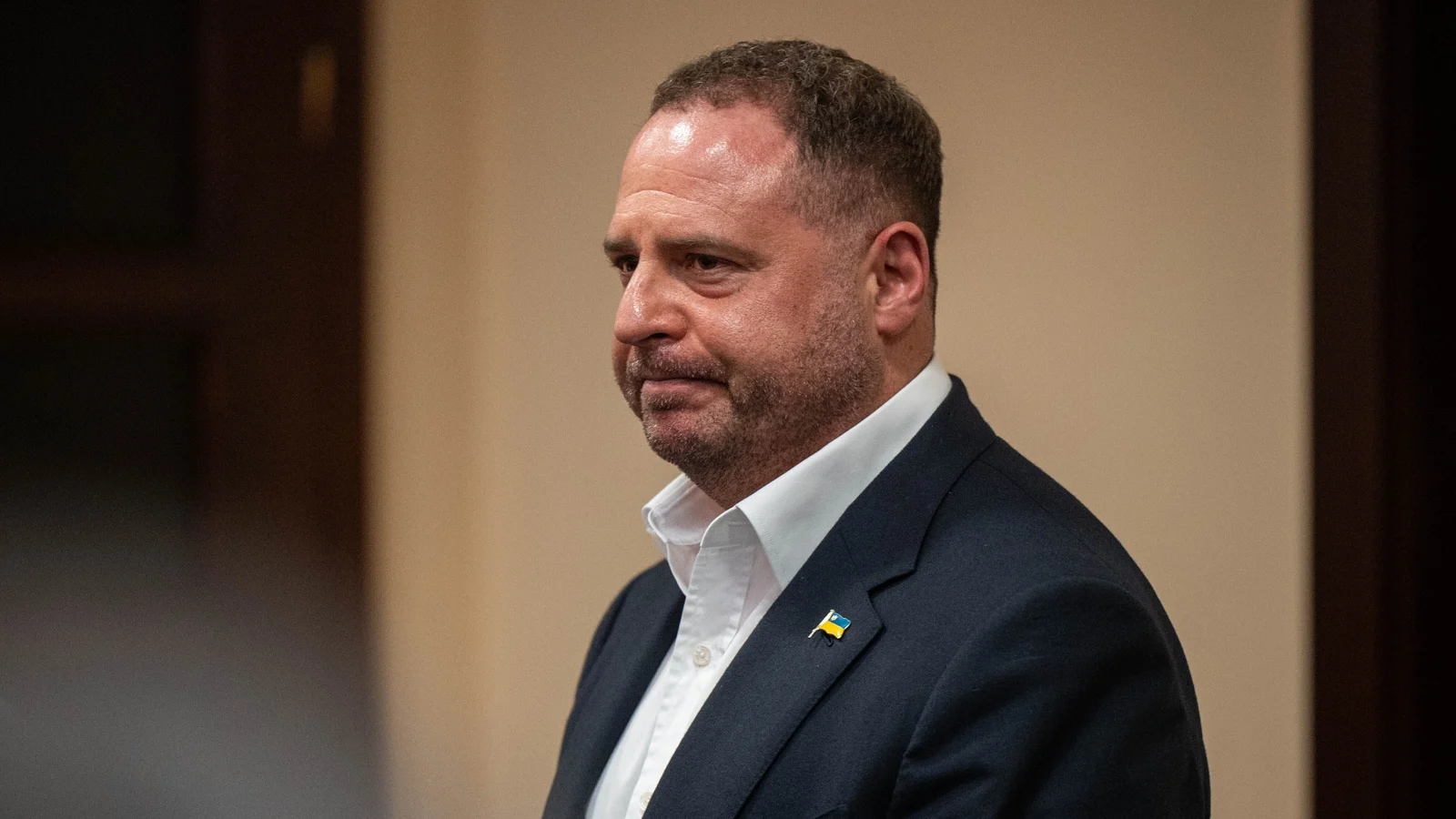
The courtroom clock clicked like a metronome over a country that has learned to measure time in sirens and summonses. On a rainy morning in Kyiv, Andriy Yermak — once the closest aide to President Volodymyr Zelensky — stood under the scrutiny of judges, cameras and a public hungry for answers. He told the court, and a nation watching from phones and kitchen tables, that the accusations against him were “unfounded.”
“As a lawyer with more than 30 years of experience, I have always been guided by the law,” Yermak wrote on Telegram after the hearing. “Now I will likewise defend my rights, my name, and my reputation.” It was a line delivered with the calm of someone used to the glare of public life, but the circumstances could not have been more combustible: a high-profile resignation in November 2025 after a dramatic raid on his home, and prosecutors alleging he played a role in siphoning roughly 460 million hryvnias — about €8.9 million — through an organized group tied to luxury development projects.
Operation Midas and the politics of wartime corruption
The probe, dubbed Operation Midas, has been described by investigators as sweeping and meticulous. Prosecutors say the money was funneled into construction projects on the so-called “Dynasty” cottage site, and that the scheme included other notable figures such as former Deputy Prime Minister Oleksiy Chernyshov and businessman Timur Mindich.
“The individuals who used funds for the construction of objects on the territory of the ‘Dynasty’ cottage site… planned to carry out further actions aimed at legalising such property,” a prosecutor told the court. The words were clinical, the implications seismic. For Ukrainians, corruption is not an abstract concept; it is a thread that still frays the fabric of democratic reform and foreign assistance.
“Corruption is the second front we fight,” said Olena Kovalenko, a civil-society activist who helped organize the 2014 Maidan protests. “When guns are firing at one border and kleptocrats steal from the other, the suffering is doubled.”
Anti-corruption agencies, born from the ashes of the 2014 uprising, have long been Ukraine’s bulwark against elite capture. Yet last summer the government attempted to curb the independence of those very institutions — a move that sparked rare and vocal protests during wartime and led Kyiv’s Western backers to demand a rollback. “When you attack anti-corruption bodies, you do not just weaken institutions; you erode international trust,” a European diplomat told me off the record.
Voices in the city
Outside the courthouse, the mood was a strange alloy of weary cynicism and cautious hope. A middle-aged woman selling knit scarves near the Maidan, who only gave her name as Marta, rolled her eyes. “We have seen so many promises. I want to believe in justice, but I also want my son to come home.” Her son, like many, is serving on the frontlines.
A legal scholar at Kyiv’s national university, Dr. Ihor Melnyk, suggested the spectacle reflects deeper institutional growing pains. “This is the state trying to assert that no one is above the law, even if that someone used to be the president’s right-hand. It’s messy. But it is a necessary mess,” he said.
Ceasefires, drones, and diplomatic fog
While the courts held their drama, a different kind of theatre played out in the skies. Days after a three-day ceasefire announced by US President Donald Trump — an extraordinary diplomatic interlude in the worst European war since 1945 — the quiet shattered. Both Moscow and Kyiv accused each other of violations; by dawn the truce had unraveled into fresh strikes. Ukraine reported more than 200 attack drones launched overnight, damaging power infrastructure and killing at least one civilian. Moscow countered that it had downed 27 Ukrainian drones.
“The humanitarian ceasefire is over. The special military operation is continuing,” Kremlin spokesman Dmitry Peskov said in Moscow, employing the language of a state at war with a narrative of inevitability. Yet when President Vladimir Putin suggested over the weekend that the conflict might be “heading to an end,” his own administration dialed back the optimism. “There are no specifics,” Peskov said. “The president said that work has been done in a trilateral format…but at the moment it is not possible to speak about any specifics.”
It is a kind of diplomatic ambivalence that leaves ordinary people stranded between hope and habit. In Nikopol, a frontline city along the Dnipro River that has become familiar with evacuation orders, families with children were told to leave parts of the city. “We packed what we could in two bags and took the bus,” said Oleksandr, a father of three. “You can live without radios, but not without your children.”
When peace becomes a word, not a plan
Talks to stop the fighting have sputtered for months amid broader regional tensions, not least the escalating conflict in the Middle East that has diverted diplomatic bandwidth. Mr. Zelensky insists Russia must make the first move. “Russia itself chose to end the partial silence that had lasted for several days. Overnight, more than 200 attack drones were launched against Ukraine,” he said, pointing a finger at Moscow.
But Moscow’s position — that Kyiv must yield on ground it still holds in the east — remains a nonstarter for Ukrainian negotiators. The gulf is not just a matter of territory; it is about identity, sovereignty and a postwar settlement that would not leave Ukraine weakened or divided.
“Any peace that is imposed without justice will be a short-lived peace,” said Maria Sanchez, a conflict-resolution expert at a European think tank. “Peacemaking needs credible guarantees, reconstruction funds, and mechanisms that prevent a return to the conditions that led to war.”
What both stories tell us
At first glance, a corruption trial and a breakdown of a ceasefire are discrete events. Viewed closely they are converging narratives about trust — in governments, in institutions, in the international system. They ask uncomfortable questions: Can a nation wage an existential war while repairing the rot inside? Can international partners commit billions in aid when domestic oversight is fragile?
Consider these facts that help frame the stakes:
- Prosecutors allege about 460 million hryvnias (€8.9m) were laundered through a network tied to luxury construction projects.
- Anti-corruption bodies in Ukraine were established after the 2014 Maidan uprising and have become central to foreign aid and domestic legitimacy.
- The conflict has caused hundreds of thousands of deaths and forced millions to flee their homes — an ongoing humanitarian crisis with regional and global ripple effects.
What comes next is as much a moral question as it is a strategic one. Will Kyiv follow through with transparent, demonstrable justice? Will Moscow offer a realistic path to peace beyond vague hints? Will the international community sustain pressure and support, or will geopolitical distractions win out?
“Peoples’ patience is not infinite,” Marta the scarf seller warned as she folded her wares. “We can forgive, but we will remember.”
Where to from here?
Maybe the most humane response is to hold both tensions at once: demand accountability and demand peace. Both are non-negotiable if Ukraine is to rebuild not just its cities and infrastructure, but the faith of its people in the state itself.
How do you imagine justice and peace being balanced in a country at war? What would you prioritize if you had to choose? The answers are not simple, but they are the work of societies, not just courts or battlefields. And until those answers emerge, Ukrainians will continue to live — courageously, stubbornly — in the space between sirens and subpoenas.