Andy Burnham’s Return?: A Mayor Eyes Westminster and a City Holds Its Breath
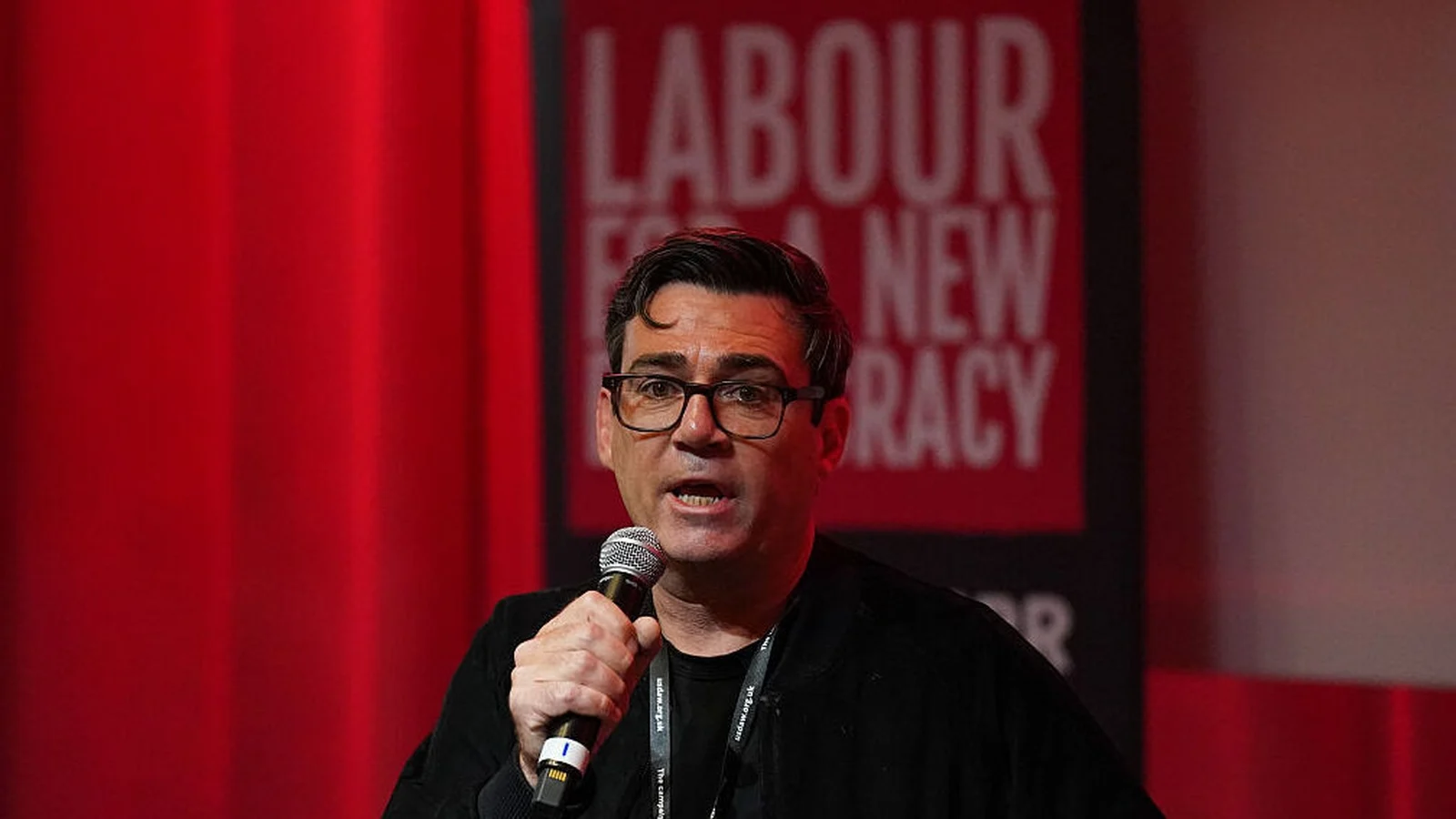
On an overcast morning that could have been plucked from any Manchester year, Andy Burnham did what commentators love and party managers dread: he asked for permission to run again for Parliament.
The Greater Manchester mayor, a familiar figure in the city’s civic life since 2017, has formally applied to Labour’s National Executive Committee to be considered as a candidate for the Gorton and Denton by-election. If the NEC gives the green light, Burnham — long a national face of Labour and an unmistakable presence in the north — could be on a path back to Westminster.
A local story that feels national
This is not merely a local by-election. It is a collision of identities and ambitions. Manchester, with its mills and terraces, its music and football rivalries, is a place where politics is often personal as well as doctrinal. To see the city’s mayor seeking a seat in Parliament is to see two layers of British politics meet: the visceral, regional pride of northern leadership and the centralized, quietly managerial hand of party machine politics.
“People here care about who speaks for them,” said Anjum Begum, who runs a small café on Reddish Lane and has voted Labour most of her adult life. “We want someone who understands the buses, the hospitals, the schools. If Andy thinks he can do that from Westminster, he should let us decide.”
Why this matters
Burnham’s move would be significant on several fronts. He remains one of the most prominent metro mayors in England — a role born out of the devolution deals of the past decade that have reshaped power away from Whitehall and into city-regions. Greater Manchester, home to roughly 2.8 million people, has become a laboratory for transport strategy, health integration, and housing policy. To some, Burnham’s potential departure raises a question about the stability of local leadership and the future of devolution itself.
“It’s emblematic of the tension we now face,” said Dr. Elena Ramos, a scholar of British politics. “Mayors like Burnham have built national reputations off local platforms. If they return to Westminster, it alters the balance of visibility and accountability for city-regions.”
Process, power and a deadline
The mechanics are straightforward but politically fraught. The NEC — Labour’s governing body — must permit Burnham to seek selection. Party headquarters has the authority to block parachute candidates, a precaution intended to protect local autonomy and prevent central manipulation. There are reports that supporters of the Labour leader are already mobilising to keep the process tightly managed; opponents argue that would be undemocratic.
Selection is expected to move quickly. A shortlist, hustings and an endorsement from the NEC are scheduled to conclude by Saturday, 31 January. That compressed timetable means decisions made this week could reshape not just a single constituency, but internal balances of influence across the party.
“Local members should pick their candidate,” said Sadiq Khan, the Mayor of London, in public remarks at a centre-left gathering in the capital. “You can’t muscle out grassroots democracy simply because someone higher up prefers a different outcome.”
Voices from the patchwork of Labour
Inside Gorton and Denton, opinions are already forming. Some welcome Burnham as a unifier; others fear the message his candidacy could send to local activists who have spent years building constituencies on the ground.
“He’s carried our concerns into national debates before. He stood up for the North during COVID and for public services,” said Tom Hargreaves, a retired teacher who now volunteers at his local Labour branch. “But we also want our members to have a genuine say. That’s what democracy looks like in our neighbourhood.”
Opposition within the party is less visible but real. One local activist, asking not to be named, described a “nervousness” among younger members. “There’s a worry that the path to the top is still through the front door of Westminster, not through grassroots organising,” they said. “It matters who represents us — not just what their name is.”
Beyond the personalities: ideological tensions
Burnham’s potential candidacy sits against a backdrop of larger debates: how centralised should political parties be? How much autonomy should local branches hold? And what does it mean for the wider Labour project if high-profile mayors drift back to the House of Commons?
Those questions cut in many directions. On one hand, Burnham’s national profile could be an asset in Parliament, where experience and media savvy matter. On the other, his departure would create a vacancy at the heart of Greater Manchester’s city-region governance — precisely when long-term projects, from transport integrations to housing pipelines, need continuity.
“The real issue is not just personalities but structures,” said Dr. Ramos. “Britain’s partial devolution means mayors often juggle local delivery with national aspiration. If we want strong cities, we must decide whether local leadership is an endpoint or a stepping stone.”
Local color: the city watching
Walk through Gorton on any weekday and you’ll see the small details that make this place distinctly Mancunian: terraces with washing lines strung overhead, the clatter of trams along Ashton New Road, a corner shop that sells everything from thermos flasks to party balloons. Denton’s industrial bones are there too, in old brick workshops with new murals on their walls and cafés where pensioners read the paper and discuss politics over tea.
“This area remembers its history; it remembers solidarity,” said Jason Malik, a community organiser in Denton. “The people here want someone who fights for their services and their sense of place. That’s what we’ll be asking, whoever the candidate is.”
What does this say about British politics now?
There’s a broader narrative at play: the ebb and flow between local leadership and national ambition, between the logic of party discipline and the messy reality of community politics. Across Europe and beyond, cities are becoming political actors in their own right. The question for Britain is whether those cities will retain autonomous voices or become stages for national politics to be played out.
So what should we watch for in the coming days? The NEC’s decision; the mood of local members at hustings; how Burnham himself frames his ambitions — as a return to national policymaking or a renewed attempt to knit local concerns into the national agenda.
And for readers watching from afar: what would it mean for your city if a beloved local leader left to chase national office? Would you feel betrayed, honoured, or simply pragmatic? Politics, after all, is not just policy; it’s relationship, responsibility and, at its best, trust.
Whatever happens by 31 January, this contest will be more than a by-election. It will be a referendum on where power should sit in modern Britain — in the hands of local communities or in the corridors of Westminster. And in Greater Manchester, under skies that know how to weep and how to clear, that debate will be fought with the blunt force of civic pride and the quieter power of everyday votes.