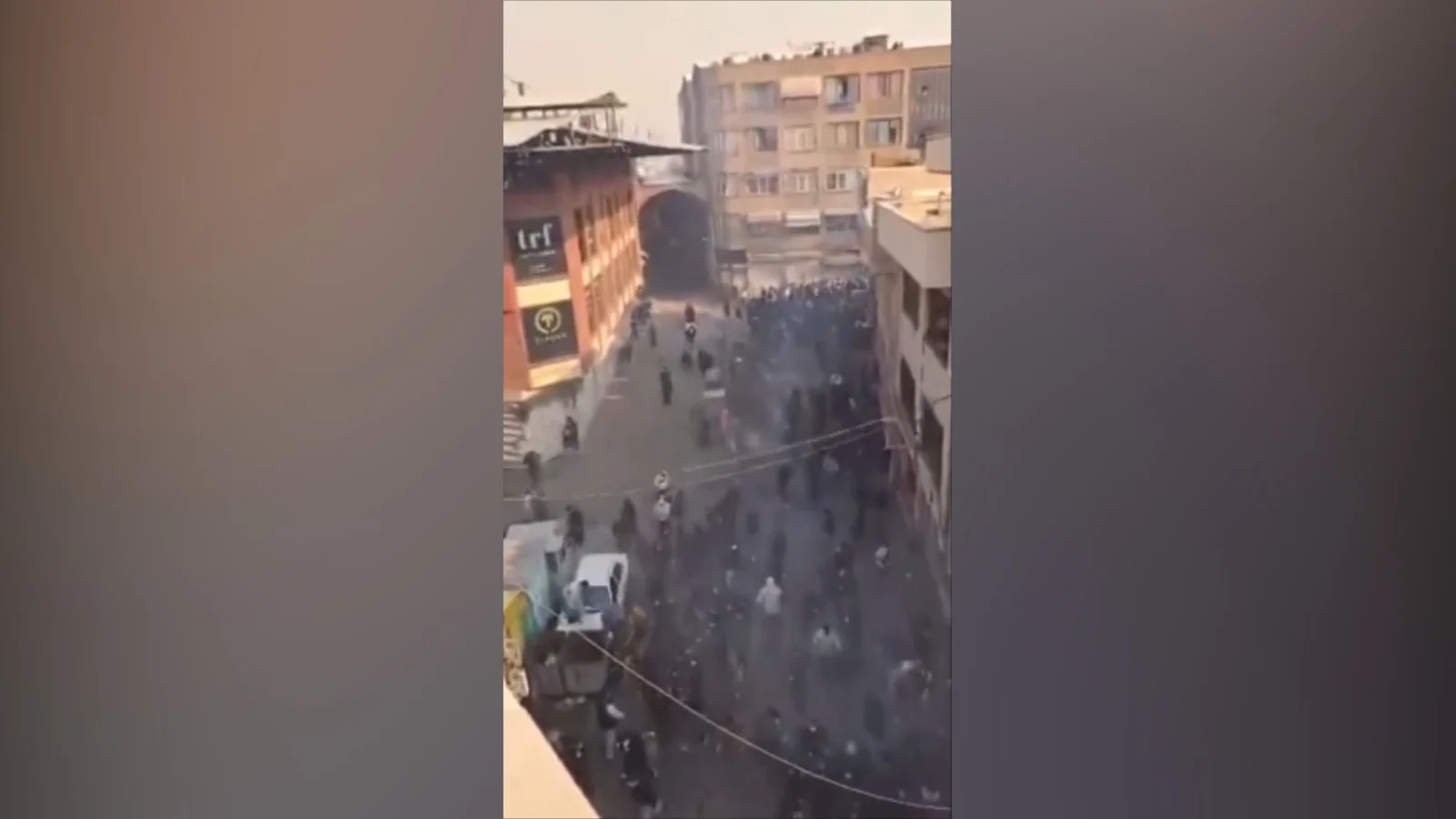
Winter Smoke in the Bazaar: A City’s Quiet Roar Turns to Shouts
The Tehran Grand Bazaar has always been a place where the city’s heartbeat can be heard unfiltered — haggling voices, the clink of coins, the sweet steam of chai rising from chipped glasses. On a frigid afternoon this winter, that cadence stuttered. Wooden shutters that normally creaked open at dawn were slammed shut. A familiar smell of saffron and frying onion was replaced by the acrid tang of tear gas. What began as a merchant shutdown on 28 December rippled into ten days of unrest, with scenes of crowds, smoke and slogans that felt, to many, like a return to the most fraught chapters of Iran’s recent history.
How the Spark Grew
The trigger, at least on the surface, was economic — the rial is in free fall and livelihoods are shriveling. On the informal black market, the currency slipped to roughly 1.47 million rials to the dollar, down from a previous low of about 1.43 million on 28 December. For traders who price goods in dollars or euros, or families trying to buy medicine or pay rent, those fluctuations are not numbers in a spreadsheet but a direct cut to the wrist.
Merchants closed their stalls in protest, a powerful symbol in a marketplace that once helped topple monarchs. From Tehran the unrest spread outward, notably into Iran’s western provinces, where Kurdish and Lor communities — already marginalized in many ways — staged their own demonstrations. The movement has not yet matched the sheer scale of the nationwide upheaval after Mahsa Amini’s death in 2022-23 or the mass protests of 2009, but it carries a distinct urgency born of daily hardship.
The Human Cost
Numbers are blunt tools when measuring pain, but they’re also necessary. Norway-based Iran Human Rights (IHR) reports at least 27 protesters killed in the crackdown, including five children under 18, and more than 1,000 arrests across multiple provinces. Official state media put a lower figure on fatalities — at least 12, including members of security forces — and acknowledged “some” arrests without providing details.
In the western Ilam province’s Malekshahi district, IHR says security forces opened fire and killed at least six people in a single incident. There are also troubling reports that authorities raided a main hospital in Ilam to detain wounded demonstrators — a move Amnesty International described as an “attack” that “exposes yet again how far the Iranian authorities are willing to go to crush dissent.”
Voices from the Alleyways
“We closed our shop so our children don’t close their future,” a carpet vendor, who gave only his first name, Reza, told me in a whisper from behind a half-lowered curtain. “My son studies in the evenings. But if the rial keeps falling, what will buying textbooks even mean?”
“They fired on people who were shouting for bread,” said Neda, a nurse in the west who asked that her full name not be used. “I saw teenagers with bullet wounds. We tried to help. Then the security men came and took the injured away from the ward.”
An official tone from Tehran offers a different cadence. The head of the judiciary warned there would be “no leniency” for what the state calls “rioters,” while the government of President Masoud Pezeshkian has announced modest monthly payments intended to ease the burden on poorer families. The gesture, many argue on the ground, feels like a bandage on a broken bone.
Slogans, Symbols and the Memory of 1979
Social media videos verified by independent sources show chants and graffiti that carry historical weight. Protesters were heard shouting “Pahlavi will return” — a reference to the monarchy overthrown in 1979 — and “Seyyed Ali will be overthrown,” aimed at Supreme Leader Ayatollah Ali Khamenei. Other crowds cried out “freedom” and “shameless.”
These are not merely catchphrases; they are markers of a deepening discontent that cuts across generations. For many young Iranians, the past is a cautionary tale: revolutions can open doors but they can also lock others. The mixture of monarchy nostalgia and anti-establishment sentiment is an uneasy cocktail, one that speaks to disillusionment with current governance rather than a straightforward nostalgia for the past.
Where This Fits in the Bigger Picture
Consider this: Iran’s economy has been battered for years by sanctions, mismanagement and the ripple effects of regional conflicts. Inflation, currency devaluation, and unemployment sit like a smog over life’s small joys. When food prices spike and the means to afford medicine disappear, political grievances crystallize quickly into public action. In that sense, Tehran’s bazaar is more than a marketplace — it’s a thermometer.
On the international stage, the unrest arrives amid other pressures: a 12-day conflict with Israel in June left geopolitical tremors, and Tehran’s regional posture has both domestic and foreign policy consequences. The world watches a nation balancing authoritarian control, popular frustration, and a youth population that is plugged into global culture via social media and diaspora networks.
What Now? Questions for a Restless Nation and a Watching World
Will the promise of modest state payments cool the simmering anger, or will it be seen as insufficient? Can the authorities navigate a path that avoids further bloodshed while addressing economic collapse? And for external observers, what responsibility is there to respond to reports of hospitals raided and children killed?
“People are not asking for utopia,” said a university student who joined recent demonstrations. “We are asking for dignity, predictability, a future where our wages mean something.”
There are no easy answers. The coming days will test not only the Iranian state’s tolerance for dissent but also the resilience of communities that have long woven their livelihoods into the bazaars, the backstreets and the coffee houses. Markets will reopen and close again; families will try to carry on. But the impressions linger: the sight of smoke curling between rug stalls, the sound of a tea vendor’s kettle covered by shouts, the young people counting the cost of staying and leaving.
Listen, Reflect, Remember
As you read this, imagine standing in that alley — the cold, the dust, the clash of voices. What would you do if your currency lost half its value over a few months? If your child’s future depended on whether a currency held steady? The scene in Tehran is both a local crisis and a mirror for global trends: economic pain, political impatience, and the unpredictable force of collective action.
Whatever happens next, the bazaar’s shutters and the voices they conceal have already spoken. They remind us that beneath statistics and geopolitics are human lives — small rituals interrupted, meals postponed, children whose futures hang in numbers. How the Iranian leadership responds, and how the world listens, will mark the next chapter in a story that is still being written in smoke and saffron.