The Day the Playground Fell Silent: A School Shooting in the Heart of the Amazon
Rio Branco wakes slowly. The sun rises hot and orange over the banks of the Acre River, turning the city’s tile roofs and patches of mangrove into a shimmer. On ordinary mornings the air smells of strong coffee and frying manioc, and children walk to school in crisp uniforms, their backpacks bumping against each other like a chorus of small hearts.
On this morning, that rhythm was shattered.
At the São José Institute, a school tucked into a working-class neighborhood not far from the downtown, panic erupted when gunfire rang out inside the compound. Two school staff members were killed; two others were wounded, including a student. The local government said a 13-year-old boy was arrested at the scene. The weapon used, officials say, belonged to the child’s legal guardian, who has also been detained.
What Happened
There are details that can be recited with clinical precision: the names, the timestamps, the arrest. But those facts never carry the full weight of what it is to be in a place where children should be safe and suddenly are not.
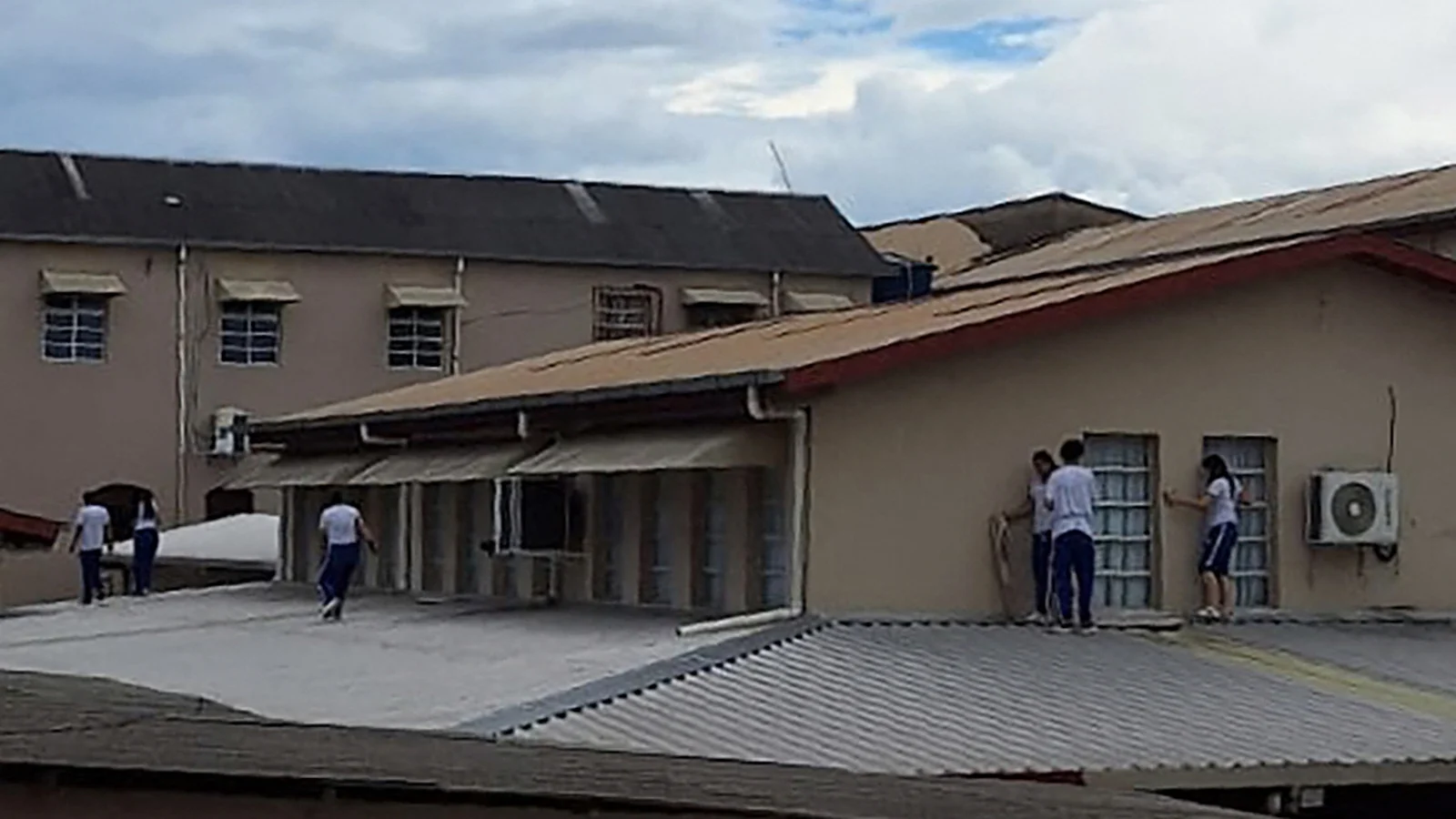
A witness working at a hotel adjacent to the school described scenes that read like fragments from a nightmare. “The wall is six metres high,” he recalled, voice still flat with shock. “Only one person managed to jump over and take refuge here in the hotel. The others were left on the school roof trying to escape. I heard the gunshots and a lot of screaming.”
Photos and video circulating on local channels showed stretcher-bound survivors, teachers embracing each other in the drizzle of emergency lights, parents sobbing outside the gates. The governor’s office announced that classes across the state would be suspended for three days and that psychological support teams were mobilized to help students and staff cope.
Arrests and an Ongoing Investigation
Authorities say the child suspect was taken into custody without being harmed, and investigations are underway to determine his relationship to the school: whether he was a current pupil, a former student, or an outsider. The legal guardian—whose firearm allegedly provided the means—was also detained as police seek to unravel how the weapon came to be used.
“We are treating this as a criminal case and a social tragedy,” the state said in a statement, offering condolences to families and education professionals. “We will investigate thoroughly to understand the chain of responsibility.”
Voices from the Ground
In the hours after the attack, the community in Rio Branco gathered like a storm of grief and questions. At a local clinic, a teacher pressed her hands together and tried to breathe through tears. “They are children,” she said. “We trust them here. I keep thinking about lunch break, about how quiet it was—then suddenly the schoolyard was filled with running feet.”
A mother waiting outside the hospital clutched a small jersey. “My daughter called me and said, ‘Mama, we’re hiding on the roof,’” she said. “I ran. As a parent you never think—never—for a moment that something like this could happen in our little city.”
An emergency-room volunteer described the arrival of bleeding children as one of the hardest things she’d seen in years working in a region already used to scarcity. “We are used to handling injuries from traffic or accidents, but this… this changes you,” she said. “The quiet after the sirens was the worst part.”
Wider Patterns: Why This Feels Like It Could Happen Anywhere
Brazil, despite its dazzling cultural life and deep regional diversity, has been grappling with a troubling rise in school attacks. The country has known the horror of mass violence before—the 2011 Realengo shooting in Rio de Janeiro and the 2019 Suzano massacre in São Paulo remain seared into the national memory—but every new episode forces a fresh reckoning with how communities protect their children.
Experts point to a web of contributing factors: easier access to firearms in some households, gaps in mental health support for adolescents, social media dynamics that can amplify grievances, and the broader social inequality and marginalization that leaves young people without reliable anchors.
“We’re seeing the convergence of several risk factors,” said Ana Prado, a psychologist specializing in youth trauma in the Amazon region. “Adolescents with untreated mental health needs, firearms kept unsecured at home, and a culture that sometimes fails to spot warning signs early—the result is tragic and preventable.”
Facts to Keep in Mind
- Authorities have confirmed two deaths and multiple injured in the São José Institute shooting.
- A 13-year-old suspect was detained; the legal guardian who owned the alleged weapon is also under arrest.
- State officials suspended classes for three days across Acre and deployed psychological support teams.
- Brazil has experienced a number of school attacks in recent years, prompting national debates about safety, mental health, and gun access.
Local Color: Rio Branco Between the Rivers
Rio Branco sits in Brazil’s westernmost state, a place where the forest and town meet, where rubber-tapper history and the memory of Chico Mendes mingle with the hum of motorcycle taxis. People here talk about the weather, the river’s moods, and the best place for a warm tapioca. They also talk about community—the neighbor who watches your house when you are away, the aunt who helps with the children, the football team that plays on a field of rutted red earth.
It is in that communal fabric that the shock is felt most keenly. “When violence comes here, it cuts differently,” said João, a local shopkeeper who kept his store open late, turning on the TV to catch updates. “We are used to being overlooked by federal policy. But this—this screams for attention.”
What Comes Next: Questions and Choices
After the first wave of emergency response—police, ambulances, counselors—communities must ask hard questions. How can schools be made physically safer without turning them into fortresses? How do we ensure firearms are stored responsibly? Where will adolescents find the emotional and psychological support they need?
Policymakers will likely revisit debates about gun regulation, youth services, and funding for school safety programs. But change also depends on quieter, slower work: better mental health screenings in schools, community-based outreach, and training for teachers and families to recognize warning signs.
How do we balance the need for security with the need for a warm, open learning environment? What responsibilities do guardians hold when they keep dangerous items in the home? And how do communities heal after such a rupture?
Resources and Support (What the State Is Doing)
- Three-day statewide suspension of classes to allow investigations and initial psychological support.
- Deployment of counseling teams to provide trauma care to students, staff, and families.
- Law enforcement investigation to determine the circumstances of the attack and the chain of custody for the weapon.
Closing: The Long, Tender Work of Recovery
There are images that will not leave Rio Branco for a long time: parents pressing foreheads to gates, a teacher’s uniform torn and stained, students whispering in the corners of their homes. There are also small acts of repair—the volunteer bringing coffee to exhausted counselors, neighbors offering spare rooms to families who traveled to the city in panic, a football coach organizing an impromptu practice to give children something steady to hold onto.
Violence like this forces a community to choose its story: one of despair, or one of determined repair. “We are going to rebuild,” said a school administrator, voice hoarse but steady. “Not just the walls, but the trust.”
As you read this, ask yourself: what would you do if your child’s school was suddenly a crime scene? What policies would you demand from leaders? And perhaps most urgently, how can societies better see and support their young people before tragedy strikes?