When a Border Finally Quieted: Soldiers Returned, but a Fragile Peace Lingers
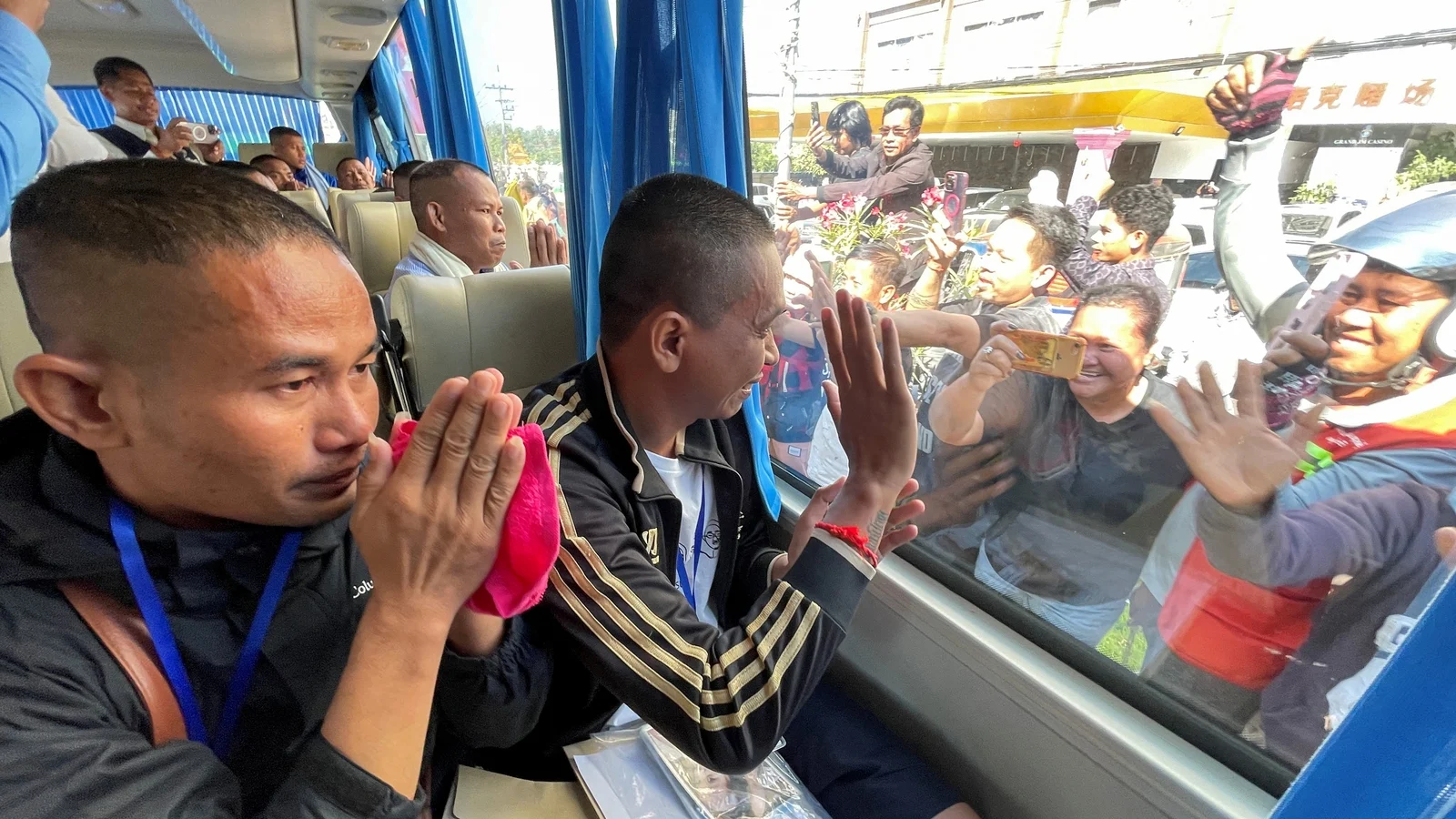
The morning the 18 Cambodian soldiers stepped across the checkpoint back toward Phnom Penh, there was an odd mix of relief and exhaustion writ across faces on both sides of the Thai-Cambodian frontier. After weeks of artillery duels, drone sorties and tank movements that had turned sleepy border hamlets into emptied shells, the small procession felt less like victory than a delicate stitch in a garment that has been coming apart for decades.
<p”Today, we returned 18 of our neighbors to their families,” said a Thai foreign ministry official in a low, almost hesitant voice. “The release is a demonstration of goodwill and a modest confidence-building step.” The phrasing was formal but the scene at the checkpoint was quietly human: uniforms swapped for hugs, hands wiping damp cheeks, old women bringing plates of rice cakes as if to feed away the trauma.
The Numbers Behind the Headlines
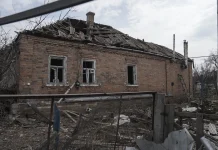
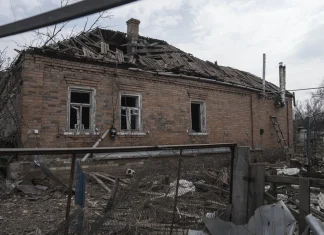
Official counts remain messy, but the scale of the human fallout is unmistakable. The renewed clashes earlier this month killed dozens, and aid agencies estimate that more than one million people were displaced from villages along the roughly 800-kilometre (about 500-mile) Thai-Cambodian border. Families fled with nothing but what they could carry—children, a few photos, a pot. Markets closed. Rice paddies grew quiet under a haze of uncertainty.
The truce, which has held for more than three days at the time of writing, includes promises to stop firing, halt troop movements and launch joint demining operations across disputed sections of the frontier. Leaders on both sides have also pledged to allow residents back into their homes as soon as security can be guaranteed.
Why the Fighting Flares Again
This is not a new story. The flashpoint is a colonial-era border demarcation that left lines on maps that communities have disputed for generations. Around the most contentious spots—ancient temple ruins that both sides claim as part of their cultural patrimony—soldiers have squared off for years. The site most often named in past disputes is the 11th-century Hindu temple Perched On Cliff—known internationally as Preah Vihear—and similar ruins dot the frontier, turning archaeology into geopolitics.
“These are not simply lines on a map,” said a Southeast Asia security analyst, Dr. Anan Chai. “They are the bones of identity for people on both sides. When leaders play up nationalism, local tensions can explode into very lethal encounters.”
Captured Soldiers, A Test of Trust
Cambodia says its troops were seized on 29 July—nearly eight hours after a ceasefire intended to halt a prior round of violence had taken effect. The prior truce had been brokered with help from international mediators, including delegations from the United States, China and Malaysia, who have periodically stepped in to cool this simmering conflict.
“We received word that our men were being handed over. There was no fanfare—just men stepping into custody and then walking home,” said a Cambodian provincial official, eyes tired but steady. “For many families, this is closure. But it is a fragile closure.”
International mediators had urged Thailand to release the soldiers as part of earlier agreements. Promises made in diplomatic communiqués are helpful, analysts say, but words must be backed by sustained action on the ground—particularly the removal of mines, which have maimed or killed troops and civilians alike.
Lives Disrupted: Stories from the Border
In a displaced persons camp beneath a strip of rusting corrugated iron, a woman named Sokha pinned a child’s drawing to a tarp wall and laughed briefly through tears. “We left with our baby and our chickens. We could not pick up the rice—there was gunfire,” she said. “The children ask when the quiet will come. How do I tell them?”
Nearby, a Thai rice farmer, Somchai, cradled an old bicycle as if it were a relic. “We’ve shared water and seeds across this river for generations,” he said. “Now a line on paper tells us to hate one another. It’s painful. We want the scholars to finish the border marking so we can return to ploughing.” His voice was flat with two months of fear and two centuries of history.
What Joint Demining Might Mean
One of the more tangible elements of the ceasefire is a pledge to cooperate on demining. Landmines are a slow, indiscriminate menace that linger long after guns fall silent. Clearing them will be costly, technical and time-consuming, but it is also something that directly protects civilians and could allow agriculture and trade to resume.
“Demining is practical confidence-building,” said Mei-Lin Tan, a humanitarian demining specialist who has worked across Southeast Asia. “It shows that both governments are willing to accept risk for the benefit of civilians. But the process must be transparent and involve local communities to have lasting impact.”
What Comes Next?
The truce is a necessary breathing space, not an endgame. Political leaders will have to negotiate the thornier question: how exactly to demarcate the border where maps and memories disagree. That process will test institutions, international goodwill and the patience of people who have already suffered a great deal.
Regional diplomacy will likely continue to involve outside powers—neighbors and global players who have an interest in stability in Southeast Asia. But for people under the tarps, in the ruined marketplaces, in the temple shadows, international delegations feel abstract. What they need most is safe return, livelihood recovery and guarantees that a child will not lose a leg to a forgotten mine.
“We do not want parades of diplomats here,” said a 62-year-old villager who gave his name only as Mr. Vann. “We want our rice fields back and our children to go to school without fear.”
Reflection: Borders, Identity and the Human Cost
Reading headlines from afar, it is easy to see this as another border scuffle—an arc on a map, another temporary truce. But walk these roads, listen to the laughter and worry in the camps, and the contours of the conflict change. It becomes a story of people bound to place, of temples that mean more than tourism brochures, and of maps that can take a lifetime to redraw.
Are we comfortable with conflicts that flare up because of century-old maps? How much global attention do we owe to places that don’t appear on prime-time broadcasts, even when a million people are displaced? The answer matters, not only to Bangkok and Phnom Penh, but to any nation where borders are both identity and instrument.
For now, the checkpoint where the soldiers crossed back home sits quiet. Children chase a battered football. An old radio plays a country song somewhere down the road. The truce holds, cautiously. The hard work—mapping, demining, reparations and real reconciliation—begins now.