On a Hillside of Memories: Life Inside the World’s Largest Refugee Settlement
The photograph is small, the edges curled and browned by years of sun and rain. Nur Haba cradles it like a relic, a single frame that contains an entire life: her mother, smiling before the world she knew collapsed into smoke and gunfire.
“She was only forty-four,” Nur says, voice low enough that the bamboo walls of her shelter seem to lean in. “They shot her in front of me.” Her fingers tremble as she smooths the paper. “Everything I had left—this picture, a scarf—I’ve kept close. Memory is all that is left to us.”
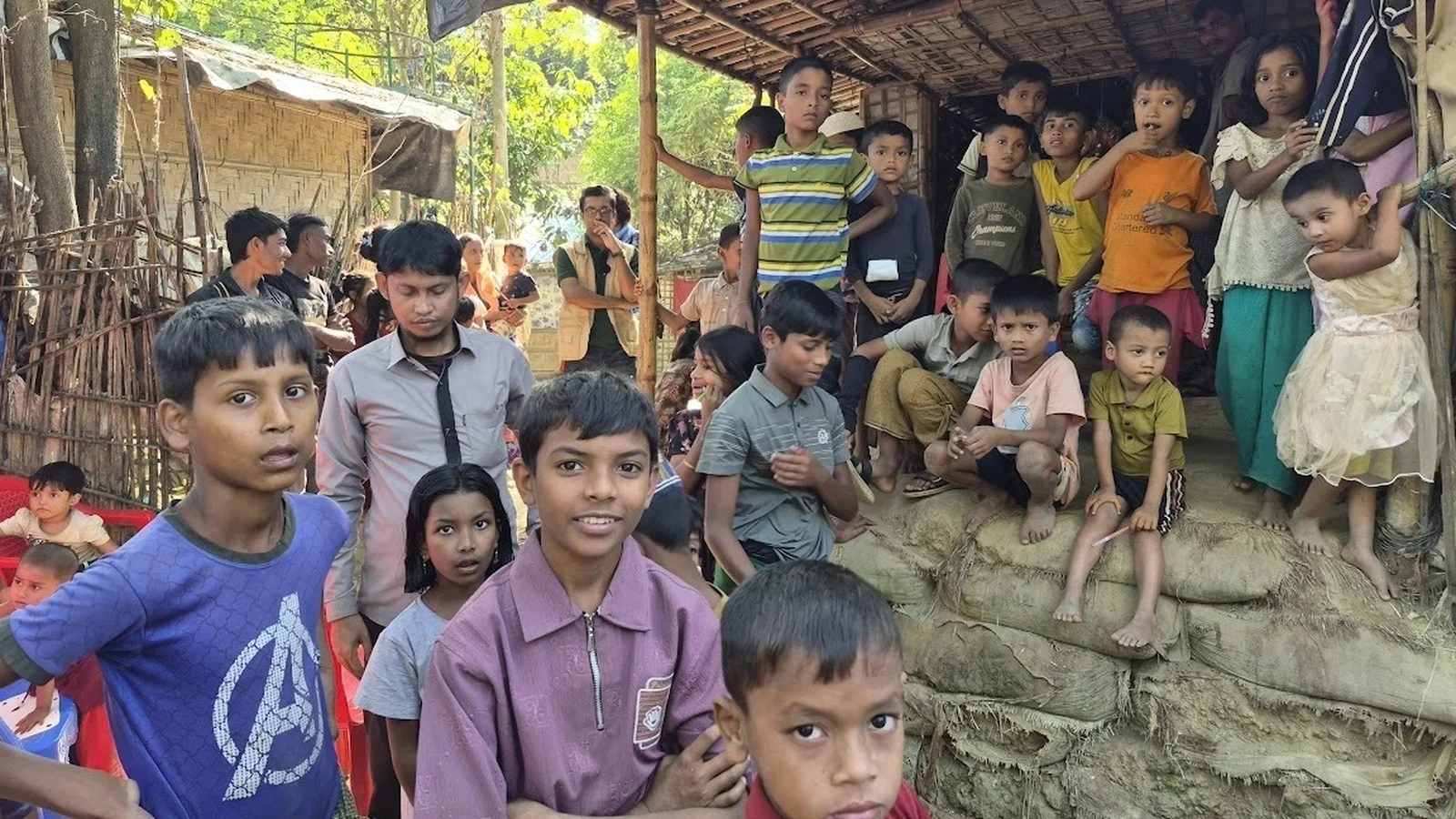
That shelter sits on a stubbled hillside in Cox’s Bazar, Bangladesh: a patchwork of tarpaulin, bamboo poles and corrugated sheets that together house a city-sized population. Around 1.3 million people live here, by most counts—the largest concentration of refugees anywhere on earth. For many of them, daily life is an exercise in holding on: to memories, to dignity, to a tentative claim on the future.
A history of being denied
The Rohingya fled not because they wanted to leave, but because of what they feared would happen if they stayed. Denied citizenship in Myanmar since 1982, systematically excluded from education, healthcare and civil rights, they have long endured discriminatory laws and practices. In 2017, a brutal campaign in Rakhine State—documented by UN investigators and described by international experts as tantamount to ethnic cleansing—forced more than a million people across the border into Bangladesh.
“We walked, we ran. Some of us hid. Many did not make it,” a neighbour in the camp mutters as children weave between food distribution lines. “The past is not a story for us; it is the air we breathe.”
How do you house a city?
Try to imagine a density no planner would ever design for: roughly 45,000 people packed into a single square kilometre in parts of the settlement. That figure, stark on paper, becomes visceral on the ground. Narrow footpaths wind between rows of shelters. Open drains line the lanes. Where there should be green space, there are sleeping mats and drying clothes. A child plays with a plastic bottle; an old woman chops vegetables over a tiny stove.
“If I put it another way,” says Manish Kumar Agrawal, who runs a major aid programme in the area, “Ireland—a whole country—has around 73 people per square kilometre. Here, entire families share space smaller than many living rooms back home. Seventy-five percent of the camp are women and children. It’s not simply crowded; it’s dangerous.”
Dangerous because close quarters make disease an impatient neighbour. Over the past year, humanitarian teams have battled outbreaks of cholera and dengue, along with recurring spikes of acute diarrhoeal disease. Clinics, set up in converted shipping containers and tents, are often overwhelmed. Water and sanitation systems strain under the load. And when illness strikes, the pathways to care are clogged by queues, lack of transport and the constant churn of arrivals.
Weathering the climate on the frontlines
The geography that once seemed to offer safety now compounds vulnerability. The camps hug steep hills carved by monsoon rains; when cyclones and heavy rains come, landslides can sweep through rows of fragile shelters without warning. In the dry season, heat shimmers over a landscape of plastic sheeting and sun-bleached bamboo, and the risk of fire is ever-present.
“These communities are on the frontlines of climate change,” a UN official told me during a recent visit. “Summers sear and dry out, then the rains arrive with a fury. People lose homes and lives over and over.”
You can still see the scars: gullies where entire slopes gave way, the rusted skeletons of shelters flattened in past storms, and families rebuilding with the same limited materials, season after season. “We have to relive the flood and the fire in our heads before they happen,” says 23-year-old Aziz Ullah, who arrived in 2017. “We talk about the past. We worry about the next rain. The future for our young people—honestly, it feels dark.”
The human cost of restriction
Life in Cox’s Bazar is heavily regulated. Movement is restricted, the right to formal work is denied to most, and many daily routines are defined by aid distributions: food, water, shelter upgrades, occasional cash assistance. That dependency shapes more than material conditions; it affects mental health, social structure and prospects.
“When people have nothing to do—when young men and women are idle—frustration breeds danger,” explains a protection specialist with a long experience of displacement settings. “We see petty crime, reports of exploitation, tensions between groups. It’s not inevitable, but it’s a pattern we must acknowledge.”
There have been disquieting reports—kidnappings, armed clashes, and cases of sexual exploitation within the camp. For many families who fled violence only to arrive in crowded, under-resourced shelters, the fear of a second betrayal—of safety promised but not delivered—weighs heavily.
The continuing tide: arrivals and the limits of hospitality
Despite the years since 2017, the exodus continues. Humanitarian agencies estimate that roughly 150,000 Rohingya have arrived in Bangladesh over the past year alone, driven by renewed violence, economic collapse and a lack of security in parts of Myanmar. Each new arrival is a human face in an already packed grid of tents, a family joining queues for water and the few school classes available.
Bangladesh, a nation with its own vulnerabilities and a dense population, has repeatedly signalled its limits. “We are a small, land-hungry country,” said a government official overseeing refugee affairs. “We can host, but we cannot absorb millions permanently. Our goal is safe and dignified return when conditions allow.” Yet safe, voluntary repatriation remains a distant hope while violence and systemic discrimination persist in the places many Rohingya left.
What does justice look like?
As you read this, ask yourself: what responsibility do we owe to people who have been stateless for generations? To those who escaped killing and came to live under tarpaulin roofs while the wider world pivoted from headline to headline?
There are practical answers: increased funding for healthcare and shelter upgrades, safer education for children, expanded livelihoods so people can work and provide for themselves, and sustained diplomatic pressure on Myanmar to create conditions for the safe return of its citizens. There are also harder moral questions about citizenship, belonging and the architecture of national identity that rendered an entire community invisible on paper and vulnerable in practice.
Numbers that matter
- Estimated camp population: ~1.3 million people
- Reported population density in parts of the camp: ~45,000 people per square kilometre
- Recent arrivals (approximate, past year): 150,000 Rohingya
- Proportion of camp population who are women and children: ~75%
Faces, not statistics
Back on the hill, a boy kicks a flattened soccer ball toward a line of boys his age. Laughter rings out for a moment that feels almost ordinary. Nur tucks the photograph back into a small tin. “I still hope my story will change,” she says. “Not just for me—for my son, for all the children here. I hope someone sees us as people, not numbers.”
We, as a global community, are measured not only by our declarations—but by the shelter we provide, the dignity we defend, and the political will we muster to make return safe and rights durable. Cox’s Bazar is a test of that resolve. Will the story end in cycles of loss and displacement, or will it be written into a different future—one where citizenship, shelter and opportunity are not privileges but rights?
If you have read this far, I invite you to hold one fact in your mind: behind every statistic is a person who remembers a name, a song, a life that did not deserve to be erased. What will you do with that knowledge?