When Morning Broke Over Caracas: The Day a Strongman Became a Detainee
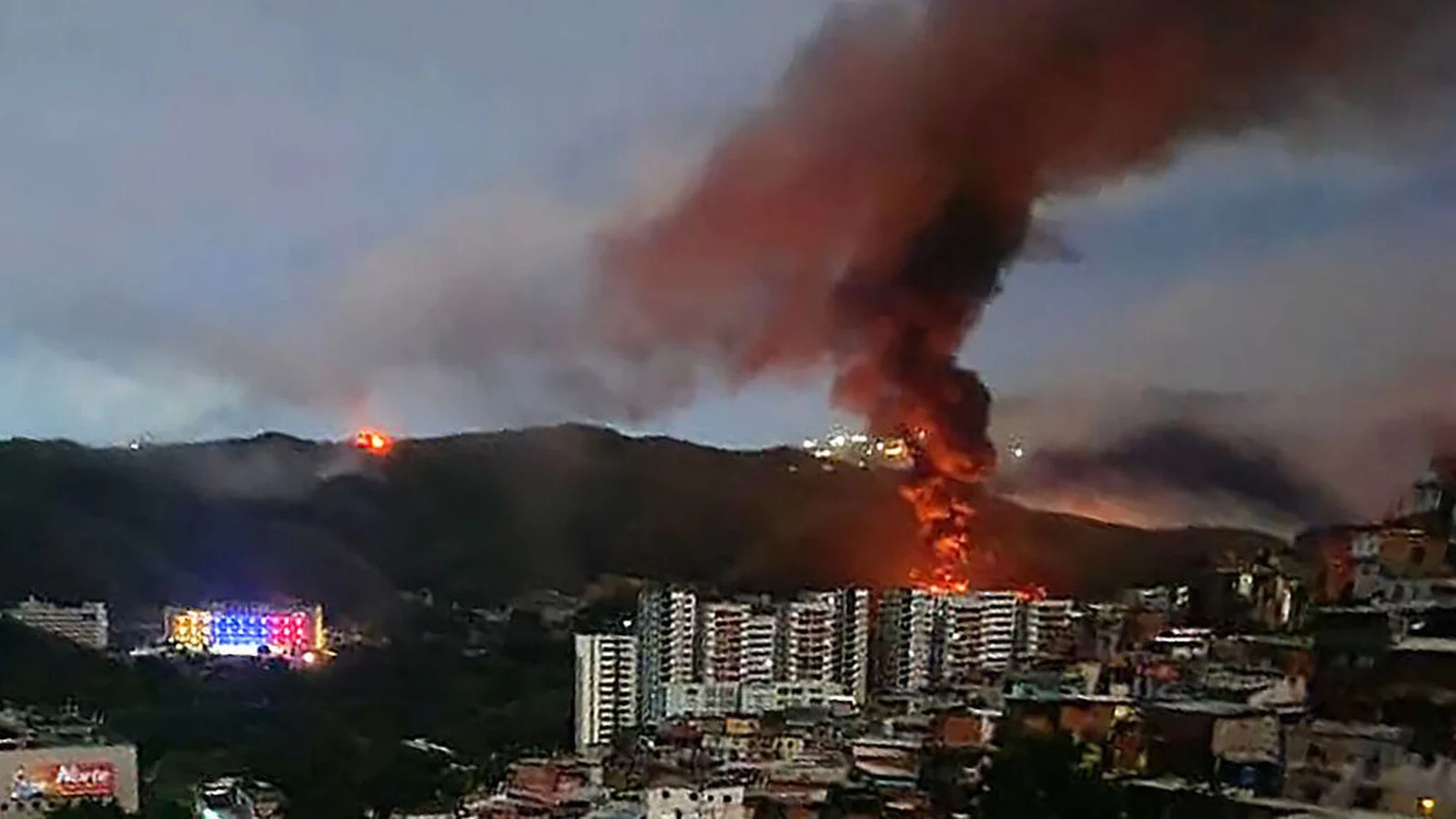
The airport lights were still low, the air thick with the diesel and dust that hangs over Caracas in the dry season, when the news began to spread like oil on water: the man who had ruled Venezuela for years, a figure of fear and devotion in equal measure, had been taken into custody and flown into American custody.
There is a particular hush when something seismic happens in a city that has become used to seismic shifts. Street vendors paused with arepas half-formed, church bells and radio DJs faltered mid-sentence, and a bus driver on Avenida Urdaneta stared at his phone until the screen grew bright enough to betray the worry on his face.
“I remembered my mother saying, ‘No one rules forever,’ ” said Mariela Rojas, who runs a tiny bakery in Catia, wiping flour from her hands. “But never did I think it would be like this — nighttime helicopters, whispered rumors, then the airport news. We live with fear like weather. Now the weather might change.”
Not Just One Man: A Landscape of Autocrats and Interests
This is not, on its face, a story simply about one man’s fall from prominence. It is a story about systems, about resources, about history that refuses to let its old frames go quietly into the archive. It is about a hemisphere where the ghosts of 19th-century doctrines still orbit today’s policy debates, but now with new actors and new tools.
Venezuela sits on one of the largest oil endowments on the planet — estimates commonly put its proven reserves near the 300-billion-barrel mark, a staggering figure that has driven both its fortune and its misfortune. Oil shaped its politics long before the current drama: patronage networks built on petro-rents, security forces supplied with foreign weapons, and economies of dependency that few administrations have managed to disentangle.
“Energy is a lever,” said Dr. Alejandro Cortés, a Latin American geopolitics scholar in Bogotá. “Whoever can command supply chains, refineries, shipping routes, gains not only revenue but strategic advantage. The United States, China, Russia — they all see Venezuela through that lens.”
Why This Moment Reels Beyond Borders
If the capture is indeed true — and the details remain contested and unfolding — it is the kind of moment that forces questions about precedence and principle. When a global superpower moves in against a sitting leader in another sovereign nation, the ripple effects are immediate and global.
Washington’s stated rationale, according to briefings and press remarks, ranged from criminal accountability to securing critical assets. “We’re going to have our very large US oil companies… go in, spend billions of dollars, fix the badly broken infrastructure,” a senior official told reporters, adding bluntly that American dominance in the hemisphere “will never be questioned again.”
That rhetoric pulled the 19th-century Monroe Doctrine into the present with a new nickname: the “Donroe Doctrine,” as it has been called in newsrooms and on social feeds — a refashioning that mixes old hubris with modern, transactional geopolitics.
Reactions: Fear, Defiance, and Geopolitical Alarm
Across Latin America’s capitals, reactions ranged from sober caution to blistering condemnation. Beijing called the operation “deeply shocking,” denouncing acts it described as violations of international law. Moscow warned that unilateral actions in the hemisphere would heighten tensions. Havana — where Cuban flags flutter beside Venezuelan ones in solidarity rallies — framed the event as an assault on sovereignty.
“These are not just words,” said Rosa Miguel, a Cuban-Venezuelan nurse in Havana, smoothing the edges of a small Venezuelan flag at a public gathering. “When they take a leader in the night, they take a whole people’s story. We felt it like a slap.”
Back in Washington, voices in the administration framed the action as a defense of hemispheric security and supply chain integrity. Earlier policy documents had emphasized the need to block “hostile foreign incursion” and to protect access to strategic resources — language that, critics say, echoes a long tradition of privileging power over principle.
Why Russia and China Mattered
Both Moscow and Beijing have been lifelines of a sort for Caracas in recent years: oil purchases, political support at the United Nations, military ties. In the weeks before the operation, diplomatic choreography included visits by high-level envoys and confirmations of strategic relationships described, by one Venezuelan official, as “multipolar cooperation for peace and development.”
“You have to understand the layered stakes here,” explained Dr. Cortés. “It’s not just a bilateral quarrel. It’s contestation over influence — who secures supply chains, who wields soft power, who gets ports and pipelines.”
On the Ground: Stories of Loss, Resilience, and Uncertainty
Walk the neighborhoods of Caracas and you will see a collage of resilience: murals of disappeared relatives, hand-painted signs for community clinics, kids in soccer cleats chasing a ragged ball past shuttered buildings. For many people, politics is measured in immediate terms: will there be light this month, will the clinic have medicine, will my child eat?
“We are tired,” said Carlos Medina, a mechanic who used to fix buses for a state-run transport cooperative. “Tired of being told there’s a solution just around the corner. If the big players are fighting over oil and influence, what do we get? More fines, more checkpoints, more long lines.”
Yet not everyone welcomed the supposed capture. Demonstrations sprang up in neighborhoods where support for the former leader remains strong. Placards read “Sovereignty, not Intervention,” and old songs — corridos and boleros — mixed with the chants, reminding everyone that identity and memory do not dissolve with headlines.
What This Means for the Hemisphere — and for You
Think of this not just as a Venezuelan drama but as a mirror. Around the world, democratic backsliding, illicit networks, and resurgent great-power competition are reweaving the map of influence. According to multiple democracy indices, the last decade has seen a slump in democratic norms and a rise in personalized power. Whether the remedy is international prosecution or regional dialogue matters less than the question of legitimacy: who decides, and by what rules?
Ask yourself: when great powers move in the name of security or resources, whose law governs the action? And when local people bear the direct cost — shortages, displacement, a spike in militarization — where is justice? These are not abstract queries; they are the kinds of moral arithmetic that determine whether a city gets electricity or a child gets to go to school.
Possible Consequences
- Short-term instability in Venezuela, including disruptions to oil production and trade.
- Heightened tensions between the U.S., China, and Russia, with potential diplomatic fallout in the UN and regional bodies.
- Ripple effects across Latin America, where governments will reassess alliances and domestic security strategies.
- A renewed debate about sovereignty, intervention, and the ethics of resource-driven foreign policy.
Closing: A Hemisphere at a Crossroads
Outside, the city hums on. Someone bangs a pot in protest; someone else lights a candle for the missing. A taxi driver turns off the radio and says, simply, “We will talk about this for years.” He is right. This episode — whether a decisive correction or a dangerous precedent — will be picked apart in living rooms, on parliaments’ floors, and in courtrooms.
Moments like this compel us to look beyond the personalities into the systems that make such dramas possible. Power does not evaporate when a leader falls; it reallocates. The question for citizens across the hemisphere — and for observers around the world — is whether that reallocation will yield more freedom, more accountability, and more dignity for ordinary people, or whether it will simply swap one set of hands for another.
So I ask you: if geopolitics is a game of chess, what happens to the pawns? And are we ready, as a global community, to defend the small things that make life worth living — clinics that stay open, ballots that count, and the quiet, stubborn rituals of daily life that endure even in times of upheaval?