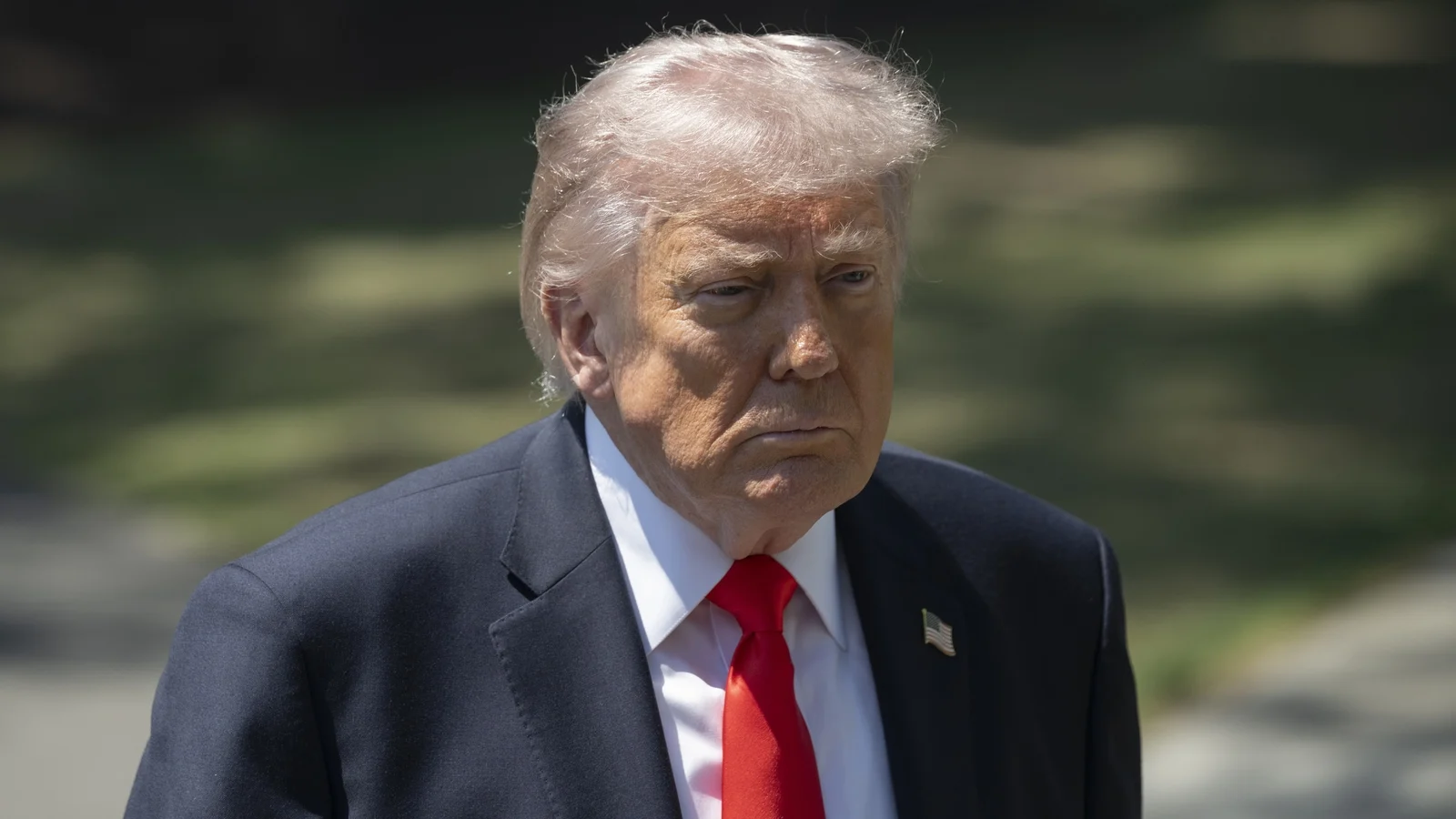
Facing a sharp rise in diesel prices that has rattled consumers and lawmakers alike, US President Donald Trump says he has struck an agreement with Russia to boost fuel supplies to the US and wider global market — a move accompanied by a temporary easing of US sanctions on Russian fuel.
Diesel, a cornerstone fuel for farming, home heating and the trucking industry, has climbed in price and is emerging as a political liability for Mr Trump’s fellow Republicans ahead of the 3 November congressional elections, which will decide whether the party retains its slim hold on Congress.
Prices dipped after the announcement, though analysts cautioned the arrangement may not be sufficient to keep costs down for long.
In a social media post, Mr Trump described a “highly successful” conversation with Russian President Vladimir Putin, saying they agreed Russia would “immediately” supply more than 300,000 metric tonnes of diesel to US and global markets — about 2.25million barrels.
The US exports about 1.5 million barrels of diesel per day.
After the call, Kirill Dmitriev, an envoy for Mr Putin, applauded US-Russia cooperation in a post on X.
Mr Dmitriev, according to sources familiar with the matter, had asked US officials during a visit to Washington last month to grant licenses allowing diesel exports to the US market for all major Russian oil firms.
Ukrainian President Volodymyr Zelensky said ‘gifts to Putin will not bring peace’
The policy shift comes after Washington imposed sanctions in October 2025 on Russian oil companies over Moscow’s war in Ukraine, which began in 2022.
Those measures were intended to choke off revenue streams, but opening a route for diesel exports could deliver Moscow billions of dollars that could help Mr Putin sustain the war effort.
Ukrainian President Volodymyr Zelensky condemned the deal, announced as a Ukrainian delegation was in the US to discuss ways to pursue a resolution, calling it a “weak decision on the part of strong partners”.
Mr Zelensky said Mr Trump had made an “unworthy” choice by agreeing to accept Russian oil to relieve shortages in the United States.
He told reporters: “It is certainly not honest, it is certainly unworthy of our partners, and it is, in my view, a weak decision”.
“Gifts to Putin will not bring peace or any benefit to the civilized world. Russia will ‘repay’ the diesel with further terror and perfidy,” he said on X.
In Washington, the agreement drew criticism from US politicians, including Mr Trump’s fellow Republican Representative Don Bacon.
Mr Bacon argued the administration should be tightening pressure, not relaxing it, saying Congress had recently approved additional sanctions that should be enforced.
“Now is the time to use those sanctions to squeeze Putin’s war machine, not reward a dictator by putting more money in his hands while he continues targeting and killing Ukrainian civilians,” Mr Bacon said on X.
The US Treasury Department issued a license allowing importation of Russian diesel until 7 April.
Mr Trump said Russia would ship another 500,000 tonnes in November, followed by a further 1 million tonnes “immediately there after.
Diesel prices are up 70% since the US and Israel launched the war with Iran on 28 February
“Even more would follow,” Mr Trump added, depending on the state of Russian diesel refineries, which he said have been damaged by Ukrainian attacks.
Market watchers remained unconvinced that the volumes outlined would fundamentally alter supply dynamics.
“I cannot overstate how much of a nothing burger this is,” Rory Johnston, an oil market researcher and founder of CommodityContext.com, said on X.
He noted Russia typically exports far more diesel than the amounts included in the deal when its refineries are not under attack.
“It’s clearly not a fix, but another stream to aid a very tight diesel market,” said Jim Mitchell, an analyst at consultancy Wood Mackenzie.
Diesel prices, often a key driver of inflation, have risen 70% since the US and Israel launched the war with Iran on 28 February.
The wars in Iran and Ukraine have tightened global fuel supplies, pushing the average US diesel price to $6.28 (€5.60) a gallon on Thursday, according to the AAA motorist group.
Those costs have remained elevated despite two recent steps by Mr Trump aimed at increasing supply: urging allies to release emergency reserves and widening access to tax-exempt red-dyed diesel, typically reserved for farm equipment.
US diesel futures dropped almost 5% after news of the deal, trading at $4.64 a gallon.
“Lower prices for Americans, especially our great farmers, ranchers, and truckers, is my greatest priority,” Mr Trump said.
Three industry sources said Mr Trump is expected to issue a directive in the coming days instructing some US department heads to look for ways to rein in diesel prices.
The directive — which the sources said may take the form of a presidential memo — would press officials to explore bypassing local and state regulations that limit energy production and to use the Cold War-era Defense Production Act (DPA) to lift oil and fuel output.
Under the DPA, the president can authorisze US-backed loans or loan guarantees to expand domestic manufacturing of critical materials and can require companies to prioritise government contracts for essential goods.
The White House has been weighing whether to deploy the DPA to expand refining capacity as the war with Iran highlights US exposure to supply disruptions and sudden price spikes.
Refining executives told administration officials last month that federal funding would be more effective if aimed at improving refinery efficiency or expanding existing plants, rather than underwriting a new refinery — a far more expensive project that could take years to build.