On a Florida stage, a warning to the region: brinkmanship, honor, and the fragile arithmetic of peace
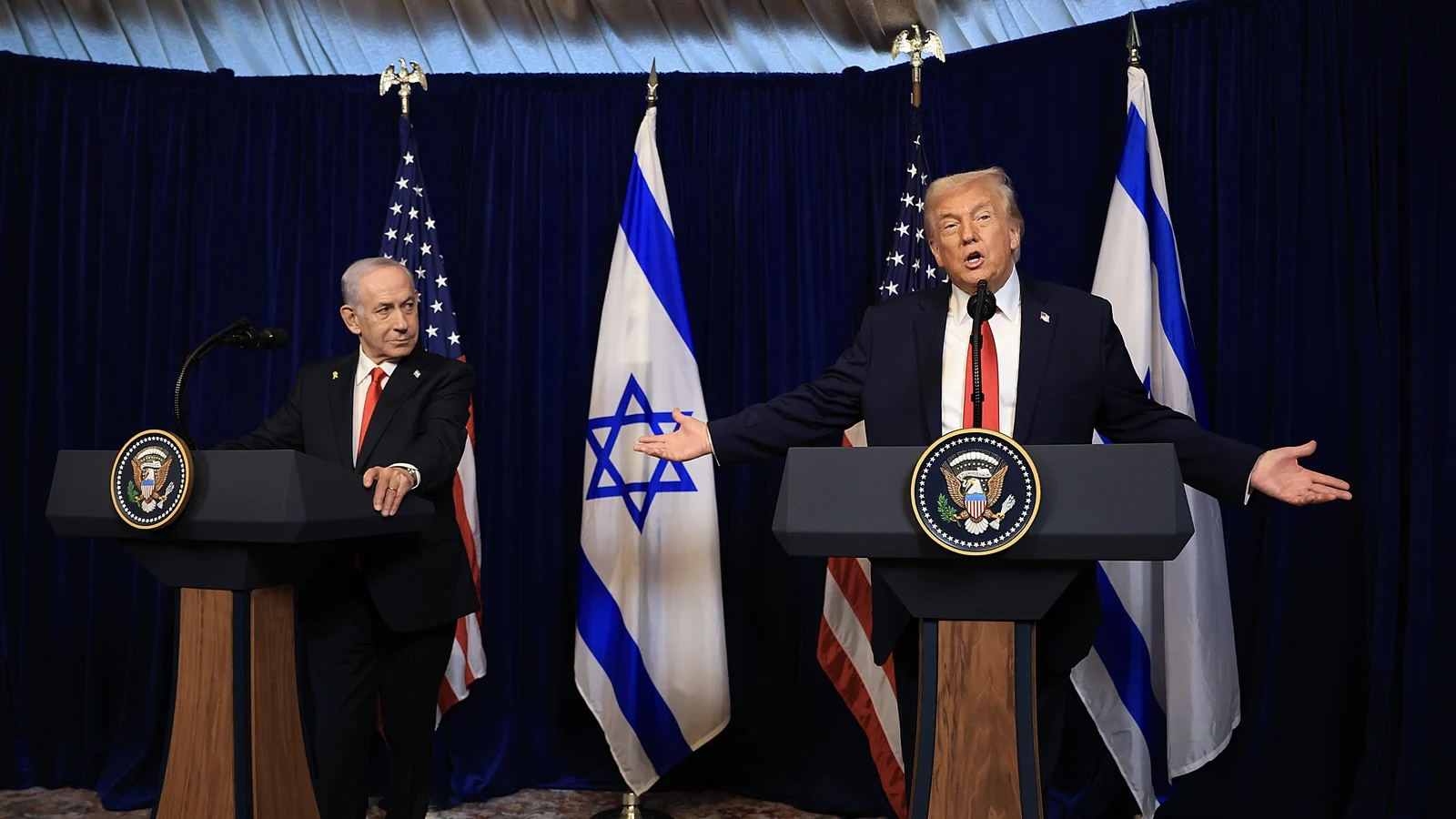
The sun hung low over Palm Beach, gilding the columns where two leaders stood side by side, and for a moment the world felt very small — and very large — all at once.
Speaking after a high-stakes meeting with Israeli Prime Minister Benjamin Netanyahu, U.S. President Donald Trump looked straight into the bank of microphones and issued a stark admonition: Iran would face fresh strikes if it tried to rebuild nuclear capabilities or replenish its ballistic missiles, and Hamas would “have hell to pay” should it refuse to disarm under the terms of the Gaza truce.
“We made our position clear,” Trump told reporters. “If Iran tries to put itself back on the road toward a weapon, we will eradicate that program. And if Hamas does not disarm, the consequences will be severe and swift.” The language was blunt, the posture unmistakable — a reminder that in geopolitics, words can be a prelude to action.
Instant ripples: Tehran’s answer and a public show of teeth
Tehran responded in equally combative language. Ali Shamkhani, a top adviser to Iran’s supreme leader, posted on social media that Iran’s missile and defense capabilities were neither “containable nor permission-based” and warned any would-be aggressor to expect “an immediate harsh response beyond its planners’ imagination.”
“We are not bluffing,” said a Tehran-based security analyst who asked to remain anonymous, describing the message as a deliberate signal to regional rivals and to domestic audiences alike. “The leadership wants to show capability and resolve without tipping into open confrontation — yet the rhetoric narrows the room for calm.”
Why this matters: a tangle of deterrence, diplomacy and symbolism
There are many moving pieces here. On one level, this is a classic display of deterrence: a superpower promising to strike back to prevent a rival from gaining a strategic advantage. On another, it is a theatrical moment — Israel awarding the United States’ leader its highest civilian honor, the first time it has gone to a non-Israeli citizen — that cements a political and personal alliance in the public eye.
“Symbols matter,” said Dr. Laila Mansour, a veteran Middle East scholar. “The medal, the open microphone, the public threats — they are all tools of statecraft. But symbols can seduce leaders into thinking they can negotiate from a posture of dominance without paying attention to the human and political complexities on the ground.”
There are practical questions too. Since the 2015 Joint Comprehensive Plan of Action (JCPOA), nuclear diplomacy has been the axis of U.S.-Iran friction for nearly a decade. The U.S. withdrawal from the JCPOA in 2018 reshaped the diplomatic landscape and pushed Tehran to diversify its options. Missile development, civilian nuclear work, regional proxies — they are all part of a complex equation of deterrence and prestige.
Hamas, the ceasefire, and the hard calculus of disarmament
The other headline from the Florida meeting was the future of Gaza. The tentative ceasefire that has held so far is fragile, and President Trump pushed for a transition to a second phase: a Palestinian technocratic government in Gaza and an international stabilization force to keep the peace.
Yet Hamas, whose armed wing has repeatedly insisted it will not surrender weapons it considers essential to resistance, is a central obstacle. “We will not lay down our arms like sacrificial offerings,” a Hamas spokesman told local reporters recently, echoing the group’s long-standing position that its fighters are a deterrent against perceived threats.
“Disarmament is not simply a technical measure,” noted Dr. Mansour. “It is deeply political and tied to questions of dignity, security, and local power structures. Asking an armed group to lay down its weapons without credible guarantees for civilian safety and political representation is like asking someone to step off a cliff blindfolded.”
Voices from the region: fear, hope, and weary pragmatism
On the streets of Tel Aviv, reactions varied. “We want peace, but we want one that lasts,” said Miriam Levy, a schoolteacher, between sips of coffee. “If there is to be a Palestinian government in Gaza, it has to be capable of governing and protecting people. Threats alone won’t build that trust.”
In a Gaza neighborhood still fresh with the scars of conflict, a father of four, Ahmad, spoke with a tired pragmatism. “We are exhausted,” he said. “Every ceasefire is a pause in the fear. Who will keep the promises? Who will let our children go to school without the sound of drones overhead?”
International experts warn that an over-reliance on coercive language can backfire. “Escalatory rhetoric narrows options,” said Caroline Moretti, a former diplomat now with an international security think tank. “If Tehran believes its survival is threatened, it will act to preserve its deterrent. If Hamas feels existentially endangered, its calculus shifts toward maximizing leverage. The challenge is to couple deterrence with credible diplomatic paths out of the crisis.”
What the world should watch next
There are a few critical junctures on the horizon:
- Whether the United States follows through with the implied military threats or shifts toward intensified sanctions and diplomatic pressure.
- How Iran interprets and responds to the warnings — will it accelerate clandestine work or move back toward talks?
- Whether Israel and the Palestinians can translate a ceasefire into a tangible, enforceable transition that addresses governance, security, and humanitarian needs.
Beyond the headlines: a moment to reflect
These are not abstract calculations. They are decisions that ripple through markets, refugee flows, energy prices, and the daily lives of millions. When leaders use the language of eradication and harrowing consequence, ordinary people hear the crescendo and count the cost in sleepless nights and shuttered businesses.
Ask yourself: what kind of security does the world want? One built on repeated cycles of blow-and-response, or one that invests in institutions, credible arbitration, and tangible incentives for peace? Which is more realistic, and which is more humane?
There are no easy answers. The political theater in Florida — the medals, the press conference, the pointed tweets and speeches — offers a window into a strategy that hinges on intimidation, alliance signaling, and domestic theater. But if history teaches anything, it is that lasting stability rarely arrives that way.
“Diplomacy is boring and boring things often work,” a veteran negotiator told me wryly. “The problem is that boring is hard when headlines reward drama.”
For now, the region holds its breath. Leaders posture. Analysts prognosticate. People pray for simple things: peace, predictability, and the chance to put down their guards. The question remains: can political theater be converted into political transformation, or will rhetoric only fan the embers of conflict? The next moves — by capitals in Washington, Tehran, Jerusalem, and the neighborhoods in between — will tell us a great deal about the answer.