A pardon that ripples from Laredo to Baku: what one act of clemency reveals
On a humid afternoon in South Texas, a woman arranging tamales behind the counter of a corner tienda looked up from her work and squinted at her phone. “A lot of folks around here follow Congressman Cuellar,” she said, folding masa with the practiced hands of someone who has fed a neighborhood for decades. “Some will say it’s justice, some will say it’s politics. Either way, it changes the conversation at our dinner tables.”
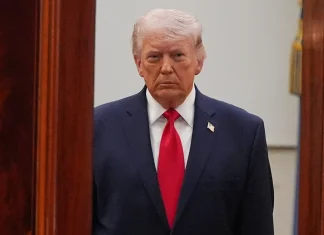
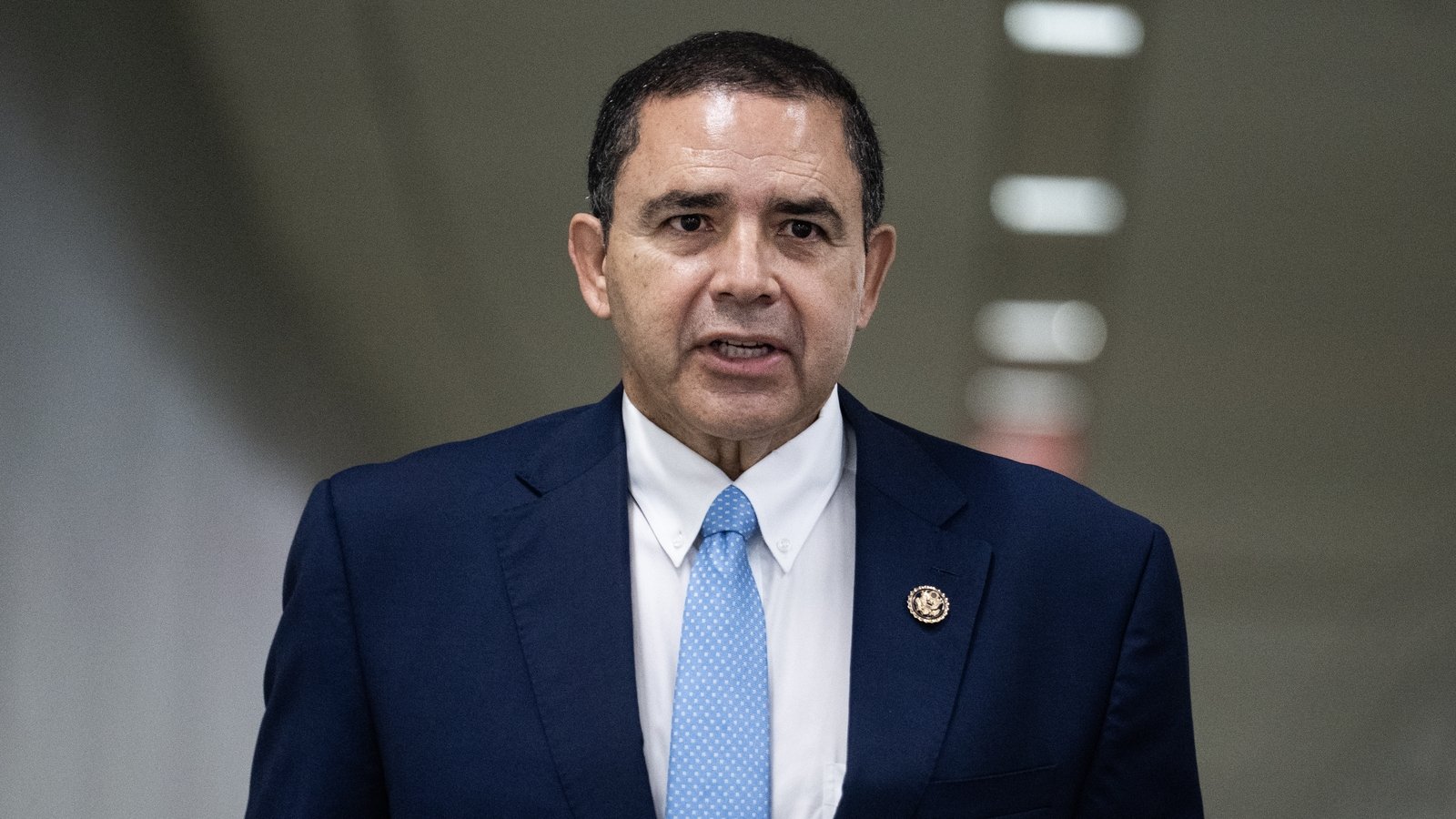
The conversation changed sharply after the former president announced, in the clipped cadence of social media dispatches, a full and unconditional pardon for Representative Henry Cuellar — the Democratic congressman from South Texas who had been charged in a federal bribery and conspiracy case tied to payments allegedly from an oil and gas company with links to the Azerbaijani government.
“I am hereby announcing my full and unconditional PARDON of beloved Texas Congressman Henry Cuellar … I don’t know you, but you can sleep well tonight – Your nightmare is finally over!” the message read on Truth Social, a platform that has become a modern podium for sweeping gestures and political theater.
The immediate fallout: relief, fury, and weary resignation
Cuellar himself, who had pleaded not guilty, responded on his own social feed with gratitude: “I want to thank President Trump for his tremendous leadership and for taking the time to look at the facts,” he wrote on X. His supporters in the district — ranchers, teachers, and small-business owners — expressed relief that the man who has long been a fixture in South Texas politics will no longer face what one neighbor called “a disaster for the family.”
Yet for critics and anti-corruption advocates, the pardon felt like a blow to institutional norms. “When high-profile pardons touch on foreign influence or alleged bribery, it raises real questions about accountability,” said a former federal prosecutor speaking on condition of anonymity. “The concern isn’t only about one case; it’s about precedent.”
Those concerns aren’t abstract. Across the world, prosecutors and watchdog groups have spent decades building cross-border corruption cases, and a single executive decision in Washington can erase years of work. To some observers in Central America and the Caucasus, the message is unmistakable: geopolitics can, sometimes, override legal process.
Voices from the border
“He’s been in our community for a long time,” said Marisela Garza, a school librarian in Laredo. “People respect he knows how our border life works. But trust in institutions is fragile. Some of us will be happy he doesn’t have to go through a trial. Others worry what it means for rule of law.”
On the other side of the spectrum, an immigrant rights organizer in the Rio Grande Valley was blunt: “Pardons like this look like picks in a game where ordinary people rarely get lucky. We’ve seen how enforcement acts against the vulnerable — why is there a different game for powerful players?”
Presidential pardon power: broad, swift, and controversial
The U.S. Constitution vests the president with the power to grant reprieves and pardons for federal offenses. It’s an authority that is intentionally sweeping, meant to be a check against unjust prosecutions and a merciful lever in extraordinary cases. But it is also inherently political.
“A pardon can be an instrument of mercy,” said a constitutional law scholar I spoke with. “It can also be a blunt political tool. The law gives the president latitude; how that latitude is used determines whether the act restores faith or erodes it.”
In recent months the act of clemency has been far from sedate. The president, now serving a second term, has used the pardon power in several headline-grabbing instances: a former Honduran president was released from a West Virginia detention facility after a surprise pardon, and earlier in the year an Illinois governor’s conviction was transformed into forgiveness. Each move reverberates across policy areas — immigration, international justice, local governance — and across borders.
Why this case feels different
This pardon isn’t just about a Member of Congress. It’s about the entanglement of local politics, energy money, and geopolitics. The accusations against Cuellar and his wife, which they denied, involved hundreds of thousands of dollars allegedly funneled from a company with partial state ownership by a foreign government. For residents in Cuellar’s district — where Spanish and English coexist on storefronts and where cross-border family ties are the fabric of daily life — the case hit close to home. It was not an abstract Washington scandal; it was a storyline playing out on Main Street.
For the international community, the optics are troubling. When U.S. actions reverse accountability in transnational corruption cases, partner nations and anti-corruption bodies take notice. “There’s a message sent whenever a high-profile pardon intervenes in cross-border cases,” said an international governance expert. “It complicates cooperation and undercuts efforts to build consistent norms.”
Broader themes: partisan blame, weaponised justice, and the erosion of trust
In announcing the pardon, the former president claimed without evidence that the prior administration had “weaponised” the justice system against political opponents. That refrain — that legal institutions become political tools — has become a familiar political salve. It resonates with a base that believes the system is stacked against them; it alarms those who worry about the politicisation of independent institutions.
Ask yourself: when trust in the justice system wanes, what fills the vacuum? Populist narratives. Conspiracy theories. Cynicism. Those are the silent companions of many Western democracies today.
Statistics and context to consider
- The presidential pardon power is among the most absolute in U.S. governance: it applies only to federal offenses and can be granted at any time, even before formal charges.
- Border states like Texas — with more than a thousand miles of shared boundary with Mexico — have central roles in national debates about immigration and trade, making local politicians from these regions particularly visible on the national stage.
- Transnational corruption cases often rely on complex financial tracing across jurisdictions; they can take years to build and involve cooperation among multiple countries’ investigators.
Final thoughts: what this moment asks of us
Pardons are, by design, exceptions. They are meant to be rare, to correct injustices or to temper mercy with prudence. When they are used frequently or in ways that align closely with partisan lines, they force us to reassess: what do we value more — political loyalty, institutional integrity, or the messy, slow play of due process?
Here in Laredo, a man sipping café de olla on a shaded bench summed it up quietly. “We all want fairness,” he said. “Whether he did wrong or not, this will be talked about at barbecues, at church, at schools. How we talk about it matters. We can’t let it make us forget the things that really bind us—family, work, the little daily kindnesses.”
So where do we go from here? Do we insist on clearer rules, more transparent processes, or a rethinking of the pardon power itself? Or do we accept that mercy — messy and subjective — has always been part of politics and always will be?
Tell me what you think. How should societies balance mercy, accountability, and the ever-present hum of politics? Your perspective matters, because stories like this one are not just Washington headlines — they are threads woven into the daily lives of communities from Laredo to the capitals of distant lands.