The Day the Tanker Stopped: Oil, Power and the Rising Temperature in the Caribbean
There are moments when a single act — a rope tossed, an anchor lowered, a hull boarded — suddenly reframes everything. Thursday felt like one of those moments on the ragged blue edge of Venezuela: the United States, President Donald Trump announced, had seized a “very large” oil tanker off the Venezuelan coast. The words landed hard and fast in a world already brimming with anxiety about energy, sovereignty, and the use of force.
What happened — and why it matters
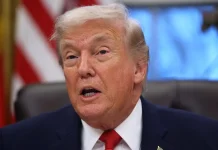
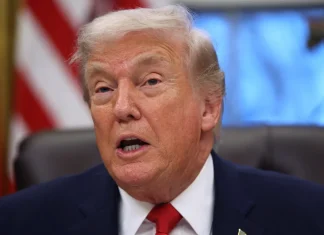
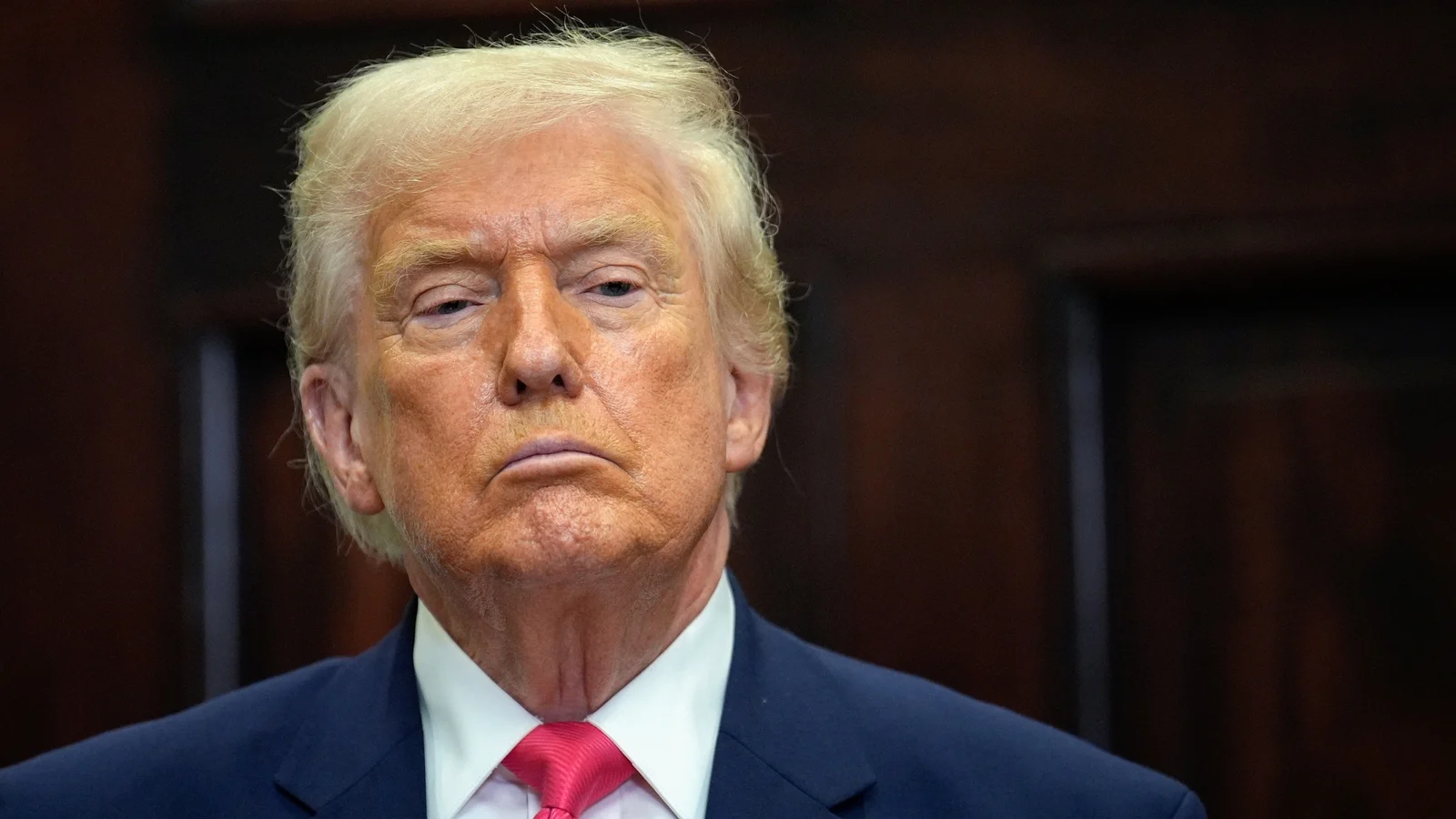
“We’ve just seized a tanker on the coast of Venezuela, large tanker, very large, largest one ever, actually,” President Trump said, the cadence of his announcement doing as much to steer attention as the action itself.
Officials briefed on the seizure — who insisted on anonymity — said the operation was led by the US Coast Guard. The vessel has been linked by maritime risk analysts to the name Skipper, though it previously sailed under the name Adisa, a name tied up in sanctions over alleged Iranian oil trading. Washington has slapped penalties on the ship, and this interdiction is the most dramatic physical enforcement move yet in a long-running campaign of economic pressure.
Why does one seized ship send shivers through markets and capitals? Because oil remains Venezuela’s financial lifeline. Last month the country exported more than 900,000 barrels per day, its third-highest monthly average this year, according to local and international trade tallies. Even as Venezuela’s production has been battered by mismanagement and sanctions, those barrels — heavy, difficult, strategically vital — still matter.
Voices from the shore
On the fisherman’s quay of Puerto Cabello, a port town whose name means “beautiful hair” but now feels anything but, people watched the sky and the horizon with a collective, low hum of unease.
“We fish by dawn and sell to make bread,” said María Ruiz, a woman who has watched tankers pass her town since she was a child. “But when the world fights over our sea, all we fear is that our nets will catch only silence.” Her hands, split from salt and wind, made the kind of gesture that has no words: small, worried, endless.
Inside a dim office at PDVSA — the state oil company that has become synonymous with both Venezuela’s riches and its decline — a mid-level engineer who asked not to be named described a growing sense of siege. “Every seizure, every sanction, chips away at our routes,” he said. “We’ve had to import more naphtha to dilute our heavy crude. That costs money. That costs trust.”
Markets and metrics
Markets reacted, predictably and nervously. After trading briefly in negative territory, Brent crude futures rose by $0.27 to settle at $62.21 a barrel; US West Texas Intermediate moved up $0.21 to close at $58.46. These were not dramatic leaps by historical standards, but each ripple is a reminder that supply perceptions — even the notion that supply might be intercepted on the high seas — can tilt prices and investor mood.
Analysts cautioned against exaggerating the immediate supply shock. “Seizing this tanker further inflames prompt supply concerns, but it doesn’t immediately change the situation fundamentally because these barrels were already going to be floating around for a while,” said Rory Johnston of Commodity Context. His observation is practical; oil is a global commodity that often spends weeks piled up in storage — on land or at sea — before reaching a refinery.
Pressure on the ground — and in the air
The seizure forms part of a wider American escalation. President Trump ordered a military build-up in the region that officials say includes an aircraft carrier, fighter jets and tens of thousands of troops. The White House has, in recent months, ratcheted its rhetoric about Venezuela’s embattled leader, Nicolás Maduro, who insists the moves are a prelude to a US-backed regime change.
“They want our oil. They always want what we have,” Maduro declared in a televised address, accusing the US of designing a campaign to wrest control from Caracas. Whether one reads his words as defiant bluff or genuine alarm, they highlight a raw truth: Venezuela’s oil is not just fuel; it is leverage, identity, and the country’s main revenue stream.
Since early September, the US has also carried out more than 20 strikes on suspected drug-smuggling vessels in Caribbean and Pacific waters. Those strikes, which US authorities say targeted illegal trafficking, have been controversial. Reports say over 80 people were killed in these attacks, and some experts have questioned the legality and necessity of sinking boats and using lethal force without publicly shared evidence.
A Reuters/Ipsos poll captured a fissure back home: a broad segment of Americans opposed the campaign of deadly strikes, including roughly one in five Republicans. That statistic hints at an unusual domestic unease about the use of military power, even among some of the president’s base.
Is this about law enforcement or geopolitics?
Officials say the seizure targeted a vessel with links to sanctions-busting networks and alleged Iranian oil trade. Vanguard, a British maritime risk company, flagged the ship Skipper as potentially involved. Beneath the operational language of interceptions and sanctions sits a broader debate: when does law enforcement become geopolitical posturing? When does economic pressure cross a line into kinetic confrontation?
“We have to be careful not to confuse enforcement with escalation,” said Ana Delgado, a Latin America scholar at a Washington think tank. “Seizures can be legitimate under international law, but they also send messages — to allies and adversaries alike — about intent and reach.”
What this portends for the region — and the world
This episode is not just about one tanker. It is a moment in a wider story about the waning of post-Cold War assumptions in the Western Hemisphere. The United States has publicly declared a renewed focus on reasserting influence in the region; for many Latin Americans, that language recalls older days of intervention and inequality.
At the same time, global oil markets are being squeezed by a constellation of forces: Russian and Iranian sanctioned barrels shifting customer relationships, American shale reshaping supply, and a world economy sensitive to disruptions. Venezuela, with its heavy, exportable crude that requires dilution, has been forced to deeply discount its oil in major markets such as China, losers in a dance where the music is sanctions and competition.
So ask yourself: when a tanker is seized far from home, what are the true costs? Is it a tactical victory against illicit trade? A provocation that risks a much larger clash? A strategy to squeeze a regime’s finances? Or all of the above?
Looking ahead
For the families on Venezuela’s coasts, the engineers at PDVSA, and the traders in New York and London, the answer will depend on what follows. Will diplomacy reassert itself? Will seizures become routine? Will foreign policy and energy strategy finally align in a way that reduces harm to ordinary people?
There are no easy answers. But as the sun sets and tankers dot the horizon like dark punctuation marks, one thing is clear: power these days often flows through pipes, pipelines, and tankers as much as it does through parliaments and podiums. And when those arteries are threatened, the effects are felt where they are least expected — in fishermen’s nets, in a family’s grocery budget, in the quiet of a refinery yard at dawn.
We will be watching — and listening. Will you?