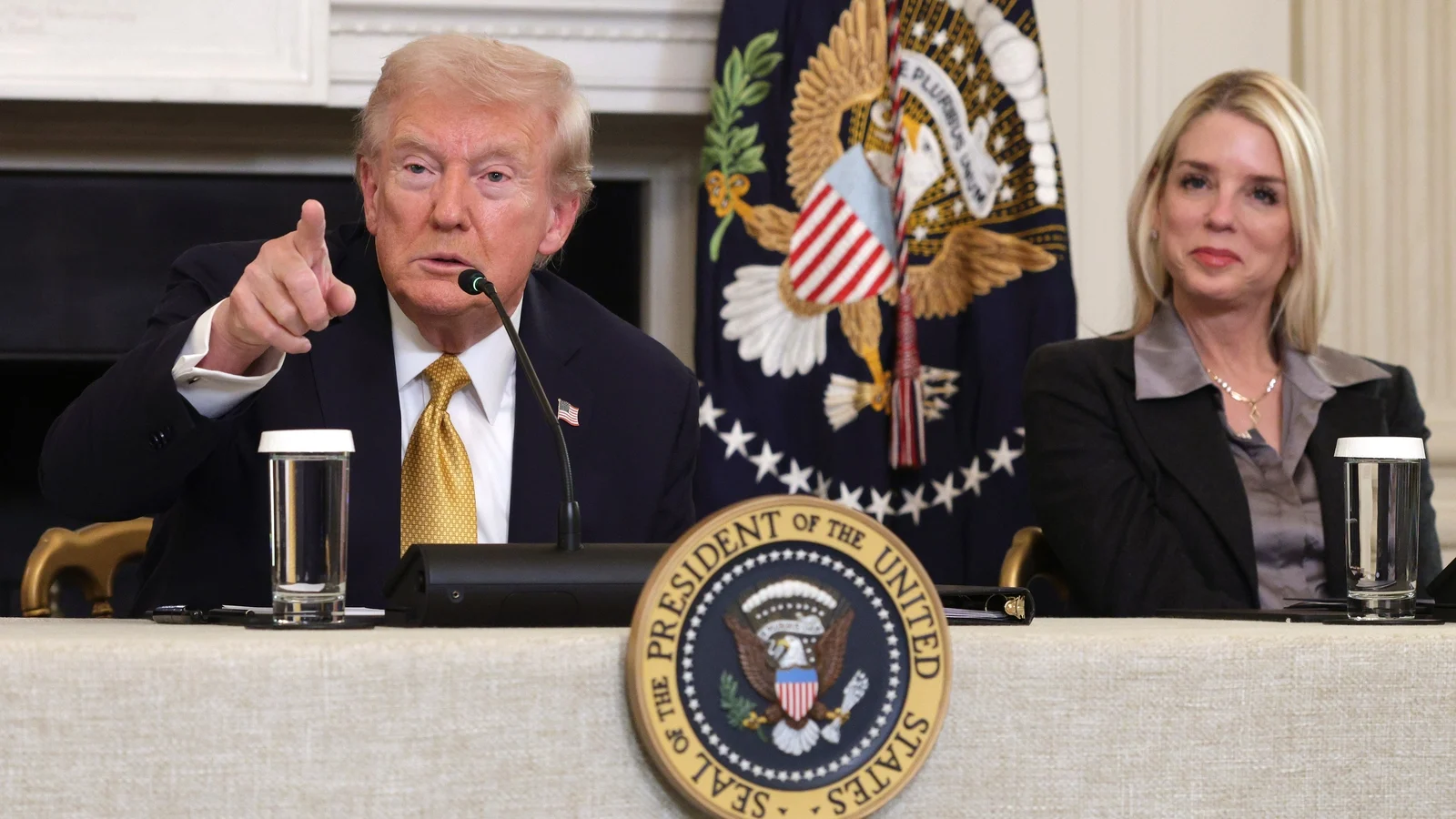
When the Justice Department Changed Hands Over Truth Social: A Washington Moment
On a damp, gray morning in Washington, an announcement blinked across screens and phones: President Donald Trump had dismissed Attorney General Pam Bondi and tapped Todd Blanche—his deputy and longtime legal ally—as acting head of the Justice Department.
It was the sort of digital trumpet blast that has become routine in this era of politics. “Pam Bondi will be transitioning to a much needed and important new job in the private sector,” the president posted on Truth Social. “Our Deputy Attorney General, and a very talented and respected Legal Mind, Todd Blanche, will step in to serve as Acting Attorney General.”
The terse public message belied the messy, private unraveling that had been building for months: frustration about how records from the Jeffrey Epstein investigations were handled, tension over the pace of prosecutions against political foes, and a growing whisper that the Justice Department’s long-standing traditions of independence had been frayed beyond repair.
Behind Closed Doors: The Epstein Files and a Department Under Strain
If you’ve followed the Epstein story at all, you know the files are not merely paperwork. They are a knot of power, pain, and secrecy: court transcripts, witness testimony, names of alleged associates and alleged victims. The Department of Justice eventually released roughly three million pages related to investigations of Jeffrey Epstein—an ocean of documents that inflamed passions and provoked countless questions about who knew what, and when.
“There comes a point when transparency becomes more than a talking point,” said a former federal prosecutor who asked not to be named. “For many survivors, each sealed page is a denial. For many in Washington, each redaction is another erosion of trust.”
Bondi, a former Florida attorney general who rose to the top of the department amid fierce partisan divides, defended the handling of those files. She argued DOJ lawyers worked on a compressed timeline and that her team had been more open than predecessors. She has countered accusations that the department covered up or mismanaged the release of sensitive material.
But public hearings in January offered a different tableau. Survivors of Epstein’s trafficking ring came to the podium; some wore determined lines on their faces, others trembled, gripping notes. When Bondi took questions, critics say she responded with political jabs rather than contrition—refusing, according to several attendees, to meet the eyes of victims in the hearing room.
“We asked for truth. We wanted our stories to be treated like evidence, not theater,” said Ana Ruiz, who described herself as a survivor present that day. “When someone who controls what gets released won’t look at you, it feels like being erased twice.”
A Department Reshaped: Staff Changes and the Perception of Partisanship
Beyond Epstein, Bondi’s tenure was defined by what many saw as a reshuffling of institutional priorities. “Dozens” of career prosecutors who had been working on investigations deemed unfavored by the White House were reassigned or removed, say multiple sources—moves critics describe as politicizing a once-technocratic agency whose legitimacy rests on impartiality.
“The long-term damage isn’t headlines,” said Dr. Miriam Klein, a legal scholar who studies prosecutorial independence. “It’s the slow burn of perception—people begin to see the Department of Justice as an instrument of whoever sits in the Oval Office.”
Supporters counter that Bondi restored focus on violent crime and worked to rebuild trust among rank-and-file Americans who felt overlooked by elite prosecutors. “She moved the DOJ back toward issues that matter in Main Street communities,” said a former state-level law enforcement official allied with Bondi. “That realignment angered some in the federal bureaucracy who were comfortable with how things were.”
Politics, Power, and Personnel: What a New Acting Attorney General Might Mean
Todd Blanche, the deputy elevated to acting attorney general, stepped into the role at a volatile moment. His appointment opens questions about whether the department will pursue a different strategy—particularly with the president reportedly unhappy that Bondi had not moved quickly to prosecute critics and adversaries he wanted to see charged.
“Changing the captain in the middle of the voyage doesn’t just affect direction; it affects morale,” said an analyst who tracks federal appointments. “People in the department will be watching to see whether precedent and practice hold, or whether politics dictates prosecutions.”
The political reverberations could be immediate. Bondi was set to appear before a Republican-led House Oversight Committee on 14 April; the committee had already voted to subpoena her. Whether that testimony will now occur, and under what circumstances, will be watched closely by lawmakers, lawyers, and a public increasingly anxious about the health of democratic institutions.
Beyond the Department: A Story of Renovation and Pageantry
While the drama at the Justice Department played out in the capital, another of the president’s ambitions cleared a procedural hurdle—this one less about law and more about legacy. Washington planning authorities voted to approve an East Wing Modernisation Project: a privately financed, $400 million ballroom intended to expand the ceremonial life of the White House.
At 8,400 square meters and accompanied in the plan by a proposed 250-foot arch across the National Mall, the ballroom has been billed by its backers as a “lasting symbol” of this presidency. Will Scharf, who chairs the National Capital Planning Commission and previously represented the president in legal matters, spoke of the ballroom in lofty terms.
“I believe that, in time, this ballroom will be considered every bit as much of a national treasure as the other key components of the White House,” he said.
But not everyone sees it that way. Preservationists and civic activists have raised concerns about private funding, the environmental and historical review process, and the optics of building grandiosity amid political turbulence.
“We’re not against beautiful things,” said Laila Morgan, a city planner and community organizer. “We’re against the idea that public space can be reshaped as the pet project of one leader without a full, transparent debate.”
What This Moment Reveals—And Asks of Us
So what are we witnessing here? A routine personnel change. A routine planning approval. Or a more profound cultural shift—an acceleration of a trend where public institutions bend to political will, where legal norms are debated as strategy, and where pageantry and power intertwine?
Around the globe, similar conversations are happening: about the strength of courts, the independence of prosecutors, the meaning of transparency. In capitals from Lisbon to Lagos, citizens are asking similar questions: can the law be both a tool of justice and a weapon of politics? What keeps institutions honest when leaders demand loyalty over law?
As the drama unfolds—new leadership at the Justice Department, the continuing fallout of the Epstein disclosures, and plans for a gilded ballroom in the nation’s most symbolic residence—one thought lingers. History teaches that institutions can be repaired, and they can be hollowed out. Which path a country takes often depends less on a single appointment and more on the quiet, daily choices of people inside and outside power.
In the end, perhaps the question is not just about Bondi or Blanche, about a ballroom or a subpoena. It is about us: the witnesses, the voters, the survivors, the ordinary public servants who still turn up for work. What will we demand of those who hold power? What will we accept?
“If we want a functioning democracy,” the former federal prosecutor warned, “we have to treat institutions like common goods—not trophies.”