Christmas Checks, World Cup Dreams and the Price at the Pump: Inside a White House Speech That Tried to Reframe an Economy
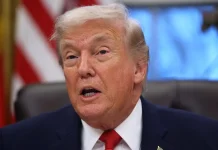
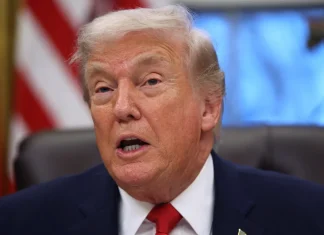
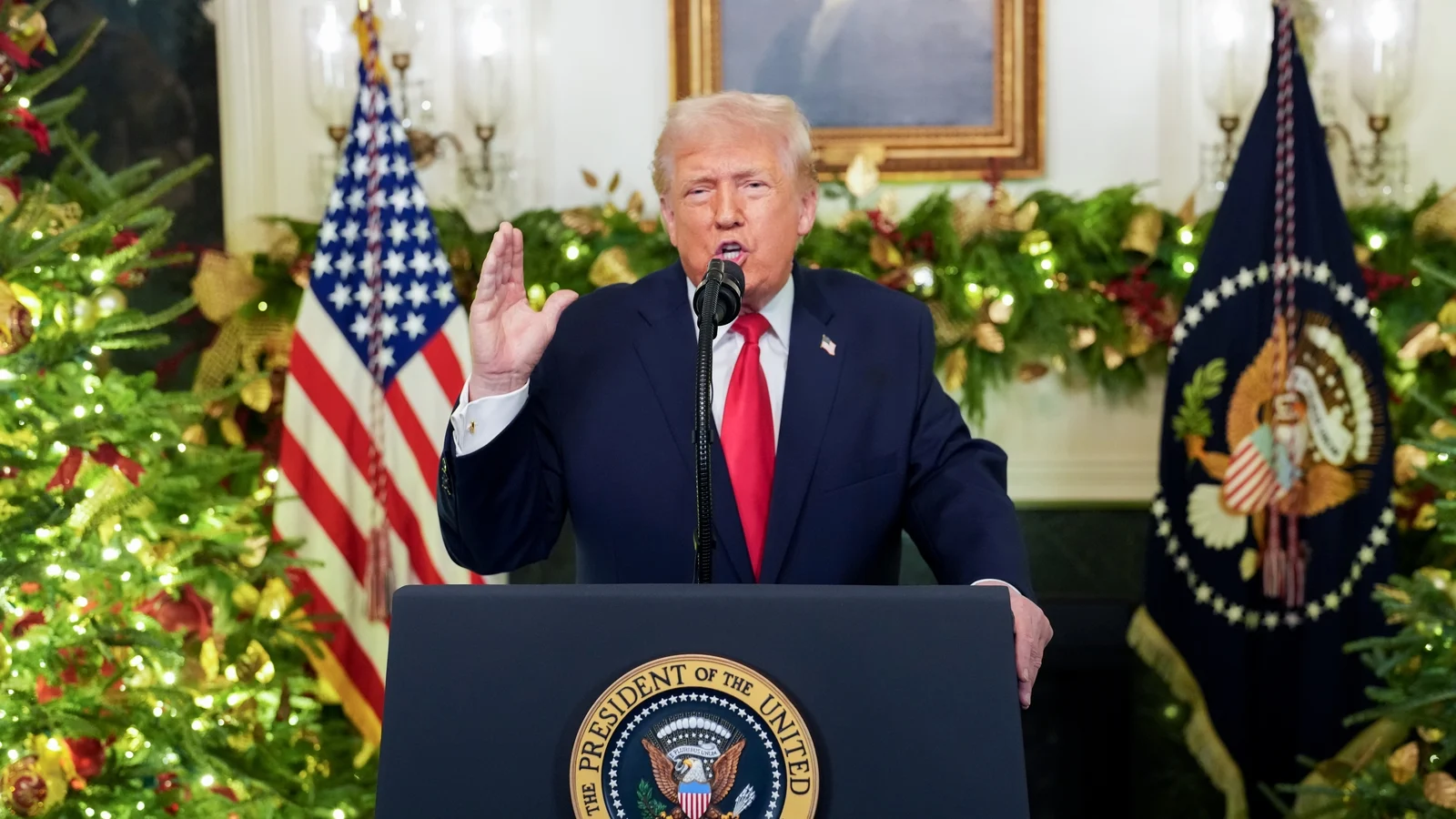
It was one of those December evenings that felt theatrically American: fireplace glow on television sets, last-minute shoppers lining drugstore aisles, and the White House bathed in soft light as the President stepped up to the podium. Donald Trump spoke like a campaign rally wrapped in a presidential address—flinty, kinetic, certain. He painted a future of booming growth and promised immediate relief to a constituency that has been telling pollsters they are hurting.
“Eleven months ago I inherited a mess, and I’m fixing it,” he said, a line meant to stitch the past to a brighter future. Then came the surprise: 1.45 million active-duty service members would each receive a $1,776 “warrior dividend”—a Christmas‑time bonus the administration says will be funded by tariff revenue. The number was deliberate, a nod to 1776 and America’s 250th birthday next year, an image meant to fuse patriotism and economic policy into one tidy visual.
The politics of affordability
But no rhetorical flourish can fully erase the hum of grocery store receipts or the sting at the gas pump. Two recent polls—one from PBS News/NPR/Marist and another from YouGov—captured that worry: roughly 57% of Americans disapproved of Mr. Trump’s handling of the economy in one survey, while 52% told another pollster they felt the economy was getting worse. Those numbers are not mere footnotes; they are the kind of raw data that shapes campaign strategy and keeps political operatives up at night.
“People are watching every cent,” said Maria Lopez, who runs a deli in Scranton, Pennsylvania. “I saw a carton of eggs at three different prices this week. My regulars come in and ask if we’re lowering prices. I tell them ‘not yet.’ They get mad, then they laugh—because what else do you do?”
For the President, the economic narrative has been a tug of war between promise and perception. He insisted that gas and grocery costs “are falling rapidly,” and forecast “an economic boom the likes of which the world has never seen”—not in 2024, not even next year, but in 2026, when the U.S. will co-host the FIFA World Cup with Canada and Mexico. It’s an audacious bet: tie national pride, global sporting spectacle and the claim of economic revival into one political arc.
Tariffs, prices and realities
Economists will tell you the mechanics of price increases are rarely single-cause. But tariffs—taxes on imports—are an obvious lever. When tariffs rise, importers often pass costs downstream to retailers and eventually consumers. In an economy as integrated as America’s, higher import costs can ripple across supermarket shelves and manufacturer invoices.
“Tariffs are a blunt instrument,” said Dr. Aisha Rahman, an economist at a Midwestern university. “They can raise revenue, sure, but they also raise input costs for businesses. That can translate into higher prices for households, especially for goods that are heavily imported.”
That line of critique goes hand in hand with the central political tension: the Administration claims tariffs will pay for bonuses and bolster domestic production, while critics warn of inflationary side effects. The President’s pledge to use tariff revenue to fund $1,776 checks to service members is a vivid example of that trade-off—the kind of populist move that appeals directly to military families but also recalls broader trade-offs for ordinary shoppers.
Foreign policy, domestic politics
The address was not purely economic. Mr. Trump spent a fair amount of time reprising foreign policy victories—boasting, as he put it, about progress toward a Gaza ceasefire, strikes that he said degraded Iran’s nuclear program, and a “war on drug traffickers” that included a recent U.S. strike in the eastern Pacific which the military said killed four alleged narco‑traffickers.
Back home, though, the stakes are less abstract. Republicans suffered stinging losses in several off-year races this past November, surprising strategists and stirring unease about the midterm landscape in 2026, when Democrats will try to flip seats and voters often express anger over everyday pocketbook issues.
“Our message has to be about affordability,” said one Republican strategist who requested anonymity to speak candidly. “Winning the argument over economic reality isn’t just about slogans; it’s about making people feel safe in their budgets and confident about the future.”
Voices on the ground
Outside the Beltway, reactions were as varied as the country itself. A nurse in Cleveland named Jamal Turner said the military checks were “a beautiful gesture” but that Americans needed relief that reached everyone. “My sister’s rent went up again,” he said. “I don’t have a problem with boosting the troops. But if you’re going to talk affordability, do it for all of us.”
At a gas station in Tucson, local attendant Rosa Estrada gestured at the pumps between customers. “People complain about the price, then they still need to go to work,” she said. “You tell them things are getting better and they ask, ‘When? Show me the proof.'”
What this moment reveals
There is a larger narrative tucked inside these campaign-style promises and ceremonial bonuses. It speaks to questions about what citizens expect from government in times of strain. Do they want one-off payments and patriotic symbolism? Or systemic fixes that reduce costs and raise wages? The White House is, at least rhetorically, offering both: immediate cash for troops and a promise of a later boom tied to global events and trade policy.
Consider these facts to anchor the conversation:
- 1.45 million U.S. service members are slated to receive $1,776 checks, the administration says.
- Polls cited show roughly 57% disapprove of the President’s economic stewardship and about 52% believe the economy is getting worse.
- Tariffs are cited by experts and opponents as a contributing factor to higher consumer prices, though evidence is complex and mixed.
Policy, politics and public perception are braided together. A big sporting event—like the 2026 World Cup—can be framed as an engine for commerce. But the road from hosting matches to measurable household relief runs through trade policy, investment, wages and, crucially, trust. People need to feel the difference in their day-to-day lives.
Questions worth asking
So I ask you, reader: When a leader promises prosperity timed to a future spectacle, do you see a plan or a promise? Are immediate, symbolic payments to select groups enough to offset the slow burn of higher grocery bills? And how much weight should tariffs carry in a broader economic strategy?
All of these decisions—who gets a bonus, which industries are taxed, how to balance foreign policy and domestic needs—shape the texture of everyday life. For too many Americans right now, that texture feels frayed. Political theater will continue; policy will keep marching. The question remains whether either will translate into calm at the kitchen table this winter.
At the deli, Maria swept the counter and shook her head. “They can give checks, and that’s good,” she said. “But I want to know if next month my customers will still be able to afford a sandwich. That’s what matters to me.” And, for millions across the country, that’s exactly what matters.