When Champagne Meets Geopolitics: Bottles, Boards, and the Price of Provocation
On a cold morning in the Marne valley, the sunlight caught the shoulders of stacked Champagne bottles like rows of tiny sunlit domes. In the cellar of a family-run house outside Épernay, the vintner poured a sample and sighed: “We age slowly, not to be used as bargaining chips.”
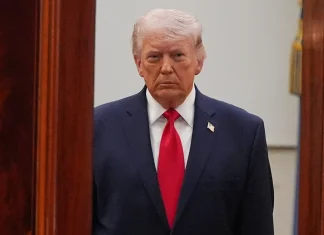
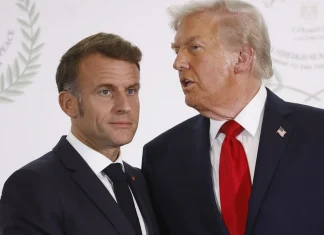
This humble scene — a quiet ritual older than the country that now surrounds it — suddenly found itself in the crosshairs of high-stakes diplomacy. In a single, explosive turn of phrase, a US leader suggested slapping a 200% tariff on French wines and Champagne to spur a reluctant president into joining an unconventional “Board of Peace.” The notion is as theatrical as it sounds: bottles as leverage, bubbles as bargaining power.
From Cellar to Cabinet: The Unlikely Weaponization of Wine
Tariffs are supposed to live in the world of economics: technical, complex, and dull. But a threat to tax French wine at two times its value turned trade policy into theater, reminding the world how entwined culture and commerce really are.
“It’s absurd,” said a winemaker who asked not to be named. “My harvest feeds 15 families here. It’s not an instrument for diplomacy. If they go ahead, restaurants will stop ordering our bottles, and small producers will be crushed.”
The proposed levy — extraordinary by any measure — would do more than squeeze importers. It would strike at a product that is practically shorthand for French identity abroad: Champagne. It would hit restaurateurs, sommeliers, and consumers who associate certain moments in life with that effervescent pop.
Trade experts point out the simple arithmetic: a tariff of 200% on a bottle sold at import price would make French wine prohibitively expensive in many markets, likely collapsing sales almost overnight. For small maisons and family estates already operating on thin margins, the shock could be fatal.
Enter the “Board of Peace”: An Odd Invitation
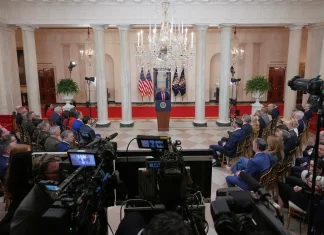
The tariff threat arrives alongside another unusual diplomatic gambit: an invitation to world leaders to join a newly proposed “Board of Peace,” billed as a group that would tackle global conflicts. The draft charter seen by reporters reportedly asks members to contribute substantial funds — a billion dollars in cash if a country wishes to remain a member beyond three years.
It is, in many ways, a novel idea — private actors and coalitions have influenced diplomacy before — but critics warn it could undermine established institutions, notably the United Nations. “You can’t replace decades of multilateral frameworks with a club where the price of entry is essentially wealth,” said an international relations analyst in Brussels.
The invitation list, per reports, was broad — and surprisingly inclusive. Even Russia was named as a potential member. “He’s been invited,” one US official said of Vladimir Putin — a revelation that raised eyebrows from Tokyo to Tallinn.
Greenland: A Strategic Island, Not for Sale
If champagne wines seemed an odd bargaining chip, the fate of Greenland is the cloak-and-dagger chapter of this unfolding tale. With an area larger than India and a population of roughly 56,000, Greenland is sparsely populated but geopolitically dense: ice, minerals, shipping routes, and a Cold War legacy including the US Thule Air Base.
“This isn’t just about land. It’s about strategic control of the Arctic,” noted a Copenhagen-based security scholar. “Whoever asks to buy Greenland misunderstands modern sovereignty and underestimates the cultural ties of the Greenlandic people.”
On the ground, reactions are visceral. “He speaks of buying our home like it’s a summer cottage,” said a Greenlandic fisherman in Nuuk. “We are not a market.”
The US president’s insistence — that Denmark “cannot protect” Greenland and that negotiations might be raised at forums like Davos — has spurred unease across Europe. Over the weekend, talk of tariffs expanded to include not only France but several EU members, along with Norway and the UK, inflaming transatlantic relations.
Europe Pushes Back — Calmly, Strategically
European leaders have answered with measured firmness. An Irish official preparing for talks with senior commissioners warned of cascading consequences if such tariff threats materialize. “We are at a moment where short-term brinksmanship can turn into long-term economic pain,” the official said. “Europe needs calm heads and dialogue.”
Indeed, the EU and the US together account for an enormous slice of global trade — more than $1 trillion in goods and services flows between them annually — and disruptions could echo around the world. Even a limited set of tariffs can reverberate through supply chains, freight markets, and the hospitality industry.
European Commission officials have repeatedly emphasized that they prefer cooperation over conflict. A decade ago, diplomats negotiated mechanisms precisely to prevent unilateral escalation. Yet when politics moves faster than institutions, the safety nets can fray.
What Would This Mean, Practically?
- French wine houses would face immediate loss of market access in the US, one of the world’s largest wine-consuming countries.
- Restaurants and retailers that rely on French imports would see price spikes, inventory disruptions, and likely menu changes.
- Diplomatic trust between the US and European partners could suffer, complicating cooperation on everything from climate to security.
“This is less about bottles and more about using trade as a blunt instrument for political ends,” said an economist in New York. “Once you set that precedent, the entire edifice of predictable rules that underpins global commerce is at risk.”
Beyond Tariffs: The Bigger Questions
So what do we make of this moment? It is tempting to chuckle at the image of Champagne as collateral damage in a geopolitical negotiation. But the consequences are real: livelihoods, long-standing partnerships, and the painstaking work of diplomacy could all be collateral in a transactional approach to foreign policy.
Ask yourself: should cultural goods ever be used as tools of statecraft? Do sovereign peoples and territories become negotiable when power shifts? And what happens to multilateral institutions when new, club-like forums offer a cash-for-membership route to influence?
These are not hypothetical queries. They’re immediate, practical dilemmas that affect farmers in the Marne, fishers in Greenland, and policymakers in Brussels alike.
Looking Ahead
For now, cooler heads are urging dialogue. European commissioners and finance ministers have scheduled talks; an Irish delegation will press for de-escalation; and in cellars across France, vintners wait with bated breath, corks intact.
“We’ll keep making wine,” the vintner in Épernay said, smiling ruefully as he set a bottle down. “It’s what we do. But we hope the world remembers that not everything valuable can be reduced to a price tag.”
Across oceans and ice, across dining rooms and diplomatic corridors, the episode is a reminder that global politics is not only about territory and treaties — it’s also about culture, identity, and the fragile economy of trust. In the end, perhaps the most human question is this: do we want our relationships managed like a balance sheet, or nurtured like a vineyard?