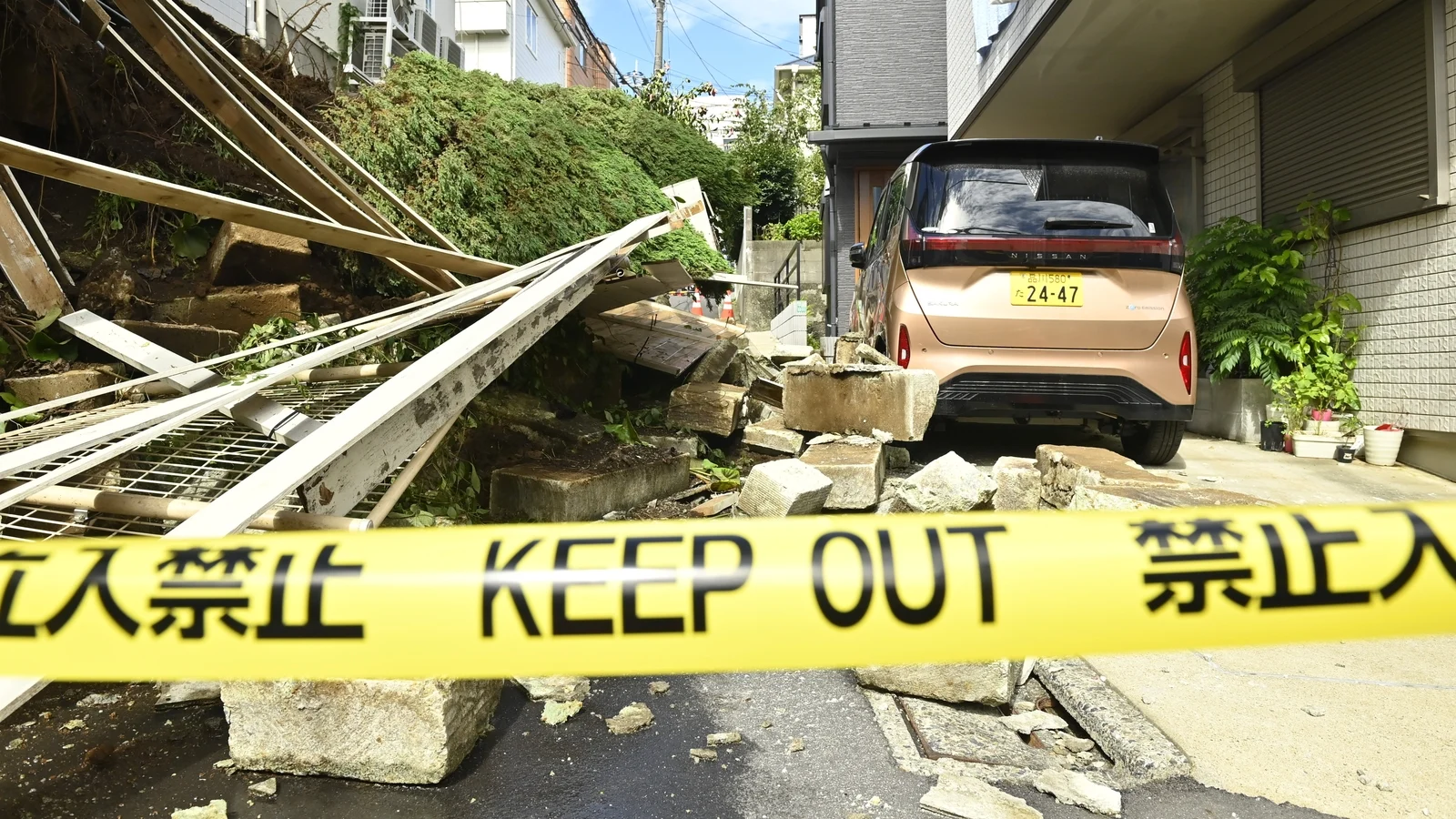
Typhoon Dujuan tore through the Tokyo region with deadly force, killing at least four people, injuring 22 others and knocking out power to thousands of homes, Japanese authorities said.
By morning, the storm had pushed off Japan’s coastline and into the Pacific, giving officials room to lift or downgrade most warnings for heavy rain and landslides.
Even before it moved away, Dujuan had already disrupted daily life in the capital, prompting the early closure in Tokyo of one of the world’s biggest video game trade fairs.
Japan is accustomed to powerful typhoons in late summer and early autumn, and other storms this season have also caused disruption, including to some events at the Asian Games being held in the country.
The Fire and Disaster Management Agency reported that three deaths occurred in Chiba prefecture and a fourth in the Kanagawa region, both areas near Tokyo.
The agency said search operations were continuing for six people reported missing after landslides set off by torrential rain.
More than 45,000 households in Chiba near Tokyo remained without electricity, and over 460 houses were damaged, according to the agency.
Typhoon Dujuan brought record rainfall for some parts of the Tokyo area
While Dujuan weakened as it tracked northeast, it still delivered record-breaking rainfall across parts of the Tokyo area.
On Oshima, an island about 120km south of central Tokyo, 832mm of rain fell over 48 hours—more than double the island’s average rainfall for the entire month of September—public broadcaster NHK reported.
Tokyo’s Edogawa Ward also set a mark, with rainfall reaching a record 282.5mm over 24 hours.
Scientists say human-driven climate change is intensifying the risk posed by heavy rains because a warmer atmosphere holds more water.