The Currency of a Moment: When a Nation Debates Whose Hand Signs Its Money
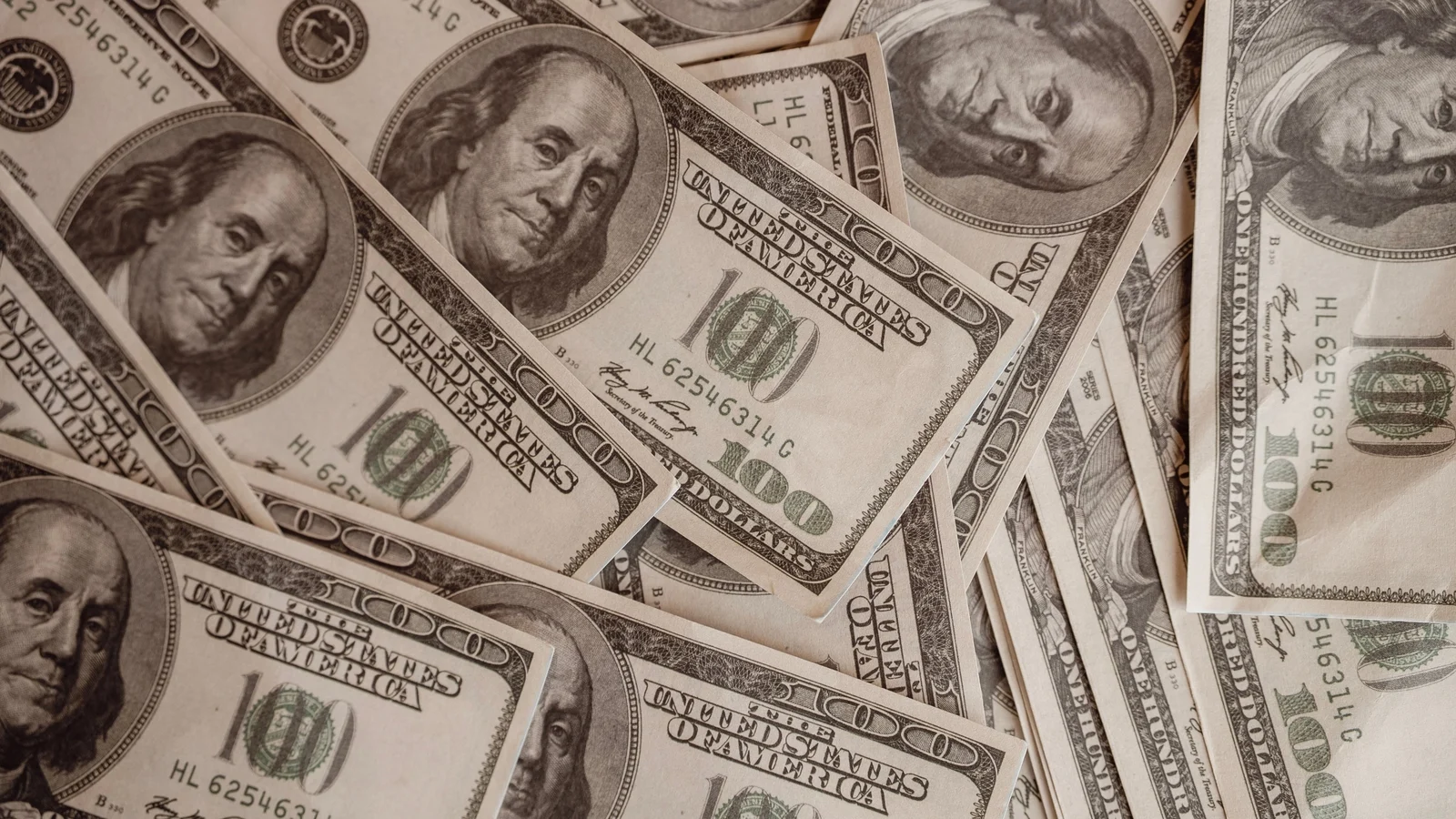
There are certain things you expect from the thin, familiar rectangle that jingles in your pocket—the face staring back at you is someone long dead, the fonts are familiar, the paper is subtly fibrous, and the signatures belong to officials whose names most of us have never learned to say aloud.
So when the Treasury Department quietly announced that new U.S. paper currency will carry the signature of President Donald J. Trump alongside that of Treasury Secretary Scott Bessent, the reaction felt less like a policy change and more like a cultural provocation.
Why a signature matters
On the surface, a signature is a small thing: a flourish of ink, a bureaucratic stamp. In practice, signatures on U.S. banknotes signal authority, continuity and a centuries-old choreography between the Treasury, the Bureau of Engraving and Printing, and the Federal Reserve.
“A signature is the handshake behind the note,” said Dr. Elaine Morris, a currency historian at a Washington museum. “It tells people who backed the money and when. Replacing or adding a signature is symbolic in ways people don’t often know—especially when you change a convention we’ve kept for generations.”
Historically, the names that grace bills belong to the Secretary of the Treasury and the Treasurer of the United States. Presidents’ faces or signatures on circulating currency have been essentially taboo, anchored by long-standing practice—and a widespread professional ethic that living political leaders should not be monetized.
“A commemorative for a semiquincentennial”—the Treasury’s case
“Under President Trump’s leadership, we are on a path toward unprecedented economic growth, lasting dollar dominance, and fiscal strength and stability,” Treasury Secretary Scott Bessent wrote in a statement accompanying the announcement. “There is no more powerful way to recognize the historic achievements of our great country and President Donald J. Trump than US dollar bills bearing his name, and it is only appropriate that this historic currency be issued at the semiquincentennial.”
Here is the context most people might overlook: 2026 marks the semiquincentennial—the 250th anniversary—of the United States. Commemorative coins and stamps are not unusual for such milestones. The new twist is the decision to fold the commemoration into circulating paper money in a way that explicitly ties a living president’s name to the everyday face of the dollar.
“The administration frames this as celebration,” said Marcus Liu, a political communications analyst in New York. “What’s surprising is how quickly symbolism becomes politics. Money is neutral until it isn’t. And once it isn’t, it’s difficult to pull the thread back.”
What’s on the new coin and bill—and why it stings
Last week, an advisory commission hand-picked by the president signed off on a commemorative gold coin bearing Mr. Trump’s likeness. The design—a stern, forward-leaning portrait of the president with clenched fists on a desk—has drawn as much attention for tone as for aesthetics. The reverse shows an eagle perched above a bell, wings spread, recalling national symbolism but with a distinctly theatrical composition.
The coin, according to the Treasury, carries no monetary denomination in the sense of legal tender value for commerce; it is a commemorative piece, likely to be sold as a collectible. The cost has not been announced, though similar commemoratives from the U.S. Mint in recent years have fetched well over $1,000 when they hit the market.
At the same time, new paper bills will print the president’s signature alongside Treasury Secretary Bessent’s name. Technically, changing signatures is less elaborate than changing portraits—but the meaning is different. A president’s signature on the dollar is a visible, daily reminder of leadership, and for many it crosses a boundary.
Voices from the street
On a humid afternoon outside a metro station in Philadelphia, where Independence Hall still hums with historical tourism, people offered quick, blunt appraisals.
“It’s weird,” said Carmen Rivera, 42, a nurse who voted for neither major party. “It makes money feel like a souvenir. I don’t want my mortgage payments to have a campaign slogan stamped on them.”
Across town, a small-business owner named Jamal Hassan shrugged. “If people want to buy a coin with his face on it, fine. But putting it on the bills—people should get a say. It feels like a flex.”
Supporters, unsurprisingly, see something else entirely. In a suburban diner outside Orlando, retired postal worker Frank Dalton smiled as he looked over a newspaper photo of the proposed coin. “He led, he stood up,” Dalton said. “Folks like me want that recognized. We put presidents on statues all the time. Why not a coin?”
Pushback, legality, and the politics of money
Critics were quick to frame the move as a breach of norms. “This is a naked attempt to monetize the presidency,” said a senior Democratic lawmaker in a phone interview. “There are traditions for a reason: to protect the public institutions from personal aggrandizement.”
Legal scholars point out that while there is a long-established policy against placing living people on U.S. currency, the law is layered with regulation and precedent rather than a single, absolute prohibition. The U.S. Mint regularly issues commemoratives; the question is whether circulating money should be treated the same as collectible items.
“At stake here is not a statutory technicality but a public norm,” said Prof. Naomi Adler, an ethics scholar who studies state symbolism. “Currency is a form of civic communication. When that communication starts to read like a personal brand, it can alter how citizens see the state.”
Practicalities—and the ripple effects
-
Bureau of Engraving and Printing basics: The BEP prints billions of notes per year to meet public demand. While designs change slowly, printing signatures is a logistical update that can be accomplished on a much shorter timescale than portrait overhauls.
-
Circulation and impact: There are over $2 trillion in U.S. banknotes currently in circulation worldwide. Any design change—symbolic or not—will ripple across ATMs, banks and vending machines, though signatures don’t generally affect machine readability.
-
Collectible market: Commemorative coins and special issues can drive secondary markets. The gold coin’s unknown price and unspecified mintage have already spawned speculation among collectors and investors.
Questions worth asking
When the face of a nation’s money becomes contested, it invites questions that go beyond aesthetics. What does it mean when a living leader’s image or name becomes part of daily transactions? Who decides what is civic commemoration and what is self-promotion?
And for readers far from Washington: how would you feel if the place where you tip a barista or pay a bus fare bore the signature of a current leader? Does it feel like honor, or does it feel like power being stamped on ordinary life?
There is no single answer. Symbols live in time and in memory, and right now the nation is split over what these particular symbols should say about itself. For some, these changes will be seen as a patriotic nod to a milestone year. For others, they will be proof that the boundaries separating public office from private commemoration need reinforcement—not erosion.
Whatever happens next—legal challenges, Congressional hearings, or a quiet administrative pivot—this episode has already done the thing symbols do best: it has asked a country to look at itself. And perhaps more importantly, it has asked citizens to decide what should be sacred, what should be ordinary, and who gets to sign the story of a nation.