A Vein, a Reprieve, and a Nation Arguing Over Its Own Morality
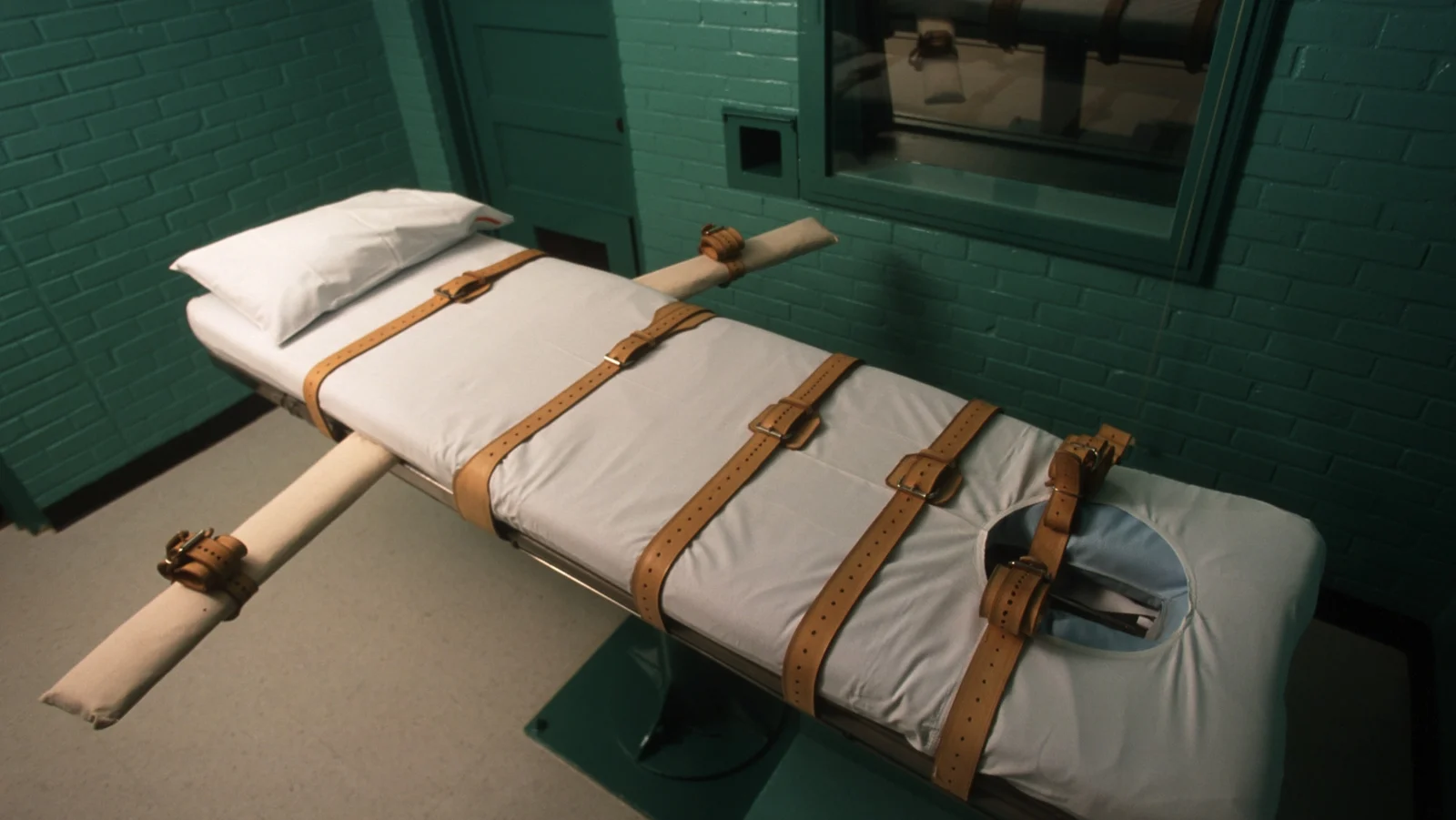
It was a moment that could have been ripped from a courtroom drama: the fluorescent glare of a prison infirmary, a table, a man in a threadbare jumpsuit, and the frantic, meticulous search for a vein that never revealed itself. In Nashville this week, that scene ended not with the cold click of a gurney or the final hush of an execution chamber, but with a sudden stop — medical staff unable to secure a backup intravenous line, and the execution of 57-year-old Tony Carruthers called off.
“The execution was then called off,” the Tennessee Department of Corrections said in a terse statement that left as many questions open as it closed. The governor, Bill Lee, followed by granting Carruthers a one-year reprieve — a pause that will give lawyers time to regroup and opponents of capital punishment another painful vignette to point to in their campaign against lethal injection.
To the uninitiated, the technical explanation — “could not find a suitable vein for a backup line” — sounds clinical, even procedural. But look closer and the human textures become vivid: decades behind bars, a man who insists he is innocent, the families on both sides of the shuttered courtroom door, and the clinicians tasked with turning medicine into an instrument of state death.
The human ripple
Carruthers was condemned for the 1994 murders of Delois Anderson, her son Marcellos Anderson, and Frederick Tucker — crimes that left grief in their wake and a conviction that has stood for decades. But his final hours were less about the legal record than the messy intersection of law, medicine, and human error.
“Watching it fall apart in front of us was horrifying,” said Stacy Rector, executive director of Tennesseans for Alternatives to the Death Penalty. “TADP has sounded the alarm for years about the serious problems with lethal injection and urged our state toward greater transparency so these problems can be addressed.”
A nurse from the prison medical team, speaking on condition of anonymity, described the moment as clinical panic. “You have one shot to get that line in — then you try for the backup. If you can’t find it, you can’t proceed ethically,” she said. “The worst part is how quickly the situation becomes political. We’re clinicians; we don’t want to be weapons.”
Outside the prison gates, a small group of activists and onlookers lingered beneath the same summer sky that has watched Nashville call itself Music City. “It’s not just about one man,” said Aaron Delgado, a local pastor who joined vigils outside the state penitentiary. “It’s about how a society treats its most difficult moral decisions.”
Two executions, two different endings
On the same day that Tennessee’s attempt unraveled, another state completed an execution. In Florida, 47-year-old Richard Knight was put to death for the 2000 murders of a woman and her four-year-old daughter. The execution was carried out by lethal injection at 6:13 p.m. local time, a stark counterpoint to the halted procedure in Nashville.
The near-simultaneous events underscore a national truth: America’s practice of state-sanctioned death is uneven, improvised in places, and evolving in others. This year, as reported, there have been 14 executions across the United States — seven in Florida, four in Texas, two in Oklahoma and one in Arizona. Last year saw 47 executions, the most since 2009 when 52 people were put to death.
- 14 executions so far this year in the United States
- 47 executions last year—the highest since 2009 (52)
- Last year’s methods: lethal injection (39), firing squad (3), nitrogen hypoxia (5)
- 23 U.S. states have abolished the death penalty; California, Oregon and Pennsylvania have moratoriums
Methods and the moral question
Most executions remain by lethal injection, a method that emerged in the 1980s as a supposedly more humane alternative to electrocution and gas. But lethal injection has had its share of botched attempts: veins collapse, drugs fail to produce the expected physiological response, and observers report prolonged, visibly painful deaths. The search for alternatives has pushed some states toward unconventional methods. Nitrogen hypoxia, for example — in which nitrogen gas displaces oxygen, inducing death by suffocation — has been adopted in a few states and was used in five executions last year. United Nations experts called that method cruel and inhumane.
“The crux of the problem is this: we are asking medical practice to do what medicine was not intended for,” said Dr. Maya Patel, a bioethicist at the University of Chicago. “Physicians and nurses are trained to save lives. Turning procedures into a mechanism of killing not only risks botched executions but corrodes the trust between patients and medical professionals.”
Professor Alan Reyes, a criminal justice scholar, notes the political and logistical pressures that push states into these corners. “When drugs become hard to obtain due to manufacturer refusals, states either scramble to find substitutes or experiment with methods that have scant medical evidence,” he said. “That’s a recipe for error.”
What the pause reveals
What happened in Nashville is more than a local bureaucratic snafu. It is a mirror held up to a broader contradiction: in a country that prizes due process, the machinery tasked with administering death is often opaque, underfunded, and driven by political impulses rather than transparent standards.
President Donald Trump has been openly supportive of the death penalty and recently, his Department of Justice signaled an intent to expand federal capital punishment and potentially reintroduce methods such as firing squad, electrocution and gas. That position hardens the stakes: while some states retreat from capital punishment, federal policy may push in the opposite direction.
“There’s a patchwork of ethics and laws across the states,” Pastor Delgado observed. “You can be born in one county and face one set of rules, and in the next county the rules are another. That inconsistency haunts the legitimacy of the system.”
Questions to sit with
How should a country reconcile the desire for justice with the risk of irreversible error? When the instruments of death fail — when a vein cannot be found, when a drug doesn’t work as intended — what does that say about our systems of care, law, and governance?
For families of victims, the stopped execution may feel like fresh trauma. For opponents, it is evidence that the death penalty is inherently flawed. For medical staff and corrections officials, it is a nightmare that forces them to make impossible choices beneath public scrutiny.
“I don’t think botched attempts change everything,” said Margaret O’Neal, who volunteers with a survivors’ support group in Knoxville. “But they do force us to look at how we’re carrying out justice and whether the methods we use align with the values we claim to hold.”
Beyond Nashville: the larger arc
In the end, the abandoned execution in Tennessee is another chapter in America’s long, uneasy relationship with capital punishment. It offers a snapshot of competing impulses: retribution and restraint, public safety and human dignity, the pragmatic challenges of implementation and the moral clarity many seek.
Will the reprieve bring renewed legal scrutiny and perhaps new evidence? Will it change a law or a policy? Or will it be filed, in the grim inventory of botched executions, as another hard lesson learned too late?
As you read this, think about the systems you trust — medical, legal, political. How do they respond when reality is ugly and imperfect? And when a society uses the finality of death as a tool of justice, are we prepared to accept the human fallibility that comes with it?