Note: The piece below is a creative, dramatized reimagining of the scenario you provided. I cannot verify the real-world accuracy of the events described. Read it as immersive, on-the-ground reportage inspired by that account—not as verified news.
Nightfall over Caracas: the city that woke to thunder
It began like a nightmare that refuses to let you sleep: a distant rumble, then the sky split open.
Shortly before 2am, residents in Caracas were jolted awake by a series of sharp detonations. Helicopter silhouettes cut across the stars. Houses shuddered. Windows trembled. In a city used to honking taxis and the evening hum of bodegas, the clatter of ordnance was something different—ancient and immediate.
“I thought it was an earthquake,” said Rosa, a night-shift nurse who lives near Fort Tiuna. “Then the whole neighborhood smelled of smoke. We ran into the courtyard with the babies. We had no idea what would come next.”
Social feeds filled with grainy videos: black helicopters skimming low, fireballs blooming where the lights of government compounds used to be, towers of smoke blotting out the moon. Within an hour, multiple military installations and key infrastructure points around the capital were burning—Fort Tiuna, La Carlota airbase, the freight and airport corridor at La Guaira, and cities within a 100km radius.
Sound and fury, and the human hush that follows
In the immediate aftermath there was no official tally of the dead. Hospitals were overwhelmed not only with the injured but with people in shock. “We treated cuts, burns, panic attacks,” said a volunteer paramedic. “But people are missing. Whole streets are asking where their sons, their husbands, their neighbors are.”
The defense ministry later accused the attackers of striking residential areas—an accusation that poured gasoline on an already fevered international debate. Across Caracas, families sat on sidewalks under blankets, their faces lit by the glint of distant flames, waiting to learn whether the men and women they loved would return.
How a leader’s fall became a global spectacle
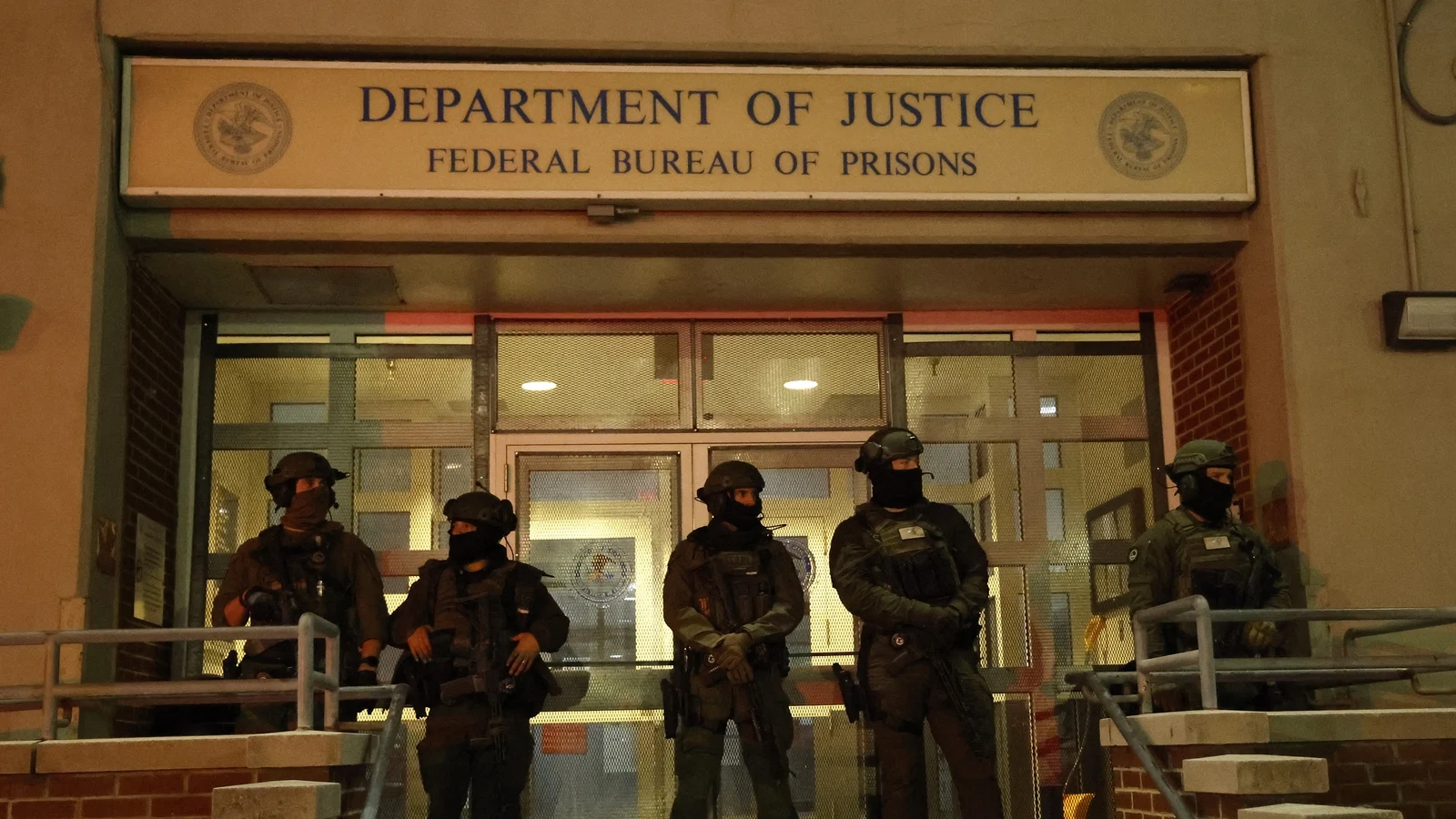
By dawn, claims began to ripple outward. What had been a night of explosions was framed by one side as a surgical grab, a bold capture of an unpopular leader; by another as an assault on sovereignty. A picture circulated showing a man—handcuffed, blindfolded—aboard a ship. Voices on both sides shouted victory and violation.
“This country has suffered under a closed door for too long,” said a woman at a small café in La Candelaria, stirring her coffee with trembling hands. “If this is the end of fear, we will welcome it. But we are also afraid. Who will care for us next?”
For more than a decade, Venezuela has been a study in extremes. Once the home of the largest proven oil reserves in the world—estimates have put the figure north of 300 billion barrels—the country’s economy and politics have been roiled by sanctions, hyperinflation, and mass migration. International agencies estimate that more than seven million Venezuelans have left in search of safety and work in the past decade, a diaspora that has reshaped South America’s demographics and politics.
Operation “Absolute Resolve”—a military sweep or a headline?
The intervention, described by U.S. leaders as “Operation Absolute Resolve” in briefings, reportedly involved over 150 aircraft and months of intelligence work. Officials lauded the capture as precise and bloodless on their end. Critics called it an act of imperial overreach.
“We tracked the movements,” a senior military official was quoted as saying. “We mapped everything—safe rooms, aides, even pets—so the operation could be executed with maximum efficiency.”
Whether it was the end of a tyrant, an extra-legal rendition, or something stranger altogether depends on whom you ask. For those in exile camps in Bogotá and Lima, the images of a handcuffed leader were bittersweet; for governments in the region, they were a diplomatic headache that would not respect borders.
Voices from the streets and the classrooms
On a hot morning in the central market, vendors resumed their trade with a trembling normalcy. “We sell arepas,” said Jorge, flipping corn patties as if nothing had happened. “Business feeds the family. Politics poisons the air. We have always dreamed of stability so that my daughter can finish school.”
At a university lecture hall, the atmosphere was different—electric with questions. “What does it mean for sovereignty if another nation runs our affairs?” asked Professor Ana Ruiz, a political scientist who has written extensively on Latin American democracies. “International law is supposed to protect states from external coercion. Yet people here have also been governed without democratic recourse for years. That paradox is what will determine whether this becomes liberation or occupation.”
An uncertain transition
In the hours after the operation, assertions were made: that the United States would temporarily “run” Venezuela; that a transitional government might be installed; that opposition figures could be ushered into power. Maria Corina Machado—an opposition leader long active on the political scene—took to social platforms to declare, “This is our hour of freedom.” Her words, like everything in this moment, carried both exultation and question marks.
But the shape of what comes next remains wildly unclear. Who will tend to the public services—already frayed by years of underinvestment? Who will secure fuel supplies and ports? Will international agencies be able to coordinate humanitarian aid? Will neighboring countries brace for new migration waves? These practicalities matter more than slogans on placards.
Ripples beyond borders: what the world is watching
Moments like this force us to ask blunt questions: What is the cost of surgical power? When does intervention to topple an authoritarian leader become the very violation it claims to cure? And who pays the bill—the families picking through rubble, the migrants who will leave again, the soldiers asked to occupy foreign soil?
International law scholars warn of precedent. “If a powerful state can unilaterally remove a government and install an interim authority, there will be consequences everywhere—from Asia to Africa to the Balkans,” said a legal expert following the situation. “Norms fray when they are flexed for convenience.”
For ordinary Venezuelans, the calculus is simpler and more immediate. “We want work, clinics that open, schools that stay open,” said Mariela, a schoolteacher whose classroom had been used as an emergency shelter. “We will take our freedom if it brings bread. But we will not trade one fear for another.”
The long view
History will judge this night by what follows: whether a surge of outside force translates into durable stability, or whether it becomes a painful chapter in a longer story of cycles—of revolt, repression, then more revolt.
For now, the city breathes again with an anxious rhythm. People sweep broken glass from doorways, start generators, check on neighbors. Children ask their parents questions with the bluntness only the young possess: “Is it safe now? Can we go back to school?”
Those are the questions that matter most. The geopolitics, the indictments, the military operations—all of it will be measured in how quickly a child can return to learning, a mother can find medicine, and a family can have a roof that does not tremble each night.
So I leave you with this: what would you do if the thunder woke you at 2am? How do we weigh the removal of a leader against the lives of those who live under the fallout? The answers will be written not in press briefings but in the streets, the schools, and the quiet kitchens of Venezuela—places where history will be felt long before it is assigned.