The Long, Hot Days of Negotiation: Miami, Moscow, and a Country Under Fire
There is a peculiar hush that settles over Miami when diplomats and power-brokers decamp from the polished conference rooms to sit on stoops and smoke-ring their way through fragile agreements. It was this hush—part humidity, part anticipation—that framed two days of intensive talks between Steve Witkoff, the U.S. special envoy, Jared Kushner, the president’s son-in-law, and Ukraine’s chief negotiator, Rustem Umerov, along with General Andriy Hnatov, the head of Ukraine’s general staff.
“We came here to talk about a future you can build a life in,” a senior State Department official told me after a late-night briefing. “Not slogans, not press releases—concrete steps toward durable peace.” Whether those steps are within reach is the central question now echoing from Miami’s sun-drenched shorelines to the rubble-strewn suburbs of Kyiv.
Conversations with Echoes of Moscow
The Miami meetings followed a high-stakes Kremlin visit earlier this week in which Witkoff and Kushner sat across a long table from President Vladimir Putin. Kremlin adviser Yuri Ushakov later described those hours as “truly friendly,” and Mr. Putin called the exchange “very useful.” The Miami round was, by all accounts, a debriefing: a careful, sometimes tense cross-check of what Moscow is willing to consider and what Kyiv will never accept.
“No one here is pretending this is easy,” Rustem Umerov told the delegation in a short statement distributed after the meeting. “Ukraine’s red lines are clear—independence, territorial integrity, safety for our people. Any path to peace must ensure those foundations.”
The participants say they discussed a U.S.-backed framework for security arrangements, deterrence capabilities, and the contours of post-war reconstruction—topics that sound technocratic but are, in truth, about very human things: children’s schools, heating in winter, and whether families can return home without fear of being shelled.
The Shadow of War: Attacks While Diplomats Talk
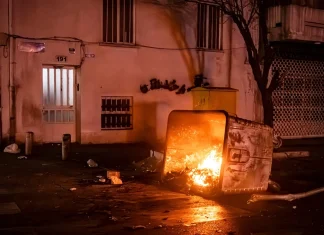
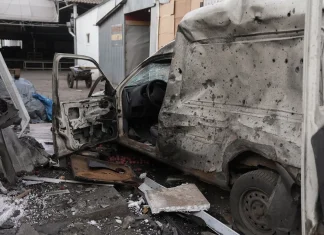
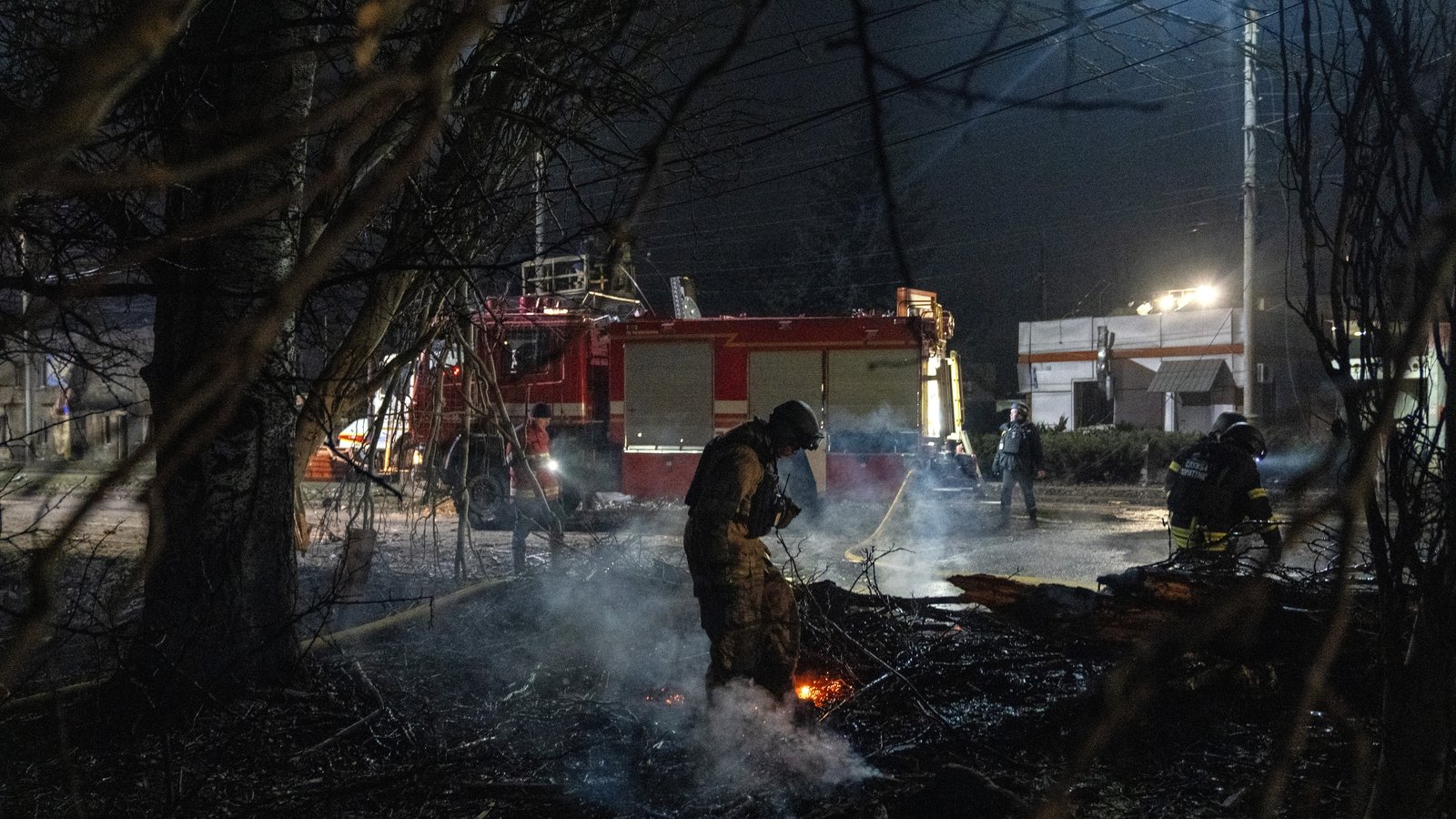
And while the negotiators talked about deterrence and reconstruction, the war continued to make its most brutal and blunt argument. Overnight, Ukraine’s air force reported that Russia launched 653 drones and 51 missiles. Targets were strikingly ordinary: energy plants, railway networks, the arteries that keep homes warm and lights on.
Fastiv, a railway hub about 70km southwest of Kyiv, saw its main station building burn after what officials called a drone strike. “There were no casualties, but the platforms are a mess and people cannot get to work,” a local bus driver told me by phone as smoke still curled over the tracks. “Trains are how my wife gets to the hospital. Now she waits.”
In Odesa region, more than 9,500 households lost heat, and 34,000 went without water, according to Restoration Minister Oleksiy Kuleba. Prime Minister Yulia Svyrydenko convened emergency ministers to coordinate relief, and warned that rolling power outages would be needed while crews repaired damage. The rhythm of life—school schedules, oven timers, hospital wards—was rearranged yet again by a distant decision to strike infrastructure.
When Infrastructure Becomes a Weapon
“Energy systems are the soft underbelly of a nation,” said Darya Kovalenko, an analyst at the Kyiv Energy Institute. “When you cut heat and light, you attack the fabric of everyday living.” Blackouts ripple into hospitals, factories, and the tiny apartments where grandparents watch grandchildren while parents work shifts. They also reshape politics—domestic patience frays, and every outage becomes a political argument about response and resilience.
President Volodymyr Zelensky’s response was a mixture of anger and exhausted defiance. “The main targets of these strikes, once again, were energy facilities. Russia’s aim is to inflict suffering on millions of Ukrainians,” he wrote on social media—an appeal for attention, but also a plea for urgency.
Between Diplomacy and Destruction
The dissonance is jarring. In one room, negotiators draw out conceptual frameworks for a “durable and just peace.” In another, people in apartment blocks boil water on stoves because central heating has been cut; rail passengers stand on platforms watching their journeys evaporate into the smoke of a bombed-out waiting room.
“If you’re a negotiator, you have to think of the civilians,” said General Andriy Hnatov in a brief comment after the Miami meeting. “But if you’re a mother or an engineer in a small town with no power, you think of the next hour.”
For the U.S. side, the operation has an added complexity: domestic politics. President Donald Trump has made ending the war a public objective of his administration, and his envoys’ meetings with both Kyiv and Moscow are being watched—by allies, rivals, and a global audience trying to discern whether diplomacy can outpace violence. Mr. Trump has publicly scolded both Vladimir Putin and Volodymyr Zelensky at times, a reminder that the personal dynamics of leaders can undercut or accelerate fragile diplomatic turns.
Questions of Trust and Verification
Talks, officials say, are not just about grand gestures. They are about verification mechanisms—who watches the borders, how long forces will withdraw, what incentives will ensure compliance. “Trust has to be built on data as much as words,” a U.S. military analyst observed. “That means monitoring, international observers, and guarantees that are credible.”
Which brings us to reconstruction: if and when shooting stops, who rebuilds? Ukraine and the U.S. discussed joint economic initiatives and long-term recovery projects, but money and machinery require calmer skies. Donors can pledge; transport corridors can be planned—but rubble must be cleared, and that takes time and security.
People in the Crossfire
Sometimes the statistics hide the human stories. In a small bakery near Fastiv, the owner swept glass off the counter and offered a cup of tea. “We will fix the oven,” she said, more as reassurance than a plan. “We always do. People are stubborn here.”
Across town, a retired teacher scrolls through news feeds and shakes her head. “They talk about frameworks and deterrence. My concern is simpler: will my daughter be able to warm the baby next winter?”
These are the questions diplomats must answer to claim any real victory: not an abstract peace, but a peace that ensures children’s sleep, hospital electricity, and trains running again.
What Comes Next—and What It Means for the World
So where do we go from here? More talks are planned. Officials spoke of “progress,” a polite but often elastic word in diplomacy. The next steps hinge on whether Russia shows what negotiators repeatedly described as “serious commitment”: meaningful de-escalation, concrete steps to stop the killings, and verifiable mechanisms that prevent a return to hostilities.
For readers watching from distant capitals, the story speaks to larger themes: the weaponization of infrastructure, the fragility of civilian life under modern war, and the limits of diplomacy in the face of raw force. It also raises a practical question: can a peace be stitched together while the guns still go off? Can trust be brokered between parties who may still view negotiation as another front in which to advance advantage?
We have seen fragile truces and abrupt breakdowns across the globe in recent decades. The calculus is never purely military—it is economic, social, and psychological. It asks us, as global citizens: what price are we willing to pay for security, and what is the true cost of delay?
As the sun set over Miami—turning glass towers to liquid gold—negotiators huddled over maps and proposals. Far away, families in Ukraine measured the sunset by whether the radiators would come on tomorrow. You can feel the distance between those two scenes like a chord stretched taut. Whether it will hold is the work of the weeks to come.