When Drones Became Diplomatic Currency: A London Visit That Reverberates from the Thames to the Gulf
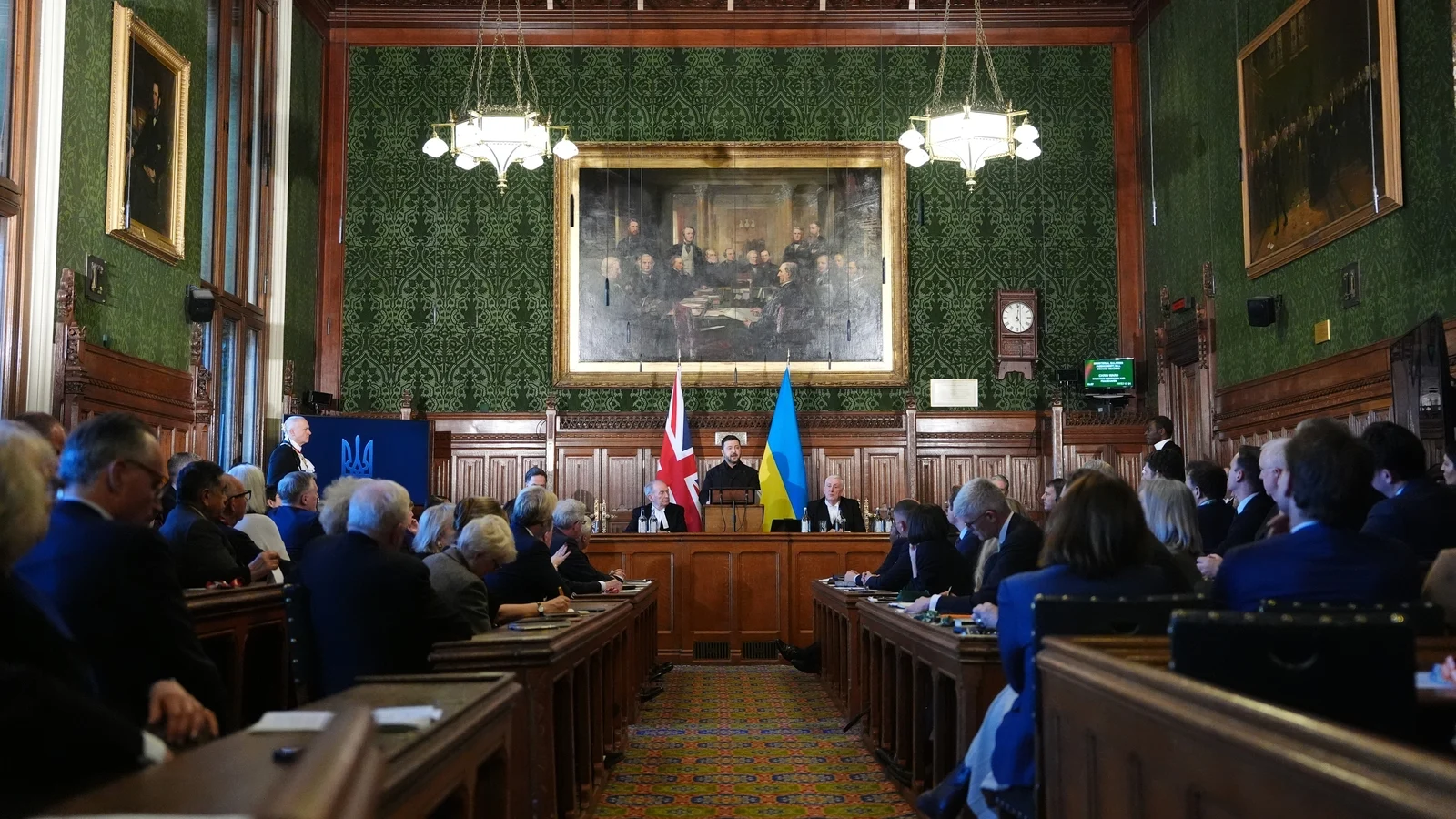
On a brisk London morning, under skies the color of an overcast headline, a small but consequential meeting unfolded that feels emblematic of 2026: technology, geopolitics, and the blunt arithmetic of war braided together in a single agenda.
President Volodymyr Zelensky arrived in the British capital not for ceremony, but for commerce of a kind that national capitals rarely advertise so plainly. The talks—held in corridors where ministers habitually trade assurances—were about selling Ukrainian drone know‑how abroad, building supply chains with British manufacturers, and folding artificial intelligence into the machinery of modern defense.
Beyond the diplomatic niceties, there was a practical urgency. The world’s attention has, in recent months, tilted toward the Middle East. That shift has had political and economic fallout: oil prices have ticked up, markets have shivered at the prospect of instability, and Moscow has seen windfall revenues that complicate the pressure that Western sanctions are meant to deliver.
From Workshops to Warzones: How Ukraine Became a Drone Powerhouse
Only four years after Russia’s full-scale invasion, Ukraine is widely recognized as a leader in drone and counter‑drone capabilities. What began as makeshift experimentation in garages and university labs has ripened into an industrial advantage: compact loitering munitions, resilient swarm tactics, and rapid iterative design cycles forged under fire.
“We had to learn fast,” said a Ukrainian drone engineer who recently returned from a deployment advising partners in the Gulf. “Failure is expensive in peacetime, but in war it costs lives. That accelerates everything—design, testing, deployment. Now people come to us because we’ve been tested.”
Kyiv officials say more than 200 Ukrainian specialists are already operating across the Middle East and the Gulf at the invitation of partner states. Those deployments are modest in number but significant in effect: technicians teaching maintenance, tacticians advising on integration, analysts sharing threat data on drones that have become a feature of regional conflict.
Why Britain Wants In
For London, the partnership offers more than goodwill. Britain brings manufacturing scale and defense-industrial heft: production lines, procurement expertise, and financial frameworks—things that can turn Ukrainian innovation into internationally available systems.
A senior British official, speaking on background, described the plan as a “tech diplomacy” play: combine Ukraine’s tactical brilliance with British industrial muscle, export the result to countries facing persistent drone threats, and in the process build a web of security relationships that extend Britain’s influence and help stabilize volatile regions.
“If a Gulf port manager can buy a proven counter‑drone kit that works on day one, that lowers the bar for resilience,” the official said. “It’s more than commerce. It’s a pragmatic way to deter attacks without stationing large numbers of troops.”
AI on the Battlefield: Promise and Peril
AI is threaded through this partnership. London announced a small but symbolic investment—half a million pounds—to seed a new Ukrainian center focused on battlefield AI. The idea is to study how machine learning can refine target discrimination, improve autonomous logistics, and harden systems against electronic warfare.
Not everyone greets the move with unalloyed enthusiasm. A defense analyst in Amsterdam worries about the long arc of such technologies. “We can’t ignore the ethical and proliferation risks,” she said. “Once algorithms see combat and teams scale them up, control becomes the policy question—who governs, who audits, how do we ensure proportionality?”
Her concern echoes a broader debate that stretches beyond London’s meeting rooms: as small, inexpensive weapons like loitering munitions proliferate, the AI tools that make them smarter could also spread, often faster than the export controls meant to govern them.
Local Voices: Cafés, Factories, and Frontline Families
Back in Kyiv, the mood is workmanlike, tempered by weariness and hope. At a café near the river, a barista who volunteers in a drone repair unit leaned on a counter and said, “We don’t romanticize technology. We patch what we have, teach others to fix it, and hope it keeps someone safe. If selling this expertise keeps missiles out of kitchens, then that’s worth it.”
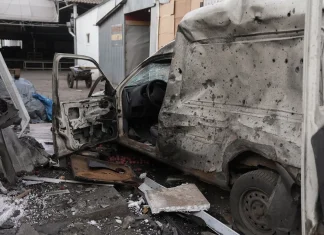
On the other side of the world, a port security chief in the Gulf—who asked to remain unnamed—described repeated, low-cost attacks that have disrupted shipping lanes and strained local economies. “Sometimes the damage is as much psychological as physical,” he said. “If we can buy a system that detects and defeats incoming drones, it lets commerce breathe again.”
Sanctions, Energy Shocks, and the Geopolitics of Attention
The timing of these talks is not accidental. European leaders are anxious that media cycles and political energy have been siphoned away by the Middle East, even as pressure is meant to remain on Russia. The UK and Ukraine publicly critiqued a recent US temporary waiver that allowed the sale of stranded Russian oil—an episode that highlighted how global energy markets can blunt the intended bite of sanctions.
Political leaders made clear they don’t want current turbulence to translate into a strategic bonanza for Moscow. “We must avoid a situation where conflict elsewhere becomes a price windfall for those we’re trying to pressure,” observed a London-based geopolitics professor. “Energy is the vector through which attention translates into advantage.”
Coalitions, Procurement, and the Long Game
Beyond drone sales, the talks touched on broader mechanisms: a so‑called Coalition of the Willing to coordinate sanctions enforcement and a planned joint defense financing and procurement mechanism being discussed with Finland, the Netherlands and others. The aim is straightforward—create demand to justify investment, speed up industrial expansion, and stockpile munitions and systems that the next crisis will otherwise scramble to find.
- What this coalition offers: pooled contracts, shared logistics, and accelerated investment.
- What it risks: political fragmentation if member states’ priorities diverge.
- What it requires: transparency in procurement and safeguards against proliferation.
Questions for the Reader—and for the World
As you read this, consider where your country sits in the map of supply and demand for defense technology. Do you want your tax money underwriting an industry that could deter aggression—or one that might widen the battlefield? How should international rules evolve to govern AI-guided weapons?
Technologies born in conflict rarely stay confined to war zones. The small loitering drone that once patrolled a Ukrainian horizon could tomorrow be repurposed in another region’s contest. That prospect forces a harder conversation about governance, export controls, and the moral calculus of arming allies.
In the end, the London meeting was both pragmatic and symbolic. It signaled that alliances now stitch together not just soldiers and sanctions but engineers, factories, and algorithms. It acknowledged that in a world of diffuse threats—drones, cyberattacks, hybrid coercion—security is increasingly made of supply chains as much as treaties.
“We’re selling more than a product,” the Ukrainian engineer said. “We’re selling a lesson learned under fire: how to make small things matter.”
Maybe that is the true export—hard‑won know‑how that, if managed with care, could make fragile places a little safer. Or, if mismanaged, it could extend the arms race into new and worrisome domains. Which future do we choose?