Israel has declared that the UK’s diplomatic outpost in East Jerusalem has effectively stopped operating as a consulate, escalating a dispute triggered by Britain’s ban on trade linked to illegal West Bank settlements.
The UK, however, says its presence on the ground is continuing. Under an agreement with Israel, the building will keep operating with diplomatic protections intact, though it will be renamed and staffed at reduced levels.
Foreign Secretary Ed Miliband rejected Israel’s claim that it can lawfully close the mission, insisting the newly named UK Mission would “continue to deliver vital services and our work with the Palestinian people”.
He said some personnel had been pulled out temporarily “to ensure their safety”.
The UK plans to push for the return of all diplomatic staff — now down to seven — after Israel’s election on 27 October, and it is understood officials are keeping the option of strong reciprocal steps in reserve if talks fail.
Israel had warned last month it would shut the consulate — Britain’s representation to the Occupied Palestinian Territories — within 30 days of the UK’s sanctions announcement, which sparked a diplomatic row.
As that deadline ran out, Israel’s foreign minister, Gideon Sa’ar, said the British consulate in Jerusalem was “ending its activities today”, and the sign identifying it as a consulate had been taken down.
Mr Sa’ar wrote on X: “The British Consulate in Jerusalem ended its role today. The Consul General and 19 diplomats are ending their assignments and will leave Israel.”
He noted that the premises are owned by the British Government, but said Israel had authorised Britain “to operate a task force of only seven diplomats from the building, which ceased to function as a consulate today”, adding that those remaining would have “a very limited scope of activity”.
He also alleged there had been “no genuine dialogue” with UK ministers in recent years, despite security and intelligence cooperation between the two countries.
“We did not want to reach this point, but the actions of the UK Labour Government brought us here,” Mr Sa’ar said.
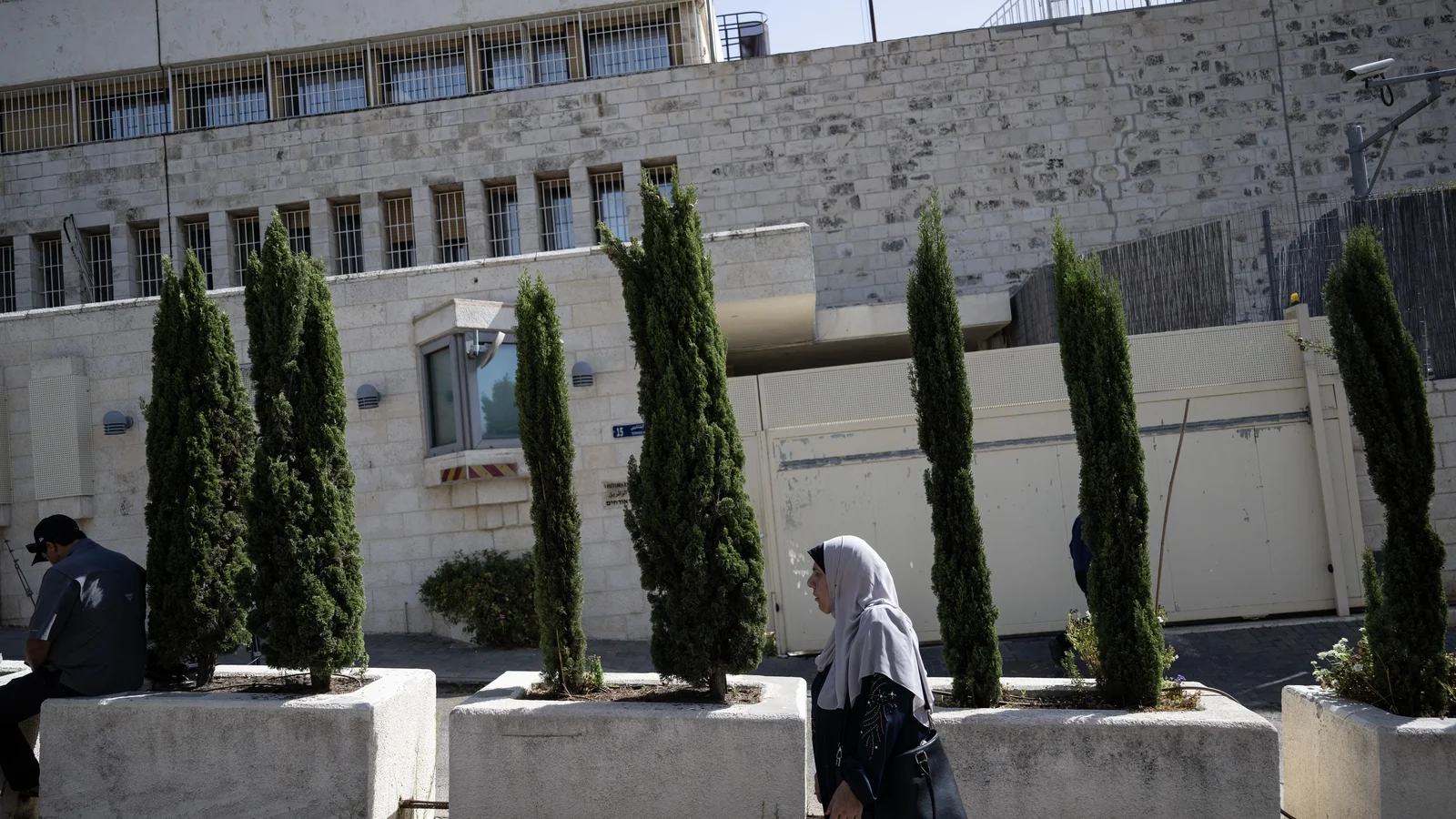
Barricades block the main road leading to the British Consulate in East Jerusalem
Israeli media reports said Britain had threatened to expel as many as 27 Israeli diplomats from London if the closure went ahead.
Mr Sa’ar responded by saying: “In accordance with the understandings we reached, no measures will be taken against Israel as a result of the implementation of the decisions.”
The UK Foreign Office said the UK Mission would keep the same privileges, documentation and diplomatic status, describing the change as a downgrade in name and staffing levels agreed with the Israeli government.
In his statement, Mr Miliband said: “We have been clear that we do not accept that the Government of Israel has the legal right to close the British Consulate General in Jerusalem, which has been there for nearly 200 years.
“The UK Government reiterates its long-standing view that East Jerusalem is occupied territory.
“Following discussions with the government of Israel, our Consulate General building will not be closing, and will be known as the UK Mission, Jerusalem from today.
“The UK Mission, Jerusalem is independent, operational, and will continue to deliver vital services and our work with the Palestinian people.”
The Foreign Secretary said the UK Mission would preserve Britain’s long-standing presence and its role in backing a two-state solution.
He added: “Without an understanding, we would not have the necessary assurances for the security and protections of our staff and premises.
“Accordingly, the UK has temporarily withdrawn a number of staff and families to ensure their safety and security.
“We will work in the coming months to build back up our presence, and we will not take reciprocal action while such discussions are under way and credible.
“The UK stands steadfast by the measures we took on 8 September, in concert with the international community, in support of a two-state solution to deliver peace and security for the people of Israel and Palestine.”
British officials intend to restart negotiations with whatever Israeli government emerges from elections later this month, with the goal of rebuilding the mission’s full staffing in East Jerusalem as soon as possible.
Asked about the apparent contradiction between Israel saying the consulate had closed and Britain insisting its diplomatic footprint remained, Foreign Office minister Stephen Doughty rejected suggestions the arrangement was a political fudge.
“Absolutely not,” he told BBC Radio 4’s Today programme, adding: “You can see what’s changed in terms of a name, but crucially, the presence remains.”
Mr Doughty said the building stayed open under an “agreement” with Israel, while describing relations as subject to “an ongoing discussion” between the two sides.
A vehicle is seen driving out of the British consulate building in East Jerusalem
He added: “We deeply regret the steps that they set out a few weeks ago in response to our measures.”
Israel’s move followed the UK’s 8 September announcement of a ban on imports from illegal settlements in the West Bank, alongside sanctions on individuals and firms accused of providing services to settlers.
When he announced the sanctions, Mr Miliband accused Israeli Prime Minister Benjamin Netanyahu’s government of ignoring the “ethnic cleansing” of Palestinians.
Israel and the United States both condemned the UK’s position.
First set up in 1838, the consulate manages British relations with Palestinians in Jerusalem as well as in the West Bank and Gaza.
It operates separately from the UK embassy in Tel Aviv, which is Britain’s main diplomatic channel with Israel.
Israel has occupied the West Bank since 1967. More than 500,000 Israeli settlers live in the territory, excluding the annexed east Jerusalem, among some three million Palestinians, which is illegal under international law.
In July, President Catherine Connolly signed into the law the bill banning goods from Israeli settlements in the occupied territories in Palestine.