Paris, Promises and the Quiet Noise of War: Allies Forge “Robust” Post-Ceasefire Guarantees for Ukraine
On a bright, brittle winter morning in Paris, beneath the ever-watchful facades of the Élysée, a small army of diplomats, soldiers and aides shuffled briefcases and blue folders. Cameras clicked; translators whispered. The spectacle could have been any summit, except that the thing being signed touched the raw edges of loss, exile and national survival.
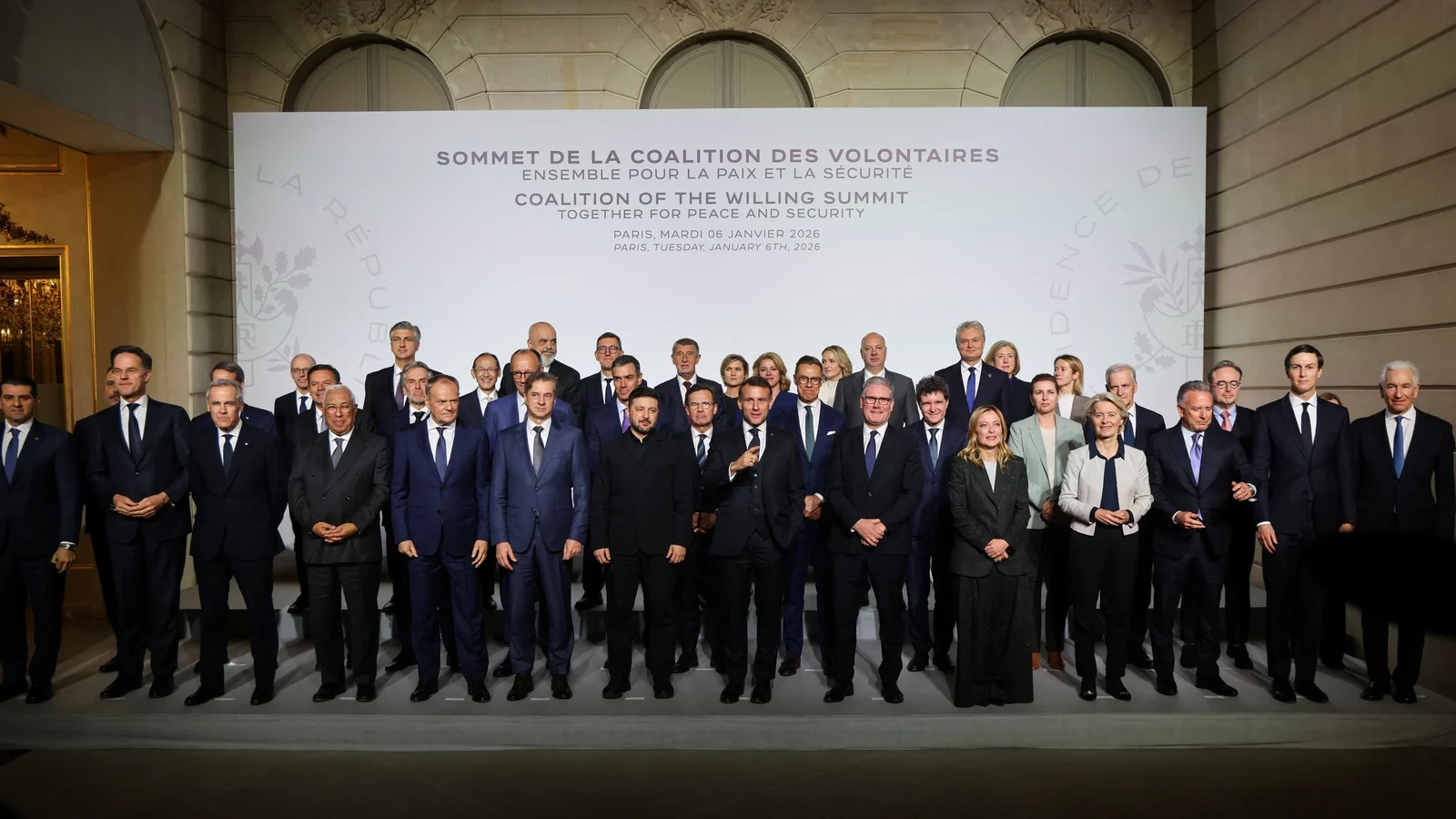
France’s president, the British prime minister and Ukraine’s own president emerged from the salon with ink on their fingers and a joint declaration that, if a ceasefire ever comes, would see Western boots back on Ukrainian soil — not as occupiers but as guarantors. The United States, Paris said, would lead a truce-monitoring mechanism. Britain and France pledged to establish military “hubs” across Ukraine and protected facilities for weapons and equipment. Thirty-five countries were represented in the talks, a mosaic of European capitals, Nordic and Balkan states, and others whose involvement signals a widening coalescence around Kyiv.
What was agreed — and what it means
The essentials are simple to say and devilishly complicated in practice: security guarantees that kick in only after a ceasefire, a multinational monitoring force, and infrastructure inside Ukraine to sustain its defence capabilities. Officials described it as an attempt to ensure that any peace deal is not a surrender — that it cannot be easily overturned by a renewed assault.
“We are building a fence around the concept of peace,” one French diplomat told me, speaking on condition of anonymity. “Not a wall, but a measured, multilayered shield: intelligence sharing, training, logistics, and a presence that reassures Kyiv and deters aggression.”
British Prime Minister Keir Starmer painted the measures in stark terms. “We will help Ukraine protect the peace it fights for,” he said at the press briefing, adding that the creation of military hubs “is about ensuring Ukraine has the capacity to defend itself tomorrow.”
U.S. involvement — announced as a leadership role in monitoring the truce — was represented by envoy Steve Witkoff, who told reporters that “a lot of progress” had been made and that allies had “largely finished” the architecture of guarantees. He stressed land arrangements would be the most sensitive question.
Voices from Kyiv and the frontline
Back home, the reaction was a mixture of relief, guarded optimism and impatience. “Any promise is welcome,” said Olena, a schoolteacher from Kharkiv who fled to Lviv and now volunteers in an IDP (internally displaced person) center. “But we need clarity: who pays for our tanks, our air defences, our hospitals? Peace on paper is not peace if the bullets can come again.”
For many Ukrainian commanders and civilians, the pledge of allied troops is less about foreign flags flying in Kyiv and more about the signal it sends: that Europe, and crucially the United States, would not abandon the country to a resurgent set of threats. “It’s reassurance, plain and simple,” said Colonel Dmytro Pavlenko, who commands an artillery unit in the east. “When your friend sleeps with a rifle by the bed, you sleep easier.”
Between principle and geopolitics: the territorial question
But the peace these guarantees aim to support collides with the thorny “territorial question.” Russia’s preconditions have included ceding parts of eastern Ukraine and recognising Crimea’s annexation — propositions Kyiv rejects. President Zelensky, who welcomed the declarations in Paris, stressed that monitoring, command structures and financing must be explicitly defined. He also warned that until territorial matters are resolved, the coalition’s unity will face its toughest test.
“A ceasefire without clarity on borders is only a pause in the fight,” Zelensky said. “We need guarantees that prevent the clock being turned back.”
That raises an elemental question for readers: can security guarantees compensate for territorial compromise? Or is territorial sovereignty non-negotiable even if a slimmer peace could save lives in the short term?
Allies, compromises and the shape of burden-sharing
Not every partner was eager to put soldiers on Ukrainian ground. Germany, long cautious about military deployments post-1945, offered a compromise: participation in monitoring, but from bases in neighboring countries. Chancellor Friedrich Merz acknowledged that “we will certainly have to make compromises” and that the solutions will be messy, not textbook-diplomacy tidy.
Ireland’s foreign minister was in Paris too. “EU accession is an important security guarantee for Ukraine,” she said, underlining Dublin’s support for Kyiv’s European path. Smaller states in the room hoped the declaration would translate into more predictable support for Ukraine’s reconstruction and governance, not just weaponry.
There’s also the delicate problem of command and control. Who decides when forces enter or leave? How are monitoring thresholds defined? Allies sign declarations with different appetites for risk, different historical memories and domestic political calculations. Jared Kushner’s presence at the talks signalled U.S. political interest across different quarters — a reminder that diplomacy these days is as much domestic theater as international choreography.
The human ledger: costs, displacement and rebuilding
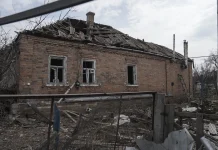
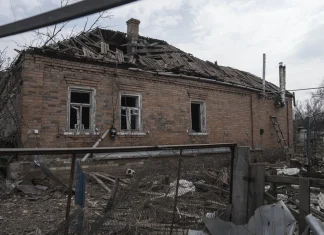
Any post-war model must reckon with the human cost. Millions of Ukrainians remain displaced internally and abroad; cities lie in rubble; infrastructure is fractured. Reconstruction will not be an expensive footnote. It will be the ledger by which future generations measure the success of these guarantees.
“We are not signing to be sentimental,” one European defense analyst told me. “We are signing because rebuilding in a country under the shadow of future attacks is an impossible business case. Guarantees make investment possible.”
And investments will have to be vast and sustained. Think of power grids rebuilt to withstand aerial attacks, ports restored to global trade flows, and schools reopened with trauma counselors waiting in the wings. These are not quick fixes; they are generational projects.
What does this mean for the wider world?
For a global audience, the Paris declarations are more than a regional pact: they are a test of whether alliances can evolve to protect states short of formal treaties like NATO’s Article 5. They ask whether multinational, flexible guarantees can act as a new bedrock for stability in conflicts where traditional alliances are either unwilling or unable to commit to full protection.
They also spotlight a broader trend in global security: partnerships that blend military presence with political and economic tools, calibrated to avoid full-scale escalation while providing real deterrence. The danger lies in ambiguity; the promise lies in unity.
So ask yourself: would you be content with a peace that leaves borders undefined if it means fewer shells? Or do you believe that sovereignty is worth the risk of continued combat? There are no easy answers.
Final thoughts — a fragile architecture
The Paris summit produced paper that promises a layered safety net for Ukraine. But paper can tear. Peace will be made, sustained and tested on the ground — in villages a shell can still find, in cities where power is rationed, in families deciding whether to return. The guarantees are a start, a scaffolding that could let a battered country rebuild. Or they could be a script for frustration if they remain vague, underfunded or politically fragile.
“We have put the first stones,” a senior French official said as the summit concluded. “Now we must build the house.”
For Ukrainians who have lost loved ones, homes and sleep, that house cannot be an exhibition. It must be a home. The question for the coalition of 35 nations is whether they will deliver not only tokens on the white marble but the patient, costly, often invisible work of making peace endure.