
The Fiery Echoes of Conflict: A Nighttime Drone Strike Thrusts Sochi Into the War’s Shadow
Long known as Russia’s jewel on the Black Sea coast—a playground for tourists, athletes, and dreamers—Sochi, the host city of the 2014 Winter Olympic Games, found itself briefly transformed last night.
Not by Olympic glory or sunshine, but by the crackle of a fire sparked by an unexpected drone strike. It’s a stark reminder: the reverberations of war have extended far beyond the immediate frontlines, reaching even the tranquil shores nearly 400 kilometers from Ukraine’s battlegrounds.
When Veniamin Kondratiev, the governor of Russia’s Krasnodar region, announced on Telegram that Sochi had suffered a “drone attack by the Kyiv regime,” the words reverberated with unsettling clarity.
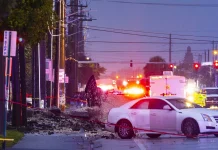
Wreckage from the drone had ignited an oil tank, unleashing flames that painted the night sky with thick black smoke. Yet despite the dramatic blaze,
Andrei Proshunin, Sochi’s mayor, was quick to reassure: there were no casualties, and the firefighters had the situation well in hand. Still, images relayed through Russian media—unyielding columns of smoke towering above the depot—offered a vivid, somber spectacle.
When a Tourist Haven Feels the War’s Reach
To understand the gravity of this incident, imagine the city: palm-lined promenades, vibrant markets filled with fresh produce and sun-warmed vegetables, the murmur of the Black Sea waves kissing the shore. Sochi’s charm is a world away from the destruction so often associated with the war, yet these drone strikes underscore a grim reality—no place is truly untouched.
“It’s surreal,” says Olga Petrov, a local café owner who witnessed the smoke drifting over the horizon. “People come here to escape the weight of the world. Now it’s as though the world has followed them.” Petrov’s sentiment echoes a quiet anguish that permeates many communities across Russia and Ukraine, caught on opposite sides of a conflict that transcends battlefields.
Drone Warfare: The New Face of the Conflict
Since the beginning of Russia’s military incursion into Ukraine in February 2022, drones have emerged as daunting instruments of war.
Ukraine has repeatedly targeted Russian oil and gas infrastructure, leveraging these small but potent machines to strike deep behind enemy lines. But the fallout of these strikes is not just strategic; it bleeds into civilian spaces, complicating the human narrative of suffering and resilience on both sides.
Last night’s strike on Sochi was not isolated. The use of drones to pressure Russian logistic nodes is part of a broader Ukrainian strategy, yet it also invites harsh retaliation.
Earlier this month, Ukrainian drones killed two people in the same city, and the latest confrontation has stoked fears of escalation far from the eastern front.
The Broader Battle: Airstrikes and Civilian Toll
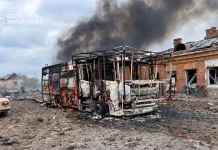
As cities like Sochi hang on the edge of new dangers, Ukrainian territories endure relentless strikes. The southern port city of Mykolaiv and regions like Kharkiv, Zaporizhzhia, and Kherson continue bearing the brunt of Russian missiles.
Prime Minister Yulia Svyrydenko’s words resonate with somber clarity: “The Russians continue to wage war not against Ukrainian forces, but against Ukrainian civilians.”
Statistics here are heartbreakingly sharp. In just the past few days:
- Seven civilians injured in Mykolaiv due to a missile strike on a residential area.
- Multiple injuries reported across northeastern Kharkiv and southern regions, a reminder that no civilian area is truly safe.
These attacks, juxtaposed with Ukraine’s tactical drone operations, illuminate the stark asymmetry—where destruction has become a harsh constant, and survival a daily act of defiance.
Behind the Scenes: Corruption and the Struggle for Integrity
Meanwhile, away from the smoke and sirens, a different kind of battle erupts within Ukraine’s institutions. Just as anti-corruption investigators regained their independence—a victory ignited by massive public protests—they uncovered a substantial graft scheme involving the procurement of military drones and signal jammers. Such revelations pierce the veil, reminding us that wars are fought on many fronts.
In a joint statement, the National Anti-Corruption Bureau of Ukraine (NABU) and the Specialized Anti-Corruption Prosecutor’s Office (SAPO) revealed how individuals, including a sitting lawmaker and military personnel, accepted kickbacks of up to 30% on contracts inflated deliberately. Four arrests followed swiftly.
President Volodymyr Zelensky’s message was clear and resolute: “There can only be zero tolerance for corruption, clear teamwork to expose corruption and, as a result, a just sentence.” This internal reckoning speaks to Ukraine’s broader struggle—not only to defend its territory but to cleanse itself from within, ensuring that resources meant to protect truly serve their purpose.
Warfarin the Airspace: From Sochi to Saint Petersburg
The conflict’s skies have become ever more contentious. Russia’s defense ministry reported intercepting three Ukrainian drones in the Leningrad region—a territory encompassing the historic Baltic port of Saint Petersburg. These aerial encounters highlight the increasingly fractured and volatile nature of the conflict’s geographic scope.
And as Russian missile strikes continue their terrifying march across Ukraine’s vast landscape, the Kremlin remains steadfast in its refusal to negotiate lasting ceasefires. Analysts suggest this inflexibility feeds into a dangerous cycle, where heightened attacks and counterattacks escalate civilian suffering without a clear path to peace.
Reflection: The Global Ripples of a Regional War
So here we stand, watching a city like Sochi—a symbol of leisure and unity—burning in the shadow of an invisible war waged by drones. It begs us to consider how modern warfare blurs the lines between frontlines and homefronts, between military targets and civilian vulnerability.
What do these strikes tell us about the nature of conflict in the 21st century, where a drone can effortlessly cross borders previously thought inviolate? How do communities reconcile the fragile veneer of peace when the specter of war looms unexpectedly?
Globally, the conflict challenges us to rethink security, sovereignty, and justice. It underscores the high stakes of energy infrastructure—a critical artery not just for Russia but for Europe and beyond—as both weapon and target. And it reminds us that war’s toll is not solely measured in soldiers lost or land seized, but in the battered spirit of places and people caught in its crosshairs.
For those of us far from the smoke and sirens, let this story be a call to empathy and awareness. Beyond headlines and diplomatic rhetoric lie stories of fear, resilience, and hope—the universal human threads that bind us amid chaos.
As night descends on Sochi today, what kind of dawn awaits its people? And what role will the global community play in shaping that future?