On the Road to Uvira: When a Lakeside Town Becomes the Measure of Peace
The road into Uvira winds like a promise along the eastern rim of Lake Tanganyika — blue water one side, dense green hills the other. For years that road has been a conduit for fishermen returning with fresh sardines, for boda-boda drivers who know every pothole, and for mothers carrying cassava and tomatoes to the market at dawn. This week it has become an escape corridor.
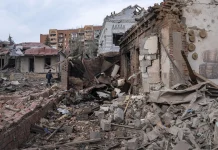
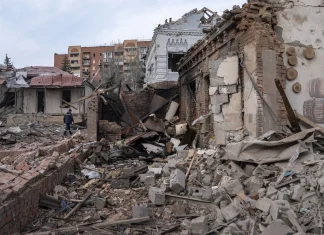
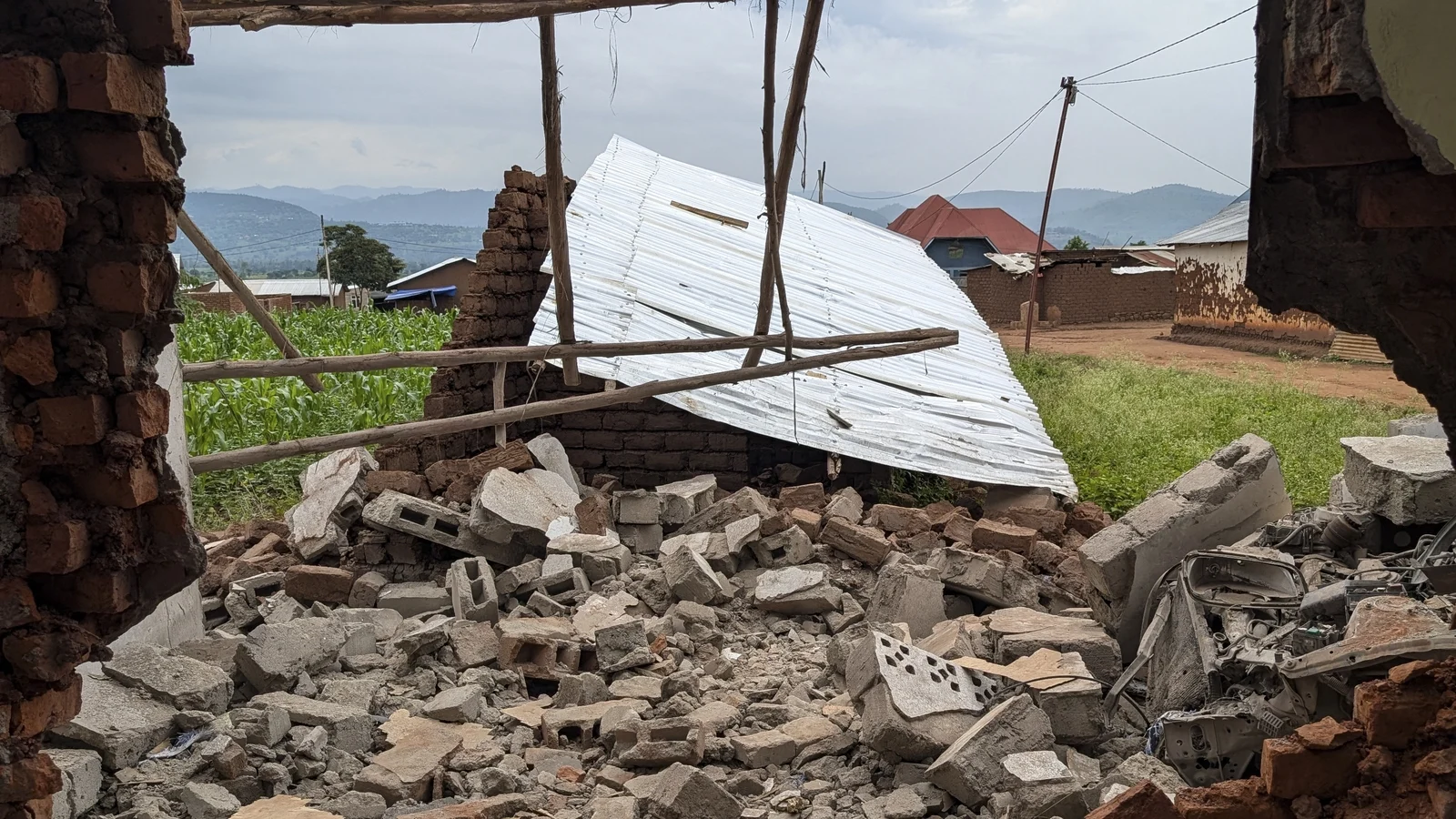
Humanitarian workers and United Nations officials say roughly 200,000 people have fled homes in eastern Democratic Republic of Congo in a matter of days as fighting surges and the Rwanda-linked M23 rebel coalition pushes toward Uvira, the lakeside town near the Burundian border. Hospitals report bodies arriving; UN briefings list at least 74 people killed and 83 wounded in the latest wave of clashes. For families who left everything behind, those are not numbers but names and gnawing absences.
Chaos under the same sky
“We woke to the sound of trucks and the smell of diesel — then the children were wrapped in blankets and we left,” said a woman who gave her name as Amina, standing by a temporary shelter pitched on higher ground outside Uvira. Her voice was low, edged with fatigue. “I don’t know if my husband is safe. The market is gone. The school is closed.”
Scenes like hers repeated along the corridor north of town. Local officials and residents told reporters that M23 forces — which many international observers say are backed by elements of Rwanda’s military, a charge Kigali denies — have been fighting Congolese troops and local defence groups, including units known as the Wazalendo, in villages such as Luvungi, Sange and Kiliba.
Luvungi, a place that had stood as a fragile frontline for months, reportedly fell to the rebels, and clashes flared nearer to Sange and Kiliba, both of which lie on the approach to Uvira. In some towns, rumours of an imminent rebel arrival sparked panicked flight; in others, local leaders tried to restore order, pleading with residents to remain calm.
“Do not flee Uvira,” a rebel commander urged — and the ambiguity of war
Corneille Nangaa, a figure leading a broader rebel coalition called Alliance Fleuve Congo, issued an urgent message over radio: “You are Congolese… and Wazalendo soldiers. Do not flee Uvira. Wait for us to free you.” It was a strange, binary call — part reassurance, part mobilization — that exposed the moral contradictions at the heart of this conflict.
Bertrand Bisimwa, the M23 commander, publicly reiterated support for peace talks that were brokered in Doha last month and for which both sides signed a framework agreement. “There are no other solutions in the current crisis than the negotiating table,” he said, insisting that even tactical counterattacks were made with the aim of returning Kinshasa to negotiations. That rhetoric sits uneasily alongside reports of towns changing hands and families fleeing for safety.
Global alarm bells — and the limits of ceremonies
Last week’s images in Washington — President Donald Trump flanked by the presidents of Rwanda and the Democratic Republic of Congo as they signed a ceremonial pact intended to seal a new era of peace — now feel like a fragile veneer. “Today we’re succeeding where so many others have failed,” President Trump declared at the signing, claiming an end to a decades-long cycle of violence. The scenes were theatrical; the aftermath has been sobering.
In response to the renewed fighting, the United States and nine other members of the International Contact Group for the Great Lakes issued a joint statement expressing “profound concern.” The statement warned that this rebel offensive, and the marked uptick in the use of attack and suicide drones, have “destabilising potential for the whole region” and pose a grave risk to civilians.
The State Department issued a blunt admonition: “Rwanda, which continues to provide support to M23, must prevent further escalation,” a spokesperson said. Kigali continues to deny direct support, while UN and US officials say they have evidence of backing. Each denial and accusation becomes a shuttle in a larger diplomatic tug-of-war — while families on the ground simply measure how much they can carry.
Numbers that should disturb us
The recent spike in displacement adds to a grim tally. Before this latest wave, more than 1.2 million people had already been forced from their homes across eastern Congo by years of fighting. To that must be added the roughly 200,000 who fled in just days during this latest offensive. Hospitals are overwhelmed; aid agencies warn of growing humanitarian needs — food, clean water, shelter, protection — even as access to some front-line areas is limited by insecurity.
Beyond immediate human costs, the conflict threatens regional stability in the Great Lakes: cross-border flows of people, weapons, and economic disruption can create ripple effects into Rwanda, Burundi and beyond. Observers note that when violence escalates around strategic towns like Uvira — a gateway to trade and lake transport — the stakes are higher than the next firefight.
Voices from the lakeshore
At a makeshift aid distribution point, a schoolteacher named Pierre stuffed a packet of rice into a plastic bag and spoke with quiet fury. “They promised us peace on television,” he said, referring to the Washington ceremony. “But peace is not a signing. It is our children sitting in a classroom. It is fishermen going out to the lake. It is us sleeping without fear.”
A local fisherman, Jacques, pulled at a frayed cap and pointed toward the lake. “When the waves are calm, we can read the face of the water and it tells us tomorrow. Today the water is angry and so is the road.” His hands were stained with fish scales and diesel; the usual genial laugh was gone.
A humanitarian worker who asked not to be named described the logistical nightmare: “We are seeing rapid displacement across multiple axes — northward, westward — and each movement fragments communities and overwhelms local services. We need corridors for aid and commitments from all parties to protect civilians.”
What now? The fragile path from paper to practice
International statements call for ceasefires, withdrawals, and a return to positions agreed in a July declaration out of Doha. They urge all parties to recommit to accords signed in December. But paper commitments and public pronouncements cannot, on their own, unmake deep grievances, or erase local distrust built over decades.
So what should you, reading from Nairobi or New York or London, take away from these images of a town people once called home? First, that diplomacy on stages — while important — cannot substitute for sustained presence and accountability. Second, that real peace requires the rebuilding of towns, markets, schools and lives, not just the cessation of guns. And third, that the world’s attention, and resources, must stay focused on eastern Congo long after microphones are packed away.
A question to hold
As you close this and scroll on, think about this: how do we measure success in conflict resolution — by headlines, by handshakes, or by the quiet return of a child to a classroom on the lakeshore? The answer will determine whether places like Uvira become symbols of durable peace or simply pauses between storms.
For now, the children who once chased one another along the lakefront are watching from the edges of camps. The fishermen wait. The markets stand half-empty. Negotiators in Doha and diplomats in Washington speak of frameworks and implementation. Back in the hills, people count what they have left and try to keep a fragile hope alive.
- Reported displaced in recent days: ~200,000
- Deaths reported in recent clashes: at least 74
- Wounded admitted to hospitals: 83
- Previously displaced before this upsurge: at least 1.2 million