Flames on the Water, Families on the Move: A Region Unraveling
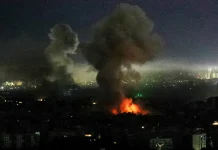
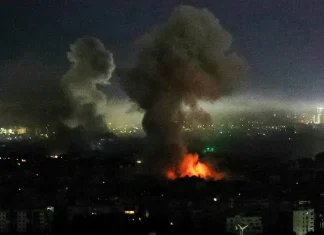
From the Basra shoreline the other night, the sea looked like a molten answer to a question nobody wanted. Two tankers burned in the Gulf, enormous orange tongues licking at black smoke that turned the sky jaundiced. Local fishermen, who have read the tides and the weather like scripture for generations, stood on the quay and watched in silence — a silence that felt, in the bone, like a forewarning.
“I’ve seen fires at sea before, but nothing like this,” said Hassan, a 54-year-old fisherman whose hands still smelled of diesel and sea. “When the flames reached the waterline, we all felt smaller. My son asked if we might have to leave Basra like my grandfather left during the war. I didn’t know how to answer him.”
Displacement: A Human Tide Swells
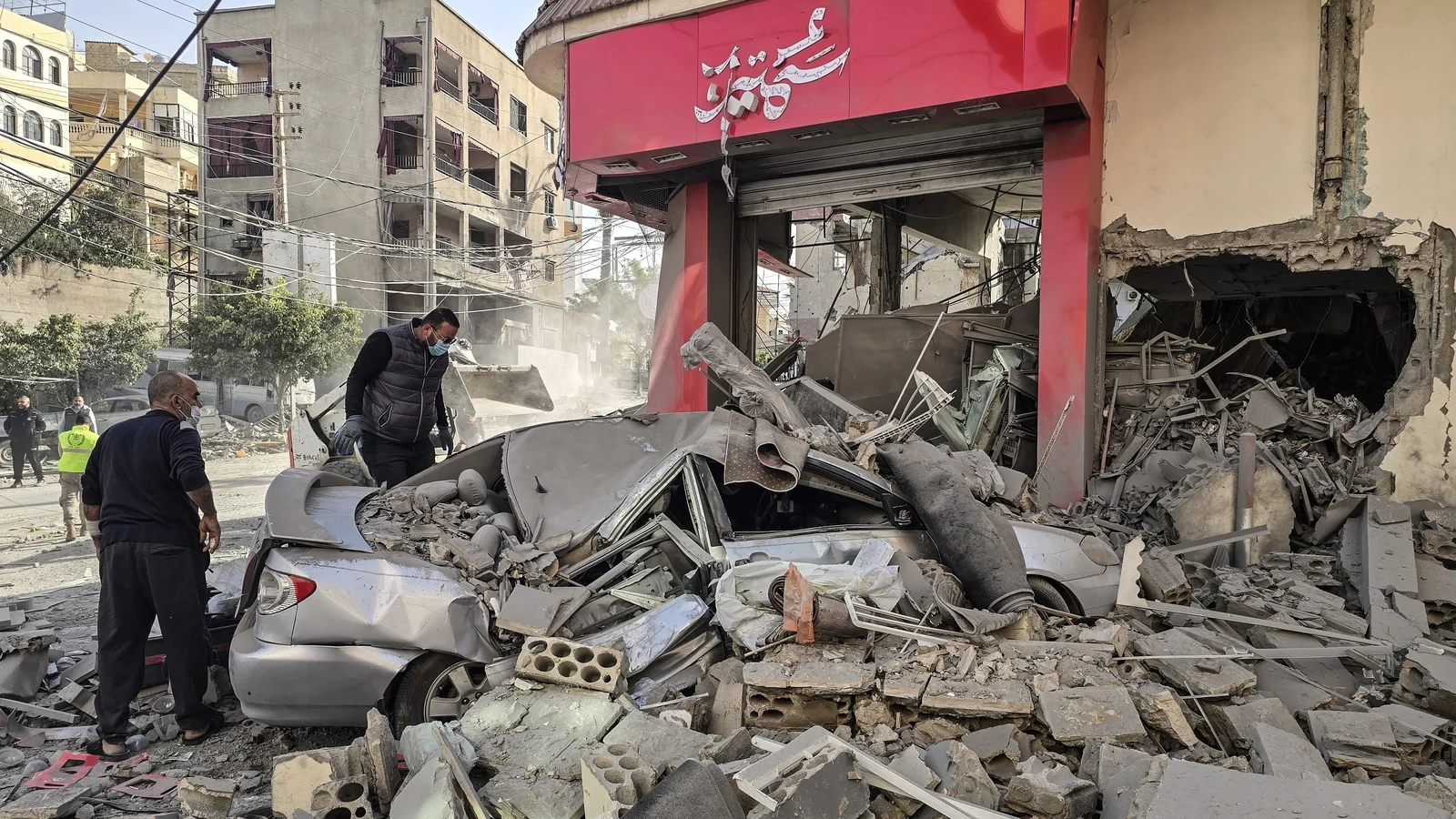
For humanitarian agencies, the images are more than dramatic headlines. The UN refugee agency now estimates that up to 3.2 million people inside Iran have been displaced since the conflict escalated nearly two weeks ago — a staggering number that reads like a number of a crisis from another era.
“This is an initial estimate, and it’s a tragic one,” a UNHCR spokesperson told me, voice low over the phone. “Household surveys and field reports show whole neighborhoods uprooted. That figure will likely climb as fighting continues and access to some areas remains restricted.”
Put another way: in a country where cities can host entire extended families under one roof, the ripple effects of displacement reach into schools, clinics and the informal labor markets that sustain millions. Children are the most fragile threads in this tapestry — UNICEF reports more than 1,100 children have been killed or injured since the fighting accelerated. Hospitals report pediatric wards filling with anxious families; teachers try to salvage learning in the backrooms of community centers.
The Maritime Shock: Energy Choked, Markets Jittery
On land, the human drama is plain. At sea, the crisis has become a chokehold on global energy flows. After President Trump declared the conflict effectively over — and then pledged the United States had “virtually destroyed Iran” — a different reality surfaced: drone sightings and attacks across the Gulf and into the Arabian Peninsula, tankers ablaze, and a new calculus for insurers and shipping lines.
Oil prices, which dipped briefly after the announcement of a coordinated release of reserves by the International Energy Agency, have rallied past $100 a barrel. The IEA said its member countries would release 400 million barrels from strategic stocks — nearly half of that from the United States — in what it called the biggest coordinated intervention in recent decades. But as analysts pointed out, even a release of that scale would cover only about three weeks of supply through the Strait of Hormuz if the waterway remained impassable.
“Strategic reserves are a blunt instrument,” explained Dr. Anjali Rao, an energy policy analyst in London. “They can alleviate the immediate supply crunch, but they don’t change the underlying risk to the shipping lanes or repair the pipelines and refineries that can be damaged in a prolonged conflict. Markets are responding not just to barrels but to uncertainty.”
Banking, Business and Everyday Disruption
The ripple goes beyond oil. Citibank temporarily closed its branches in the United Arab Emirates; HSBC announced branch closures in Qatar. Iran’s Revolutionary Guards’ statement that it considered banks legitimate targets — and its warning that people should stay away — sent a current of fear through cities that had been hubs for international commerce.
“We had customers come today asking what would happen if the bank closed for weeks,” said Leila, a branch manager in Dubai who had moved to the UAE from Tehran a decade ago. “People keep asking the same question: How long will this last? No one has an answer.”
Violence Spreads: From Ports to Border Towns
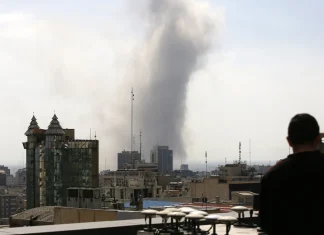
The attacks are not limited to tankers. Drones and explosive-laden boats have struck vessels near Iraq and the United Arab Emirates. Images filmed from the shore at Basra and verified by Reuters showed the scale of the devastation. Iraqi authorities said the vessels had been hit by explosive-packed boats; at least one crew member was reported killed. Earlier in the day, a Thai bulk carrier was set ablaze, a strike claimed by Iran’s Revolutionary Guards, who accused the ship of ignoring orders.
Across the Levant, the map of confrontation widens. Hezbollah in Lebanon launched a heavy rocket barrage into northern Israel, provoking new orders from Israel’s defense ministry to expand operations. “If Lebanon’s government cannot stop Hezbollah, we will act ourselves,” Defense Minister Israel Katz warned in a terse statement, underlining how local actors are being drawn deeper into a conflict that threatens regional stability.
What Are the Stakes? Beyond the Headlines
Look up from any list of statistics and you see the same human contours: mothers searching for milk, traders unable to finish contracts, a tanker crewman who won’t board a ship to feed his family. The violence is being fought with new tools — drones, cyber webs, asymmetric maritime tactics — but the costs feel ancient: displacement, lost livelihoods, the slow grinding down of normal life.
“What we’re watching is not just military escalation,” said Professor Omar Haddad, an expert in Middle Eastern security. “It’s the weaponization of commerce. When ports, banks and shipping lanes become legitimate targets, the ordinary economic interdependence that kept this region connected for decades is being deliberately frayed.”
Iran’s leadership, according to its military spokespeople, has signaled a strategy to create a sustained economic shock to force political concessions — a chilling admission that civilians and global markets are now instruments of war. Tehran warned it could close the Strait of Hormuz and has said it will not negotiate with the United States while attacks continue. Global oil flows — nearly a third of seaborne crude transits the Hormuz choke point in calmer times — are suddenly in peril.
Human Stories, Global Reflections
Back in Basra, the fishermen began to gather wood to light small fires on their boats, more as warmth than signal. A woman selling tea at the harbor, who declined to give her name for fear of retribution, brewed cup after cup and offered one to me. “It feels like the world is watching us as a spectacle,” she said, stirring sugar into the tea. “But no one asks what we will eat if the ships don’t come, if the oil keeps burning.”
Her words lingered. They ask of us a difficult question: how do we respond when infrastructure, markets and politics collide to displace families and unsettle an entire region? Is the global community equipped to supply not just oil but shelter, medicine and the patience required to rebuild lives?
Where Do We Go From Here?
There are no simple answers. Diplomatic channels hum with activity, strategic stocks move, war rooms convene. Yet the immediate, human needs press: shelter for the displaced, protection for civilians near ports and pipelines, safe corridors for aid. The world can turn the taps of oil policy and money markets, but it cannot instantly plug the social ruptures.
So I ask you, as a reader watching this from elsewhere in the world: how does your country’s policy meet this moment? What responsibility do citizens have when global supply chains and geopolitics bend toward war? And perhaps most urgently, how do we keep the stories of people like Hassan and the tea seller alive in our public conversations?
When the fires at Basra dim and the hulls are cooled, the true reckoning will begin: how to stitch back livelihoods, reopen lanes of commerce without turning them into instruments of threat, and keep families in their homes. Until then, the Gulf will keep sending up plumes of smoke that cut not just the sky, but the fragile threads that bind all of us to one another.