The planet’s frozen frontiers are approaching a point of no return, according to two UN-backed reports that warn crossing 1.5C of global warming would set off “irreversible” damage to glaciers, sea ice and other parts of the cryosphere, with knock-on effects felt far beyond the poles and high mountains.
“We cannot negotiate with the melting point of ice”, one of reports the stated, warning that even if global heating is held below 1.5C, sea levels could still climb by between two and nine metres.
Under the landmark 2015 Paris Agreement, countries committed to keeping warming well below 2C while pursuing efforts to cap it at 1.5C in a bid to avert the most dangerous consequences of climate change.
But one of the new reports said that overshooting the 1.5C limit “will bring large-scale and in many cases irreversible impacts” for the cryosphere — the Earth’s ice in all its forms.
It said the shrinking of glaciers and sea ice, the thawing of permafrost and the faster rise of seas would reverberate widely, driving threats that range from flooding to mounting water shortages.
There could also be benefits for sea ice if warming is kept below 1.5C
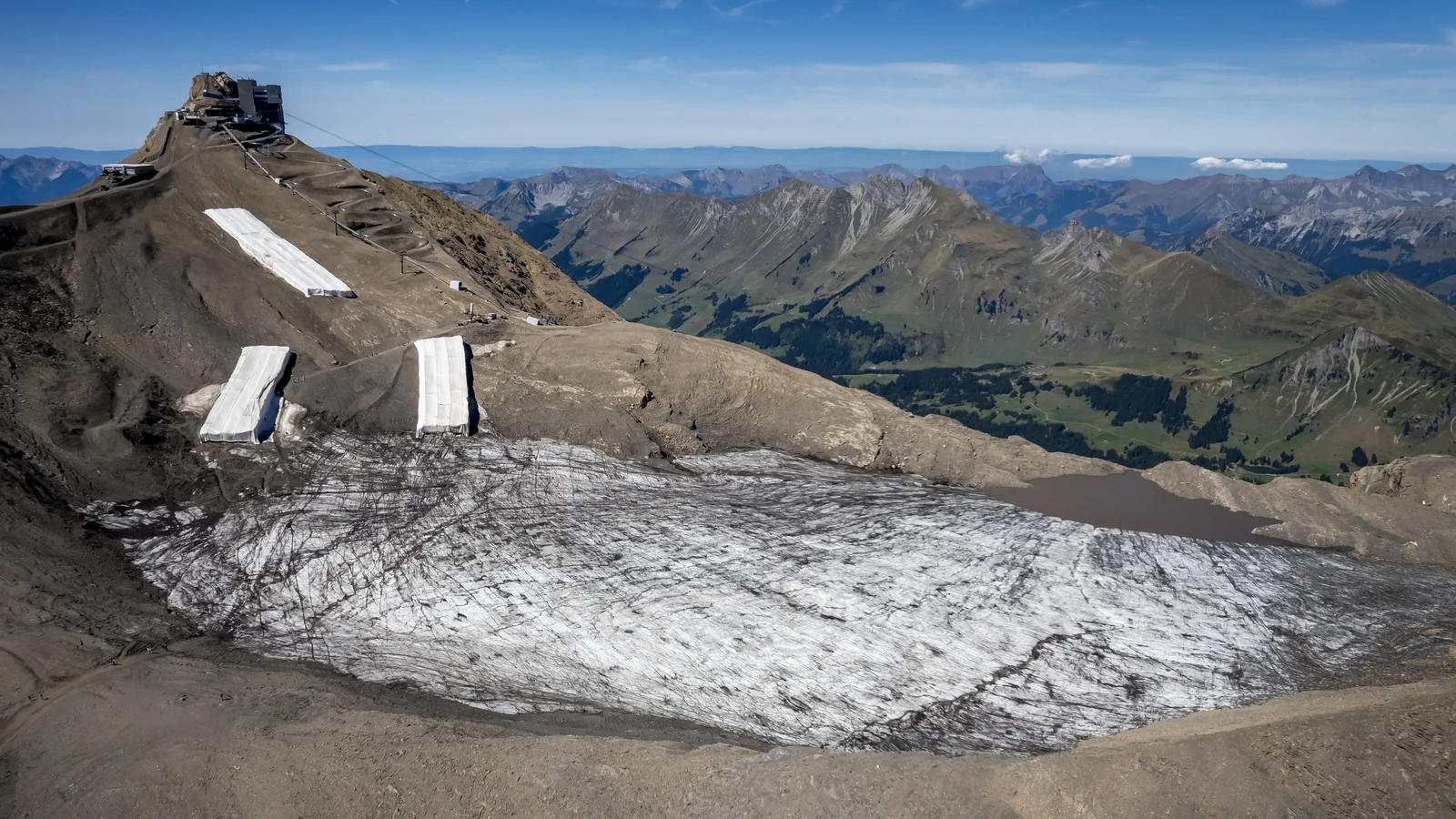
Some of the damage is already evident, the reports noted, pointing to Switzerland where glacial mass has fallen by 20%.
And while the 1.5C target remains a central benchmark, the UN warning said it is already too high to protect the cryosphere, describing today’s warming levels as “already unsafe” for the Arctic, Antarctic, mountain glaciers and polar oceans.
“Although returning to 1.5C will slow ice loss, a truly ‘safe’ temperature for Earth’s ice is now thought to be closer to 1C or even below over the coming centuries,” it added.
Global warming has already reached 1.37C above pre-industrial levels and, according to the European Copernicus network, the world could pass the 1.5C threshold around 2030.
“There are no good outcomes in exceeding 1.5C,” said glaciologist James Kirkham, lead author of one of the reports, entitled “Overshoot and the Cryosphere”, which was written with 80 scientists.
“To contain the global fallout and damage from ice loss in the world’s polar and mountain regions, overshoot needs to be kept to the absolute minimum.
“Every extra fraction of a degree and every year spent in overshoot means more devastating impacts,” he said.
Slow recovery
Scientists cautioned in particular about the danger of tipping points and said that even if global temperatures later dropped back below 1.5C, the road to recovery would be long and uncertain.
Bringing warming down to under 1.5C — and even closer to 1C — could allow some glaciers to partially regenerate, and it could also offer benefits for sea ice, the reports said.
However, Matthew England, an oceanographer and climatologist at the University of New South Wales in Australia, said recovery could take “decades to centuries”.
The second report – “State of the Cryosphere 2026. The Cost of Overshoot” – shows that exceeding 2.8C into the next century would have significant consequences.
It said sea levels could rise by up to five centimetres a year by 2150, compared with the current 0.45 centimetres, while thawing permafrost could emit as much carbon dioxide each year as the United States, the world’s second-largest polluter.
Assessing risks to ocean circulation, scientists said that if warming reaches 3C, “severe and possibly abrupt circulation disruptions become extremely likely”.
Among the major threats cited was a weakening of the Atlantic Meridional Overturning Circulation, a shift that would bring “drastic impacts on temperatures in northern Europe”.
The reports also highlighted a worst-case — but “not-so-improbable” — projection in which the world reaches 2.6C of warming by 2100 even if countries fulfil their climate pledges.
“Temporarily exceeding 1.5C does not mean that the goals of the Paris Agreement are irrelevant but instead makes them more urgent,” Mr Kirkham said.
He added: “Returning to 1.5C or below by 2100 remains possible with sufficient political ambition and urgency, specifically by speeding the transition away from fossil fuel use to reach net zero by mid-century.
“Such urgent action can prevent and even reverse some cryosphere loss.”
Gunjan Silwal, a Nepali glacier researcher, said decisions taken over the next few years “will lock in the scale of the damage”, and warned that August’s mountain and glacier collapse — which killed more than 1,400 people and left over 5,000 missing — was “only a foretaste”.
The report said current trajectories would bring “rapidly increasing environmental hazards” for communities living in mountain regions as well as those downstream.
Those dangers would include landslides and flooding, with extreme snow and rain events becoming “so frequent as to become unmanageable”.
It said this would then give way to longer stretches of drought and deepening water scarcity as reduced snowpack in mountains cuts the water supply to downstream areas.
The report said “this can be expected to drive large-scale downstream population displacement”.