A potential breakthrough to end the fighting between the United States and Iran is being billed as imminent by Washington and Islamabad, but Tehran has offered no confirmation on the timetable and hardline voices inside Iran are already on the streets.
President Donald Trump wrote on social media yesterday that a deal with Iran was set to be signed today, on his 80th birthday.
Pakistani Prime Minister Shehbaz Sharif said the parties had settled on a framework for a peace agreement and that Islamabad was making arrangements for an electronic signing, with technical-level talks expected to follow in the coming week.
Iran, however, did not verify that a signing would take place today.
Iranian Foreign Ministry spokesperson Esmaeil Baghaei, speaking before Mr Trump’s post, urged caution about predicting timing. State media quoted him as saying, “It will not be tomorrow [Sunday],” while adding it could occur “in the coming days.”
In his Truth Social post, Mr Trump said that once a framework agreement is signed, the Strait of Hormuz — a critical route for global oil supplies that Iran has blocked — would immediately be “open to all.”
Iranian hardliners remain visible
Even after US bombings severely degraded Iran’s military-industrial base and damaged its military, experts say the conflict has tightened — not loosened — the grip of hardline Revolutionary Guard dominance.
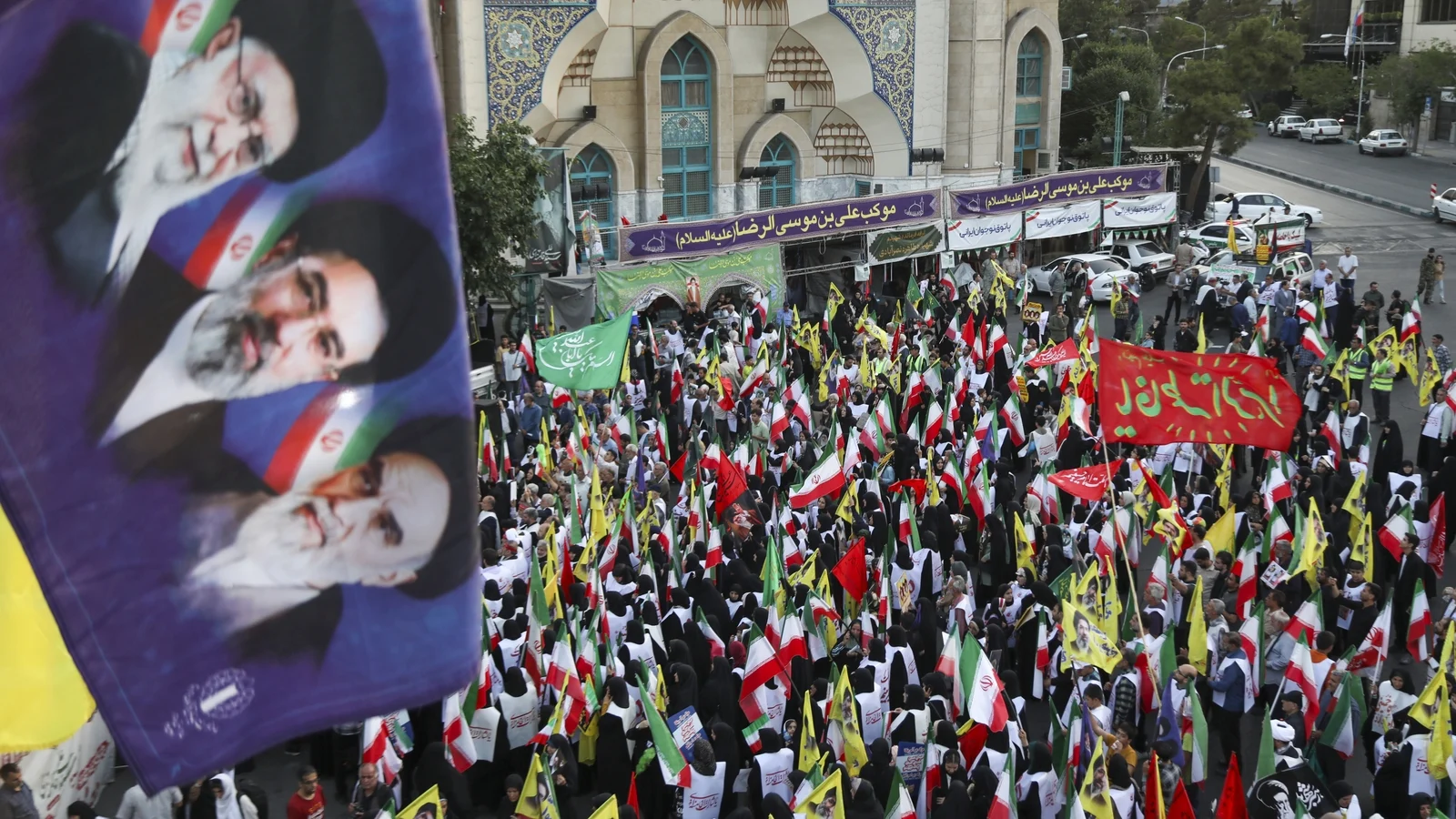
Videos circulating on social media and appearing on Iranian news websites showed groups opposed to an agreement assembling in public squares and outside the Foreign Ministry in Tehran. The crowds appeared to direct their anger at Iranian Foreign Minister Abbas Araqchi, chanting, “Araqchi have some shame, let go of America!”
Reuters could not immediately verify the videos.
When the US and Israel began the war against Iran on 28 February, Mr Trump publicly urged Iranians to rise up and seize control of state institutions.
An oil tanker arrives in South Korea have been blocked in the Strait of Hormuz since February
Despite signs over the past two days that the US and Iran were moving toward an agreement, hostilities have persisted. The US military continues to impose a blockade on Iran while trying to ease Iran’s chokehold on the Strait of Hormuz, which carried 20% of the world’s oil shipments before the war.
Early yesterday, US forces shot down multiple Iranian one-way attack drones headed toward the strait, the US military said.
Israel, which says it is not a party to the US-Iran deal, said yesterday it struck more than 70 sites in Lebanon over a 24-hour period, targeting Iranian ally Hezbollah.
Israeli Prime Minister Benjamin Netanyahu has clashed with Mr Trump over US demands that Israel scale back military action in Lebanon to give Washington room to clinch a deal with Tehran.
On Friday, Mr Araqchi said that although the terms could still change, the tentative agreement demonstrated that Iran had emerged stronger from the conflict.
Opening strait a priority, nuclear talks later
At pro-government rallies held across Iran last night, residents and news agencies reported that hardliners who oppose the framework agreement voiced their displeasure loudly.
Sources on all sides of the talks said the proposed memorandum of understanding centres on reopening the strait and ending the US naval blockade.
Negotiations over Iran’s nuclear programme — a central justification Mr Trump has cited for the war — would come later.
“Iran is going to open up the Strait of Hormuz, that’s a requirement. It could be open with no tolls. As they do that, we will lift our blockade,” a US official told reporters.
“It’s going to happen in conjunction, and part of the next step, the phase after that, is going to be the demining of the straits,” the official said, adding that countries in the Group of Seven major powers could play a role.
Mr Trump discussed efforts to end the Iran conflict during a call with British Prime Minister Keir Starmer.
According to draft terms described to Reuters by multiple sources, the US would start releasing billions of dollars in frozen Iranian assets and waive sanctions on Iran’s oil exports in exchange for Iran reopening the strait.
Iran’s Fars news agency quoted Mr Baghaei as saying that releasing Iran’s frozen assets was a core element of the agreement, and that Iran would have to charge for services in the Strait of Hormuz.
He said foreign military bases in the region must end, the agency reported, without elaborating.
Iran’s nuclear programme would be addressed during a 60-day period of talks.
A US official said the agreement would ultimately result in the dismantling of Iran’s nuclear programme, with its stockpile of highly enriched uranium to be destroyed and removed.