When a Country’s Fate Is Decided by Another’s Press Room
There are moments in history when the map on a world atlas could be redrawn not by diplomats or ballots, but by a command from a briefing room. This week, the creases of geopolitics were painfully visible: US special forces swept into Venezuela, capturing President Nicolás Maduro and his wife, flying them to New York to face charges, and with that act, Washington signaled it would exert direct control over Caracas’ most prized asset—its oil—“indefinitely,” according to senior US officials.
The scene is almost cinematic. A leader wrested from power, arraigned in an American courtroom; a capital city in shock; families mourning in the barrios; and the world asking a single, urgent question: who now runs Venezuela?
The Raid and the Human Toll
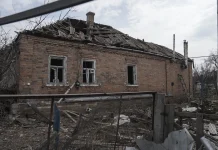
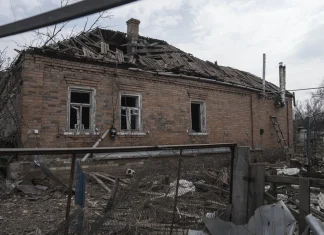
Caracas awoke to violence and confusion. The interim government in the capital says at least 100 people were killed and roughly the same number injured during the operation. Officials in Havana added to the grief by reporting that 32 Cuban military personnel—who for years have served in advisory and protection roles for Venezuela’s leadership—were among the dead.
“My niece was at home when the helicopters came,” said Marisela Gómez, a schoolteacher from Petare, her voice tight with disbelief. “We heard explosions and then the street lights went out. For two days the children have been too scared to go outside.”
Maduro and his wife, Cilia Flores, appeared in a New York courtroom this week, walking under guard but reportedly on their own feet, as prosecutors read charges related to drug trafficking. The image—of a leader once ensconced in the presidential palace now processed through the American judicial system—will be replayed in living rooms around the globe for years to come.
Control of Black Gold: The US Plan
At the center of this unfolding story is crude oil. Venezuela is not merely a country; it is a major repository of hydrocarbon wealth, with proven reserves that rank among the largest in the world—estimates commonly cited place its reserves at roughly 300 billion barrels.
Yet those riches have been a kind of curse. Production has collapsed over the past few decades from the levels of several million barrels per day in Venezuela’s heyday to under a million barrels per day in recent years, as infrastructure deteriorated and investment dried up. That decline makes the country both strategically alluring and logistically challenging for any new operator.
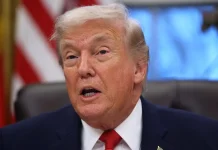
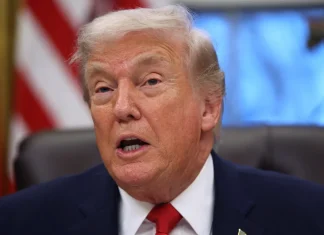
White House officials have been blunt. “We obviously have maximum leverage over the interim authorities in Venezuela right now,” a senior spokesperson told reporters. “We will market Venezuelan crude—first the stored, backed-up volumes, and then, indefinitely, production as it comes online.”
President Trump has reportedly announced a plan for Venezuela to transfer between 30 million and 50 million barrels of oil to the United States immediately, with the intention that American companies would sell the crude and that Venezuela would use the proceeds to purchase US-made goods—everything from agricultural products to medical devices and energy equipment.
“It’s a classic resource-control play—strategic, but risky,” said Elena Cortez, an independent energy analyst in Houston. “If you think in cyclical terms, buy low, invest to rebuild capacity, then reap the upside when the fields recover. But you’re talking about political and operational risks on top of extraordinary technical work.”
To cement that leverage, Washington has seized two oil tankers in recent days, including a Russian-linked vessel that US authorities said had been “deemed stateless” after flying a false flag. Moscow condemned the seizure, and the move has added a fraught, international dimension to what Americans are calling a post-Maduro transition.
Voices from the Streets and the Halls of Power
Not everyone accepts the new order. Interim vice-presidential figure Delcy Rodríguez called the US action “a stain on our relations such as had never occurred in our history,” asserting that no foreign power governs Caracas—a defiant claim that many Venezuelans greeted with weary skepticism.
“They tell us we are free, but who decided to fly our president away?” asked Jorge Alvarez, a mechanic near the market in La Vega. “Freedom isn’t when your leaders are taken and your oil is sold on someone else’s terms.”
In Washington, officials defended the approach. “We’re continuing to coordinate with the interim authorities,” one White House aide said. “Their decisions are going to be dictated by the United States of America until stability is restored.”
Senator Marco Rubio, who met with nervous legislators on Capitol Hill, insisted the US was not improvising. “We have thought this through,” he said. “There is a plan for governance, for economic recovery, and for restoring the Venezuelan state—under international oversight.”
Local Color: Small Details That Matter
Walk around any Venezuelan neighborhood and the impacts are visible in small, human ways: the bakery that now sells loaves on a rationed basis; the mechanic who keeps his garage lit by the hum of a shared generator; the school where teachers use candles to demonstrate physics after the lights go out. Food lines snake in the mornings, and old café faces—those who remember Chávez’ early days—speak in low tones about pride, loss, and a future now traded like a commodity.
What This Means for the Region and the World
Ask yourself: if a powerful country can reach across borders, arrest a sitting leader, and seize the revenues of another state’s natural resources, what does that mean for international norms? The echoes are of a revived Monroe Doctrine—an assertion of hemispheric prerogative that will alarm capitals in Moscow, Beijing, and even Brasília.
Energy markets will watch closely. Even if the initial transfer of 30–50 million barrels is fulfilled, rebuilding Venezuela’s oil sector will take years, substantial capital, and a stable security environment. And the humanitarian question is immediate: who will ensure that oil revenues are used to rebuild hospitals, restore water systems, and feed families who have been dispossessed for a decade?
“You can talk about barrels and balance sheets all day,” said a Caracas-based aid worker who asked not to be named. “But a toddler needs milk today. That’s the test of any plan.”
Quick Facts
- Estimated Venezuelan proven oil reserves: roughly 300 billion barrels (among the world’s largest).
- Reported casualties from the operation: at least 100 dead and a similar number injured; Cuban authorities cited 32 Cuban military among the dead.
- Immediate oil transfer discussed: 30–50 million barrels to the United States.
- Venezuela’s recent oil production: collapsed from several million barrels per day in prior decades to under 1 million bpd in recent years.
Looking Ahead
We are at a crossroads where raw power meets fragile institutions. Will Washington’s heavy-handed stewardship deliver reconstruction, rule of law, and improved living standards? Or will it deepen divides, provoke counter-moves by foreign powers, and leave Venezuelans waiting longer for the basic stability they deserve?
As you read this, consider the human faces behind the headlines: the mother in a Caracas barrio counting the hours until her next meal; the engineer in Maracaibo whose career was built on oil wells now idle; the immigrant families in Bogotá watching events with a mix of relief and dread. The answers that emerge in the coming months will not only shape Venezuela’s destiny but also test the rules by which nations govern one another.
What would you expect from a global power asserting such direct control over another country’s resources? And if you were Venezuelan, what would you demand from those now calling the shots?