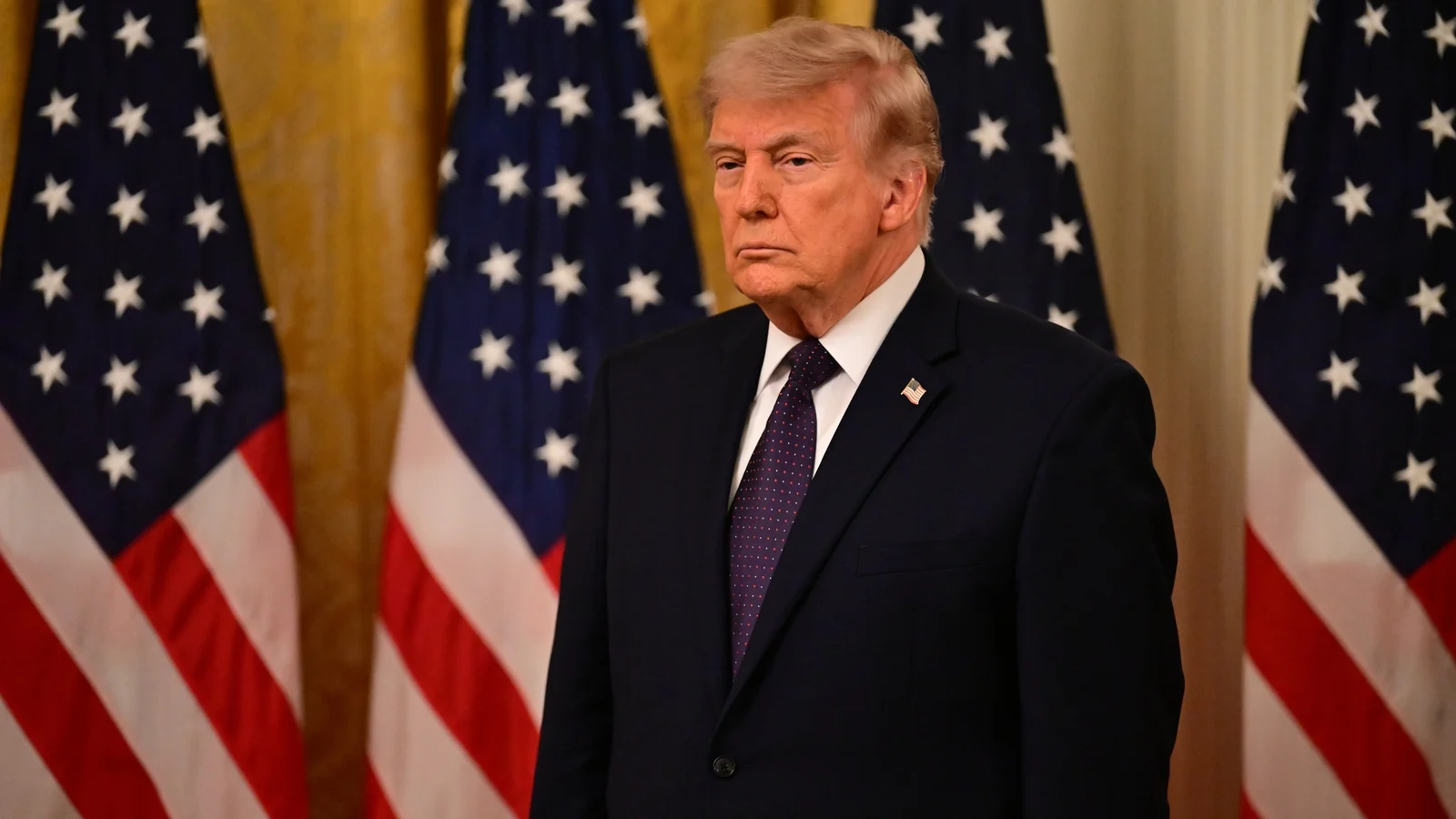
With the Middle East war still casting a shadow over global shipping and energy markets, US President Donald Trump said he is heading to the White House Situation Room to decide whether to seal a peace deal with Iran.
“I will be meeting now, in the Situation Room, to make a final determination,” Mr Trump wrote in a lengthy social media post, reiterating that Iran must commit to never obtaining nuclear weapons and must allow the Hormuz shipping lanes to reopen.
In the same post, Mr Trump asserted that Iran “will complete the immediate removal” of mines in the strait and that the US naval blockade of Iranian ports “will now be lifted,” clearing the way for oil and other tankers to resume movement.
But it remained unclear whether Tehran had accepted those terms, or whether any blockade had in fact been lifted before Mr Trump makes his decision.
Mr Trump also laid out specific language on Iran’s nuclear material, saying enriched uranium stockpiles “will be unearthed by the United States… in close coordination and conjunction with the Islamic Republic of Iran, plus the International Atomic Energy Agency, and DESTROYED.”
After reports that Iran has sought financial compensation for the war and that the White House has discussed the possibility of investments, Mr Trump said “no money will be exchanged, until further notice”.
He added that only “items, of far less importance, have been agreed to”.
In Tehran, Iran’s top diplomat Abbas Araghchi told his Omani counterpart that any deal to end the war hinged on Washington backing away from what Iran calls overreach, according to Iran’s foreign ministry.
“The Iranian minister of foreign affairs… indicated that arriving at a final agreement depended on ending the American party’s attitude based on excessive demands and shifting and contradictory positions,” the ministry said, summarising a call between the two ministers.
We need your consent to load this rte-player contentWe use rte-player to manage extra content that can set cookies on your device and collect data about your activity. Please review their details and accept them to load the content.Manage Preferences
‘Not there yet’
US Vice President JD Vance said an agreement remains unfinished, even as talks appear to be nearing a conclusion.
The United States and Iran reached an agreement yesterday to extend their ceasefire and lift restrictions on shipping through the Strait of Hormuz, pending US President Donald Trump’s approval, sources told Reuters.
“It’s hard to say exactly when or if the president is going to sign the MOU. We’re going back and forth on a couple of language points,” Mr Vance said.
“I can’t guarantee that we’re going to get there, but right now I feel pretty good about it,” he said.
Iran’s Tasnim news agency reported today, citing a source, that the text still has not been finalised and that the wording of the potential memorandum of understanding had “undergone some changes in recent days”.
Iran has yet to comment on news of the proposed deal, which was first reported by Axios
US sources confirmed reporting by Axios that the two sides had agreed on a memorandum of understanding to prolong the ceasefire and launch negotiations on Iran’s nuclear programme.
Under the proposed deal, shipping through Hormuz would be unrestricted, with no tolls or harassment; Iran would remove all mines within 30 days; and the United States would lift its naval blockade if commercial traffic resumes, Axios reported.
US Secretary of State Marco Rubio met with his Pakistani counterpart at the State Department in Washington today, as negotiations drag on.
His meeting with Foreign Minister Ishaq Dar — whose country is acting as mediator between the US and Iran — took place days after Rubio travelled to India, Pakistan’s historic rival.
The two officials did not address the press.
US strikes on the southern Iranian port city of Bandar Abbas prompted Iran to target “the American airbase that served as the source of the attack,” state broadcaster IRIB reported, citing the Revolutionary Guards.
The Guards did not specify the location of the base, but Kuwait, which hosts US troops, said its air defences responded to incoming fire.
Kuwait’s foreign ministry condemned “the criminal Iranian attacks that targeted the territory of the State of Kuwait with missiles and drones, in a dangerous escalation”.
US Central Command called the attack an “egregious ceasefire violation”.
Iranian forces had fired at four ships trying to transit the Strait of Hormuz without authorisation, IRIB reported yesterday. Iran has blockaded the waterway since the war began.
US forces said they had intercepted five attack drones in and around the strait, and prevented the launch of a sixth near Bandar Abbas.
Iranian foreign ministry spokesman Esmaeil Baqaei called the US strikes truce “violations”.
A US official told AFP the actions were “measured” and “intended to preserve the ceasefire”.
Iran’s Guards threatened a “firm response” to any renewed attacks.
Strait standoff
For Iranians watching the truce teeter, the uncertainty has become part of daily life. Before yesterday’s strikes, Amir, a 27-year-old software developer in Tehran, said the possibility of renewed fighting never feels far away.
“I feel like nothing is certain yet,” he said.
“The daily question is: Will there be missile strikes tonight?”
At the centre of the talks is the Strait of Hormuz, a vital maritime corridor whose closure has squeezed the enormous volumes of oil and gas that typically flow through it.
Analysts have warned that any prolonged disruption could keep energy prices elevated and make inflation harder to contain, sharpening the economic cost of the conflict.
When asked about a possible short-term arrangement allowing US ally Oman and Iran to control the strait, Mr Trump issued a threat toward Muscat.
“No, the strait is going to be open to everybody,” Mr Trump said.
“It’s international waters and Oman will behave just like everybody else or we’ll have to blow them up.”
Treasury Secretary Scott Bessent speaks during a White House press briefing
US Treasury Secretary Scott Bessent echoed the warning, saying Washington would “aggressively target” Oman if it helped impose tolls in the strait.
Mr Bessent said the US would also move to cut Iranian airlines off from landing slots, refuelling and ticket sales, while still permitting travel for religious pilgrimage and humanitarian reasons.
Oman, which mediated US-Iran talks in Geneva before the war, has itself been attacked by Tehran.
Mr Baqaei described the threat toward Oman as “a worrying sign of the normalisation of anarchy and intimidation in international relations”.
Qatar’s emir also spoke by phone with Mr Trump about efforts to curb escalation, after Doha hosted senior Iranian officials this week.
Lebanon escalation
In Lebanon, a separate ceasefire has failed to halt clashes between Israel and Iran-backed Hezbollah, keeping another front of the conflict active.
Iran has insisted any agreement to end the war must apply to Lebanon.
Israel’s military said yesterday it carried out a precise strike in the Beirut area, while Lebanon’s military said the attack hit an apartment south of the capital.
AFPTV footage showed smoke rising from the area on the edge of Beirut’s southern suburbs, a Hezbollah stronghold.
Read more:
Latest Middle East stories
The fresh escalation comes as Lebanon and Israel prepare for talks between military delegations at the Pentagon, and for US-brokered talks early next week — the fourth round since the latest Israel-Hezbollah conflict erupted.
Lebanon’s health ministry said the Beirut-area strike killed three people, including a woman, her baby daughter and a Syrian child, and wounded 15.
It said Israeli attacks had killed 3,324 people, up 55 from the previous day, when Israel declared most of south Lebanon “combat zones” and told residents to leave.
The Israeli military said a soldier was killed Wednesday by a Hezbollah drone near the Lebanon border, bringing its military death toll to 23 troops, along with one civilian contractor.