Smoke on the horizon: how a regional flare-up is reaching the offices, ports and petrol pumps of the world
On a windswept quay outside Dubai, a burnt-out silhouette of an oil tanker still smells of diesel and burnt rubber. Sailors in grease-streaked overalls point toward a blackened hull as cranes loom behind them like guilty colossi. Far away in Tehran, shopkeepers closed their shutters early and lit samovars of tea in their kitchens as they listened to a barrage of statements that could redraw maps of trade and security.
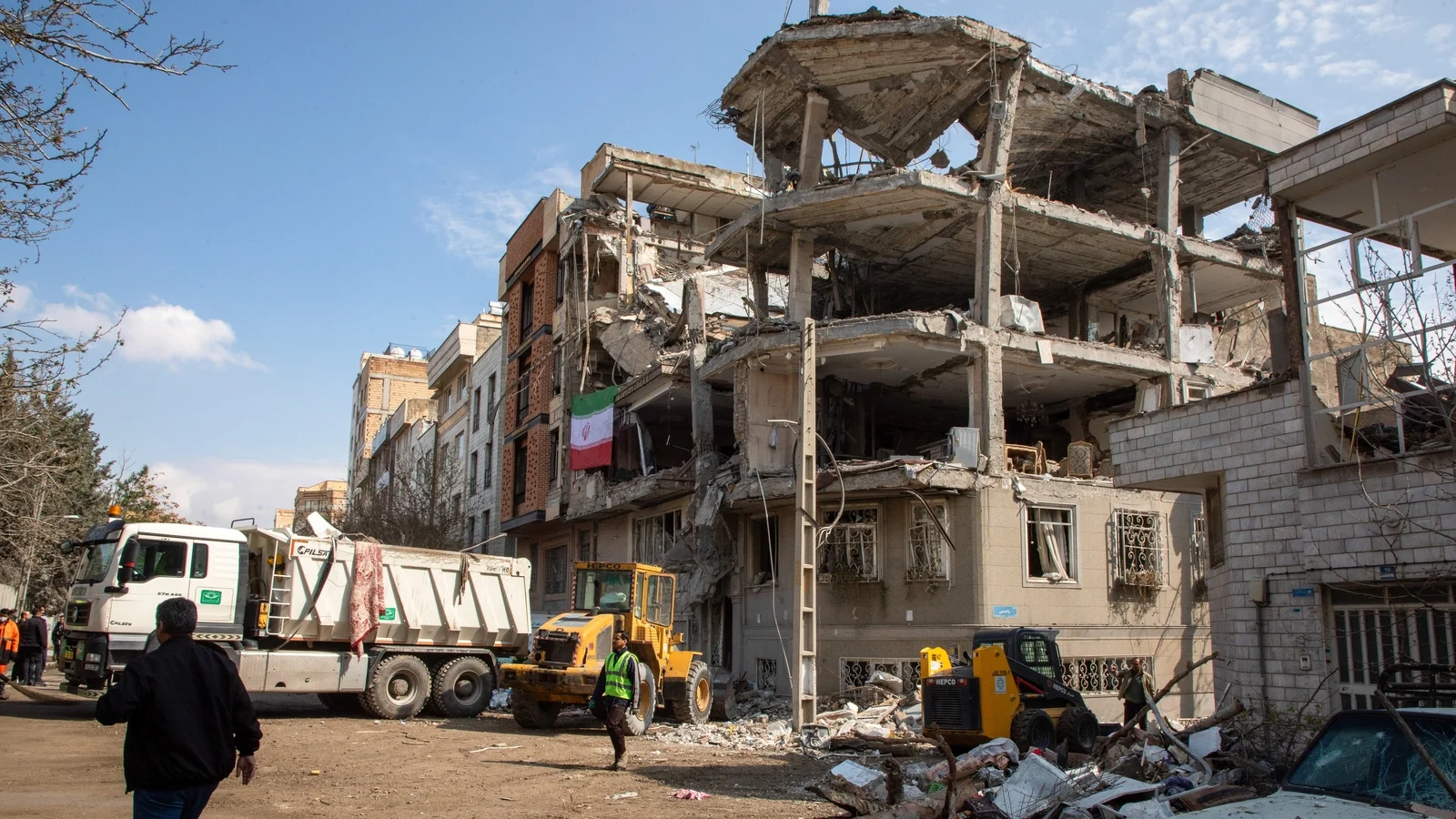
What began as tit-for-tat strikes and counterstrikes has slid into something broader and stranger: a public threat by Iran’s Revolutionary Guard Corps to target American companies operating in the region, an escalatory gambit that reads less like classic warfare and more like a campaign of economic and technological intimidation.
The threat—and the list
On Tuesday the IRGC issued a terse communique saying that, starting at 8pm Tehran time on April 1, it would “target US companies in the region” in retaliation for attacks inside Iran. The communiqué named a group of household names — including Microsoft, Google, Apple, Intel, IBM, Tesla and Boeing — warning that “the destruction of their respective units” would be the price for further operations inside Iranian territory.
A White House official, speaking on background, pushed back this week: “The United States military is and was prepared to curtail any attacks by Iran, as evidenced by the 90% drop in ballistic missile and drone attacks by the terrorist regime,” the official said. The choice to speak without attribution reflected the hush that often surrounds the more sensitive lines of military signaling.
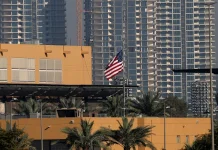
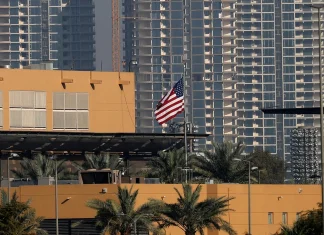
The immediate practical effect was swift and uneven: the US State Department circulated a blunt travel advisory for Americans in Saudi Arabia, urging citizens to “shelter in place” and advising that hotels, schools and gathering places could be potential targets. The Embassy warned Americans to stay away from windows and remain inside until further notice.
Names on a list, lives on the line
Lists have power. They make abstract geopolitics feel personal. Imagine a Dubai hotel manager, a Microsoft campus cleaner in Abu Dhabi, or a Boeing supplier in Jeddah reading their company’s name on a list that implies direct danger. It is one thing to hear about an exchange of missiles; it is another to see your employer singled out.
- Companies reportedly named by the IRGC: Microsoft, Google, Apple, Intel, IBM, Tesla, Boeing (among 18 others).
- Start date cited in the IRGC statement: 8pm, April 1 (Tehran time).
- US response: travel advisory for Americans in Saudi Arabia; White House reiteration of military readiness.
On the water: tankers, tracks and the smell of smoke
At 3am local time, a fire aboard the Kuwait-flagged tanker Al-Salmi turned a quiet patch of the Gulf into an inferno. Authorities in Dubai later said the blaze — blamed on a drone strike — was brought under control with no crew injuries and no oil spill reported. Satellite monitors and shipping trackers painted a stark picture: the Al-Salmi was carrying roughly two million barrels of crude, a mix of about 1.2 million barrels bound for Qingdao from Saudi sources and 800,000 barrels of Kuwaiti crude, according to tracking service TankerTrackers.com and maritime registries.
The market felt it immediately. Benchmark Brent crude ticked above $114 a barrel in intraday trading, and American drivers watched the national average price of gasoline cross $4.00 per gallon for the first time in more than three years, according to price-tracker GasBuddy. For many households, these aren’t abstract numbers — they are the slow theft of grocery money, the added sting at the pump.
“We feel it at the docks,” said Hassan, a foreman at a shipyard near Jebel Ali who asked that his family name not be printed. “When ships don’t come, when crews are scared — there is a ripple. Men can’t send money home. Food prices go up. It’s the little things that break people.”
Washington’s posture: preparations and warnings
Back in Washington, senior officials have described a posture of readiness and insistence that they can blunt Iranian attacks. US military leaders say they have increased strikes on key Iranian assets and have targeted what they describe as maritime capabilities. “We are continuing to degrade and destroy,” General Dan Caine told reporters, referring to efforts against naval and industrial targets.
Reinforcements have been arriving in the theater: elements of the US Army’s 82nd Airborne Division began to deploy to the region, according to senior US officials. For diplomats and analysts that signals both deterrence and the grim possibility of expanded operations.
“Deploying airborne units isn’t a theatrical gesture — it’s a signal that planners want to keep a full menu of options open,” said Dr. Laila Abbas, a Middle East security analyst at a London-based think tank. “But the more kinetic options you present, the easier escalation becomes.”
Voices from the ground and corridors of power
On the streets of Tehran, reactions were muted and complex. A fruit vendor, wrapping pomegranates in paper, summed up a common sentiment: “We are tired of war. We want guarantees, not threats. We do not want our children to die because of decisions made far above our heads.”
In European capitals, leaders sounded a different, weary chord. Ireland’s leader called for an end to the fighting, warning of the global fallout — from disrupted energy supplies to a spike in fertilizer costs that could deepen hunger in vulnerable regions. “Any disruption to food production has calamitous implications,” he said, tracing the chain from a blocked strait to empty plates halfway across the world.
Even religious leaders have intervened. A senior Vatican official made a rare public plea for de-escalation, urging policymakers to find “an off-ramp” and reduce suffering. “Too many innocent people have already paid the price,” the official said.
Beyond the headlines: why this matters globally
What we are watching is not simply a regional crisis. It is a test of how modern states weaponize not only steel and explosives but also commerce, technology and logistics. An attack on a tanker ripples through financial markets and freight contracts. A threat to a tech company can chill investment flows, complicate supply chains and raise fears among foreign employees who suddenly find their workplace a potential battlefield.
Consider these stakes:
- Energy security: Roughly a fifth of the world’s oil transits the Strait of Hormuz at times. Interruptions here hit prices and economies globally.
- Food security: Fertilizer shortages push up costs and can reduce harvests in regions that are already food-insecure.
- Economic contagion: Disrupted supply chains can slow manufacturing, raise inflation and unsettle markets already reeling from other geopolitical shocks.
What comes next?
There are no certainties. Diplomacy will likely continue alongside strikes and sanctions. Pakistan has offered to mediate, hosting rounds of talks with regional powers and reaching out to China. In the coming days, the tide of action — military moves, economic pressure, public posturing — will shape how deep this conflict becomes.
And for ordinary people everywhere, the question is painfully practical: how do you plan your life when the map of risk is redrawn from one press release to the next? How do nations keep trade moving and people safe when the instruments of trade are weaponized?
We often reduce conflict to headlines and red lines. But look closely and you’ll see a mosaic of small human choices — a port worker skipping a shift because of fear, a shipowner rerouting around the Horn, a student in Riyadh suddenly confined to their dormitory by a travel advisory. These are the textures of modern war.
So I leave you with this: when powerful actors list companies and dates and issue ultimatums, ask yourself what kind of world we are willing to inherit. Will we allow commerce to become a battlefield? Or will we find ways to protect the quiet, everyday transactions that keep families fed, students learning and markets functioning?
In the glow of harbor lights and the quiet of a Tehran tea house, the answers are being written a little at a time — by negotiators, by soldiers and, most of all, by ordinary people who need peace to live their ordinary lives.