When the Flags Shift: America’s Pullback from Germany and the Ripples Across NATO
On a chilly morning outside the pastry shop in Kaiserslautern, an American GI in a worn leather jacket shrugged as he stirred sugar into his coffee. Around him, German mothers walked toddlers past shop windows whose displays mixed lederhosen with U.S. Army surplus jackets. “We hear things,” he said. “But the truth is, you don’t pack up a life because of talk.”
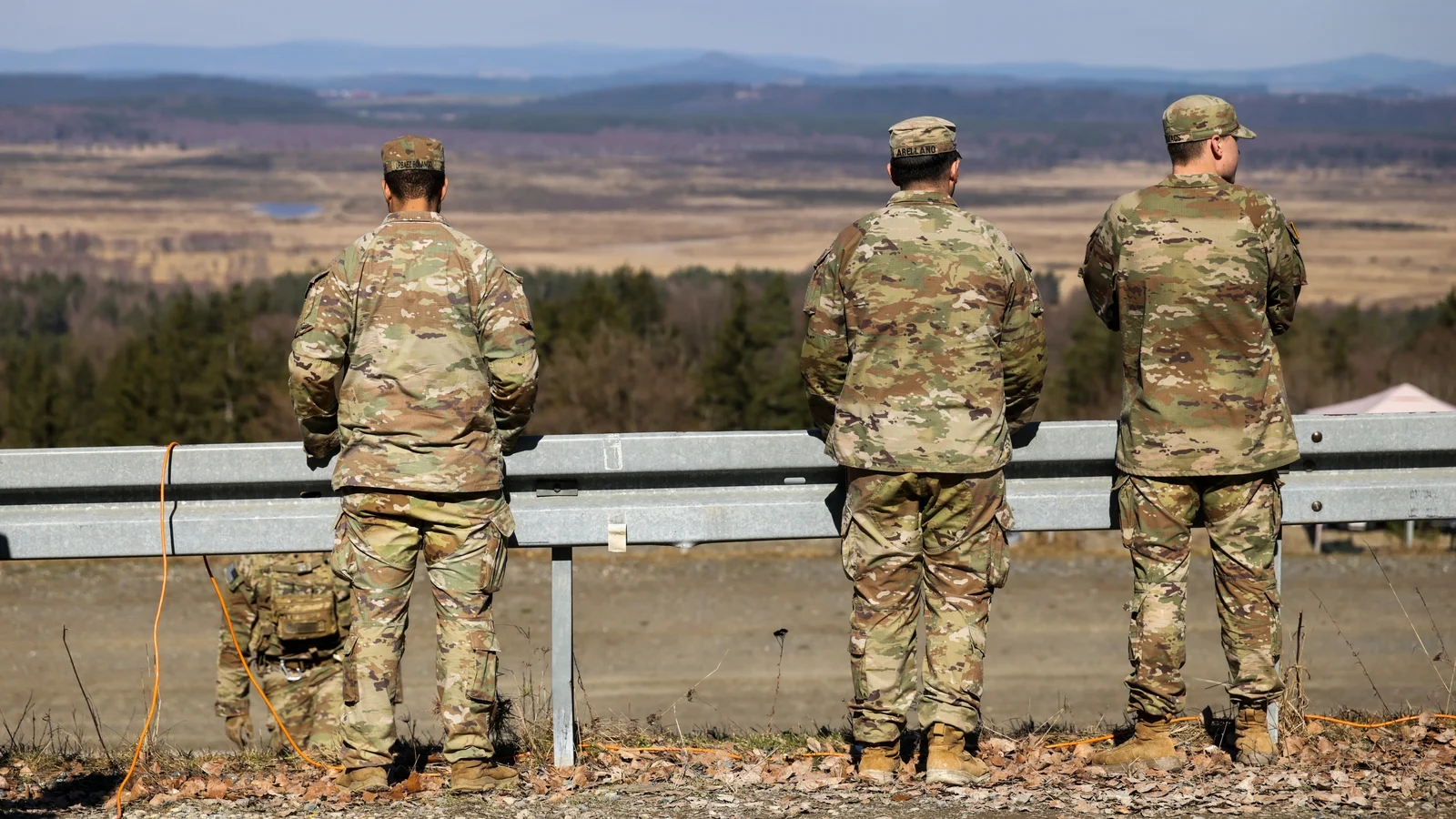
That casual scene — two cultures braided together by decades of alliance, commerce and neighborhood barbecues — is now a quiet stage for a much louder drama. The Pentagon has ordered roughly 5,000 U.S. troops out of Germany within the next six to twelve months, a decision the department says flows from a reassessment of military needs across Europe. The announcement landed like a gust of wind, rattling domestic politics in Berlin, military logistics in Ramstein and diplomatic ties across NATO.
The facts, plain and fast
- Planned withdrawal: about 5,000 U.S. service members from Germany over the next 6–12 months.
- U.S. troop presence as of 31 December 2025: roughly 36,436 in Germany, 12,662 in Italy, 3,814 in Spain.
- Estimated U.S. cost of 60 days of recent conflict in the Middle East: under $25 billion, according to congressional testimony.
“We expect the withdrawal to be completed over the next six to twelve months,” Pentagon spokesperson Sean Parnell said in a measured statement, framing the move as a response to “theatre requirements and conditions on the ground.” But anyone who’s watched U.S.-European relations for the past decade knows this decision didn’t spring from a sterile review alone. It is entangled with politics — personal, partisan, and geopolitical.
From the Oval Office to local streets
President Donald Trump has, in recent days, sharpened his criticism of Germany’s leadership, following a tense public spat with Chancellor Friedrich Merz. Mr. Trump accused Mr. Merz of being soft on Tehran, suggesting — in blunt terms — that the German chancellor was permissive about Iran’s nuclear ambitions. “He doesn’t know what he’s talking about,” the president told reporters, adding that he was “studying and reviewing the possible reduction” of forces in Germany and might extend such steps to Italy and Spain because their governments had not backed U.S. policy in the Middle East.
“Why shouldn’t I?” he asked sharply, gesturing to the tariffs, security burdens and allied hesitations that, in his view, justify a tougher stance. It is a posture familiar to anyone who followed his earlier presidencies: a steady drumbeat urging Europe to carry more of its defense weight, often accompanied by deadlines and threats.
Back in Germany, reaction has been mixed. “We are prepared for a reduction,” said Foreign Minister Johann Wadephul during a visit to Rabat, noting that Berlin would coordinate closely with NATO. He was quick to underscore that major American bases — Ramstein among them — remain indispensable. “Ramstein has an irreplaceable function for the United States and for us alike,” he said, a sentiment echoed by German officers who emphasize the base’s crucial logistical and command roles.
People on the ground: fears, pragmatism and everyday life
In neighborhoods that have lived with American boots for generations, the debate is not only strategic; it’s personal. A café owner near the U.S. base confided, “When the soldiers leave, business goes. We’ve had birthdays, Thanksgiving dinners — an entire rhythm of life that includes Americans.”
A German nurse working evenings at a clinic frequented by military families told me, “We’ve seen deployments before, but this feels different because it’s tied up with diplomatic rows. People worry about jobs, schools, the kids.”
And there are soldiers themselves — heavy, practical people who speak candidly. “I joined to serve, not to be a political pawn,” said a mid-ranking sergeant waiting for a flight briefing. “If they tell us to move, we will. But there’s a human cost — relationships, mortgages, children in school.”
What this means for NATO and the wider world
The pullback touches on larger themes: burden-sharing within NATO, the rising strain of populist politics in Europe, and the real-time pressures of a volatile Middle East. European capitals have been on higher alert since Russia’s 2022 invasion of Ukraine and subsequent drone incursions that rattled airspace across the continent. The idea of a U.S. recalibration, even a partial one, forces NATO partners to confront uncomfortable questions about their own readiness and spending.
For Germany, those questions have already provoked a policy shift. Chancellor Merz has made national security a centerpiece, unveiling increased defense spending and promising to modernize a military long criticized as underfunded. Yet his popularity has dropped, and in the churn of domestic politics the far-right Alternative for Germany (AfD) has surged in opinion polls.
Outside Europe, the dynamics are no less consequential. The U.S. emphasis on punishing allies perceived as insufficiently supportive of a campaign against Iran — from restrictions in the Strait of Hormuz to calls for peacekeeping forces — has a domino effect. Spain and Italy, which host 3,814 and 12,662 active U.S. troops respectively, are now explicitly in the president’s sights. “If we see a change, it will be because countries haven’t stepped up,” Mr. Trump said, a stance that underscores both leverage and risk.
Costs, calculations, and the human ledger
Officials in Washington told congressional lawmakers that the recent flare-up in the Middle East cost under $25 billion for the first 60 days of conflict — a jaw-dropping figure to many families feeling sticker shock at the gas pump and grocery store. That price tag complicates the political calculus: supporters of a muscular policy abroad argue the expense buys security and deterrence; critics say it sows instability and domestic hardship.
“You cannot look only at dollars,” a NATO analyst in Brussels told me. “You have to look at credibility and cohesion. If allies perceive the U.S. as transactional, the alliance’s glue weakens.”
Where do we go from here?
On main streets and around base gates, people are already making choices: subletting apartments, rethinking real estate, planning schooling changes for kids. At the diplomatic level, NATO summits and back-channel talks will try to steady the vessel. But the larger question remains: can long-standing security architectures endure when politics and personalities make alliance calculations public and immediate?
Imagine waking up one day and finding that a neighbor who had long lent you sugar, tools and a watchful eye had decided to leave. Would you hurriedly reinforce your door, or would you befriend a new neighbor? The answer matters not just for towns in Germany but for capitals across Europe, the United States, and beyond.
So I ask you, reader: do you see this as the beginning of a necessary rebalancing of global commitments — a step toward more European responsibility — or as a fracture that could invite new dangers? The next chapters will be written not only in Washington and Berlin but in kitchens, classrooms and town halls where the ripple effects of policy become the fabric of daily life.