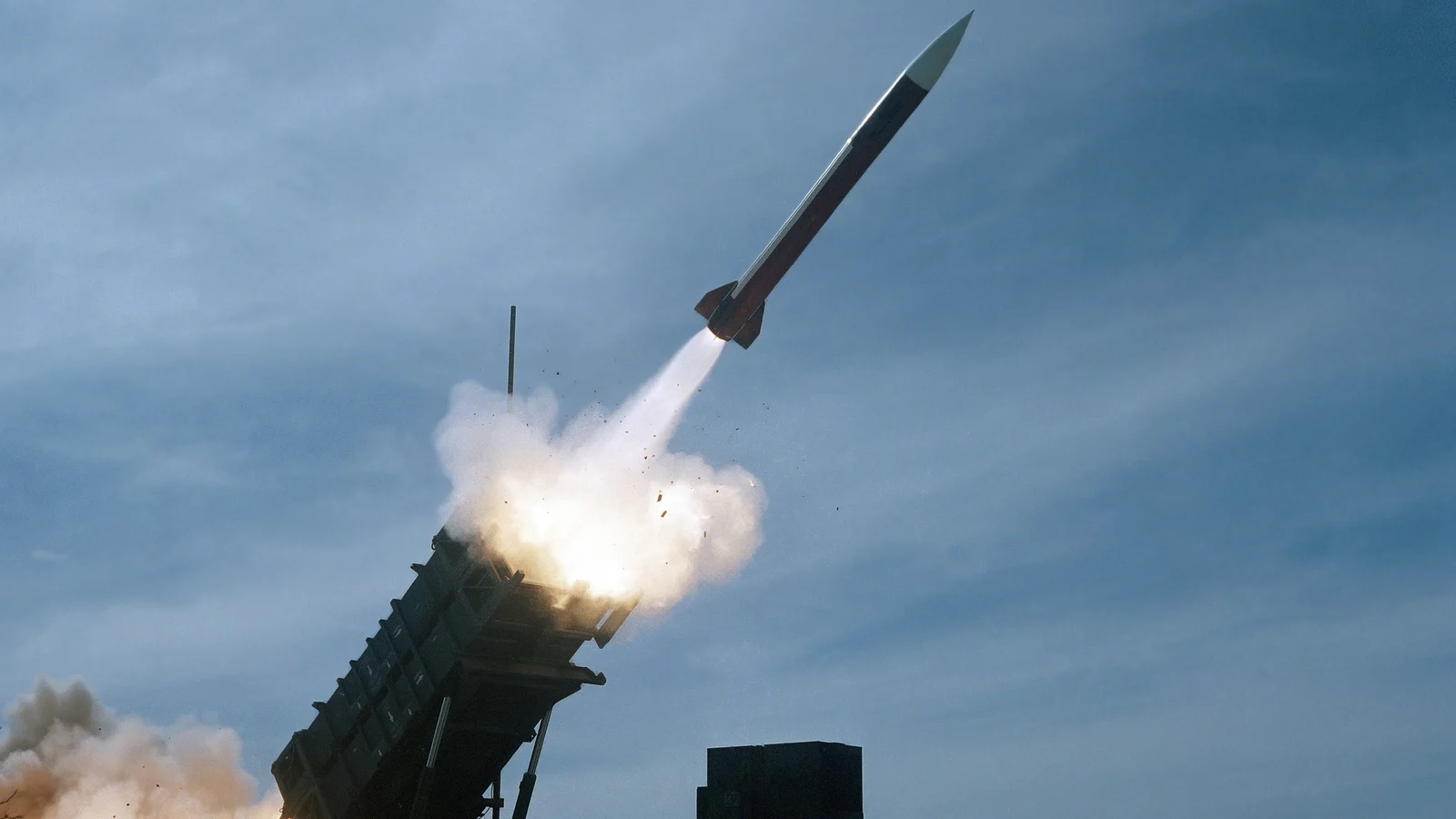
In a striking promise at NATO’s summit, US President Donald Trump told Ukraine’s Volodymyr Zelensky that Washington would grant Kyiv the “the right to make” Patriot air-defence missiles a move aimed at easing Ukraine’s growing shortage of the critical US-made interceptors.
“So one of the things we’re going to be talking about is we’re going to give a licence to you to make Patriots. That’s pretty cool, right. This way, you can’t complain that we’re not giving them enough,” Mr Trump told Mr Zelensky.
“We haven’t informed the company of that yet, but that’ll work out all right.”
Ukraine has struggled to counter Russian ballistic missile attacks as supplies of Patriot interceptors run low, leaving the country racing to defend against fast-moving threats that are difficult to intercept.
Even as Moscow has intensified bombardments of Kyiv in recent days, Ukraine appears to be gaining traction by shoring up the front line and carrying out strikes deep inside Russia.
Mr Trump argued those long-range attacks could help push the war toward a conclusion.
“It’s an escalation, but it’s also an escalation that can help lead to an end,” Mr Trump said.
The US president again said he believed both Mr Zelensky and Russian leader Vladimir Putin want to reach an agreement to stop the fighting.
“The president wants to get it done, and I believe that President Putin wants to get it done, and that should be a good combination,” he said.
Ukrainian military analyst Sergiy Zgurets said Russia holds an advantage in ballistic missiles and has taken advantage of Ukraine’s limited Patriot stocks to strike Kyiv.
“This allows the adversary to use such attacks as a means of psychological pressure,” he told AFP.
Still, the proposed licence for the Patriot widely regarded as one of the world’s most sophisticated air-defence missiles — may offer little immediate relief because of long production timelines.
The US Foreign Policy Research Institute estimates it could take up to 24 months to produce the air defence missile and 30 months to produce its engine.
Fresh Russian strikes on Ukraine
A warehouse was set on fire following a Russian strike on Kyiv
Overnight Russian strikes across Ukraine killed at least seven people, as Ukraine’s military said it had struck several Russian tankers.
Kyiv residents heard a powerful explosion shortly after midnight before the city’s air alert sirens sounded an uncommon breakdown in the warning system that unsettled people in the capital.
AFP journalists reported that the initial blast was followed by multiple explosions in a sustained barrage.
Mayor Vitali Klitschko said one person was killed in Kyiv, after earlier reporting that missile strikes had sparked fires in warehouses.
Over the past week, Russia has launched several major and deadly assaults on the Ukrainian capital — part of a month-long wave of ballistic missile and drone attacks that has killed more than 50 people.
At the NATO summit in Ankara, Mr Zelensky has been pressing allies to supply ammunition for US-made Patriot air defence systems — the only capability described as able to stop Russia’s ultra-fast, hard-to-intercept ballistic missiles.
In the southern region of Mykolaiv, a mother and daughter were killed when Russian forces struck with guided aerial bombs, a military spokesperson said.
Officials said two people were killed in the northeastern Kharkiv region and another two in the frontline Kherson region in the south.
Ukraine, for its part, has stepped up strikes deep into Russia operations Kyiv portrays as justified retaliation for repeated night-time bombardments of its cities.
The governor of Russia’s central Saratov region said one person was killed in a Ukrainian drone attack.
Ukraine has also increased attacks on Russia’s so-called shadow fleet ageing tankers used to export oil products that generate vital revenue for Russia’s stuttering economy.
The commander of Kyiv’s drone forces said 21 Russian ships in the Black Sea and Sea of Azov had been hit over the last 72 hours.
Russia bans diesel exports until end of July
Russia today imposed a ban on diesel exports in a bid to “stabilise” a deepening fuel crisis triggered by weeks of intensified Ukrainian strikes on energy infrastructure, as shortages spread across the country.
Local media reports and statements from officials say more than 90% of Russian regions have faced fuel rationing or shortages since June.
“A ban on diesel fuel exports went into effect today, which will allow for increased supplies to the domestic market,” Deputy Prime Minister Alexander Novak said during a government meeting with President Vladimir Putin, adding that the measure was intended to “stabilise the situation”.
The government later said the ban will remain in force until 31 July.
“The decision was made to maintain stability in the domestic fuel market,” it said, adding that “the restrictions will not apply to diesel fuel exported from Russia under international inter-governmental agreements”.