The Night Caracas Went Quiet: A Nation Held Between Two Worlds
When the lights went out over parts of Caracas, it felt less like a blackout and more like the page turning in a book everyone had been reading for years — one chapter of chaos closed, another chapter of uncertainty forced open.
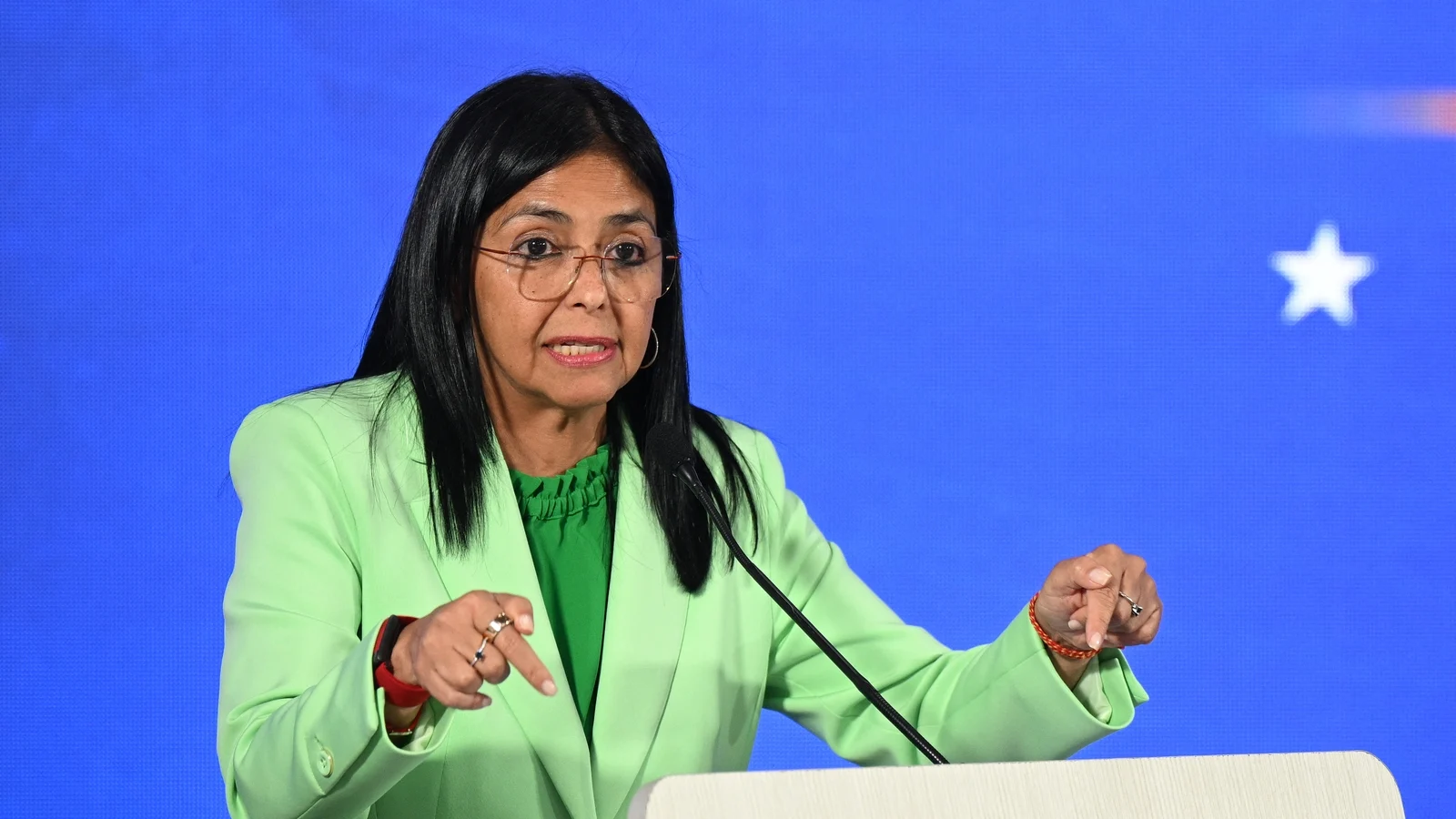
By morning, the picture was almost cinematic: a Venezuelan leader — Nicolas Maduro — photographed descending the stairs of a U.S. government plane under the watchful presence of FBI agents at a New York National Guard facility; inside Venezuela, the Supreme Court had announced that Vice President Delcy Rodríguez would step in as acting head of state. The words on the televised decree were deliberate and legalistic: Rodríguez would “assume and exercise, in an acting capacity, all the attributes, duties and powers inherent to the office of President to guarantee administrative continuity.” It stopped short of declaring permanent vacancy — a move that would have required elections within 30 days.
It is the sort of moment that leaves citizens and diplomats alike asking: who is in charge, and who will pay the price for the answer?
Scenes from the Street: Fear, Relief, and a Strange Calm
In Maracay, a market stall hummed as usual with the afternoon trade in plantains and powdered milk. “I felt like I was watching a movie,” said Carolina Pimentel, 37, a merchant who had followed the night’s events on a smuggled radio. “I’m happy — if it’s true — but also scared of what might come next.” Her fingers, stained brown from plantain frying oil, tapped a nervous rhythm on the counter.
Across the capital soldiers maintained checkpoints that felt both routine and unnatural. Small pro-Maduro gatherings convened in pockets, faces upturned to leaders on flat-screen TVs in neighborhood bodegas. Others, watching from the windows of high-rise apartment blocks, whispered about U.S. helicopters and blacked-out barrios. For many Venezuelans, the greatest certainty has been uncertainty itself.
“People have learned to carry two things: hope and a backpack,” said Ana Ruiz, a social worker who has run food distribution programs in barrios around Caracas. “The hope is small, and the backpack heavy. Tonight, both are being tested.”
A Timeline in Brief
- Overnight operation knocked out electricity in parts of Caracas.
- U.S. forces, according to White House statements, captured President Maduro near a safe house.
- Maduro transported to a U.S. military facility in New York state; he faces charges including alleged drug-trafficking conspiracies.
- Venezuelan Supreme Court names Vice President Delcy Rodríguez acting president to maintain administrative continuity.
- International reactions split across hemispheres — from praise to condemnation; the U.N. Security Council scheduled an emergency meeting.
From Mar-a-Lago to Maracay: A Bold Promise and a Question of Power
On the tarmac at his Mar-a-Lago resort, President Donald Trump framed the operation as decisive. “We will run the country until such time as we can do a safe, proper and judicious transition,” he said, an assertion that sounds tidy until you look at the map. Venezuela is a nation of 28 million people, a jagged country of Andean heights, thick Orinoco wetlands, and long Caribbean coasts. It is not an administrative spreadsheet that can be managed from Palm Beach.
“We can’t take a chance that someone else takes over Venezuela who doesn’t have the interests of Venezuelans in mind,” he added.
But how does one “run” a country from afar? The practical answer has never been delivered in full: what U.S. forces do not control is the soil of Venezuela itself — its ministries, its courts, the loyalty of its armed forces. The local answer is muddier: tonight the oil pumps may still turn — but who pulls the lever?
Oil, Empire, and the Ghosts of Interventions Past
Venezuela’s black gold is not a footnote. The country is believed to hold some of the world’s largest proven oil reserves — estimates often point to around 300 billion barrels — and the idea that those reserves could, as President Trump suggested, pay for an occupation is as provocative as it is historically loaded. “This conversation echoes the rhetoric from Iraq in 2003,” said Mariana López, an international relations professor in Bogotá. “It raises old fears about extractive policies and new fears about the sovereignty of nations.”
There’s historical memory here that reverberates across Latin America. The last overt U.S. intervention in the region on this scale is often traced to Panama in 1989. For many, the sight of foreign troops entering a Latin American capital summons a century of “gunboat diplomacy,” Monroe Doctrine-era paternalism, and the kind of muscle-politics that governments in the region are wary to welcome back.
“For Latin America, this sends a chilling message: that no leader is entirely safe if deemed illegitimate by a foreign power,” said Tyson Barker, a senior associate fellow at the German Council on Foreign Relations. “It flattens any moral high ground the U.S. might have when comparing its actions to those of authoritarian powers elsewhere.”
Regional Reactions Were Swift and Varied
- Argentina’s President Javier Milei praised the change as delivering newfound “freedom.”
- Mexico denounced the operation as a violation of international law.
- Brazil’s President Luiz Inácio Lula da Silva warned that the operation crossed “an unacceptable line.”
Voices from the Ground: Between Kidnapping and Liberation
On television in Caracas, Vice President Delcy Rodríguez condemned what she called a kidnapping and demanded the immediate release of President Maduro and his wife, Cilia Flores. “He is the only president of Venezuela,” she said, her voice a steady drumbeat of defiance.
Inside a small square near the Wall Street Heliport in New York, a line of police vans and news vans framed a drama that had crossed two hemispheres. Protesters clustered in Times Square, some brandishing banners calling for Maduro’s return, others chanting against foreign intervention. “It’s a kidnapping,” shouted one man, clutching a photo of Maduro and Flores; nearby, a woman in a Venezuelan tricolor scarf yelled, “We are tired of suffering.”
“When you are a country where more than 7 million people have left searching for bread, it’s not abstract to talk about security or economic stability,” said Jorge Alvarado, a Venezuelan economist now based in Madrid. “The immediate question for Venezuelans is not ideology — it’s how to get medicine to the hospitals and fuel to the buses.”
What Comes Next? The Risk of a Vacuum
Whatever one’s view of the legality or morality of the capture, the practical reality is stark: removing a long-entrenched leader can yield unexpected consequences. A power vacuum can attract spoilers, armed groups, opportunists, and old rivalries reasserting themselves. Venezuela’s neighbors — Colombia, Brazil, Guyana, and island nations in the Caribbean — watch with alarm because instability can quickly spill over borders in the form of fresh migration, illicit trade, and security crises.
There will be votes and counters, statements and sanctions. The U.N. Security Council will meet. Lawyers will discuss extradition and jurisdiction. But perhaps the most urgent question is the human one: who will keep the lights on in hospitals, who will staff the clinics, and who will reassure parents watching their children sleep with the radio on?
Asks for the Reader
What do you think? When does an intervention become occupation, and when does the removal of a leader translate into liberation? Can international law, domestic wellbeing, and geopolitical ambition ever align neatly? As this story unfolds, the answers we choose will shape not just Venezuela’s future, but our collective memory of an era when the world watched a country held — for a night — between two worlds.