The Sky Over Al Jahra: A Sudden, Surreal Moment
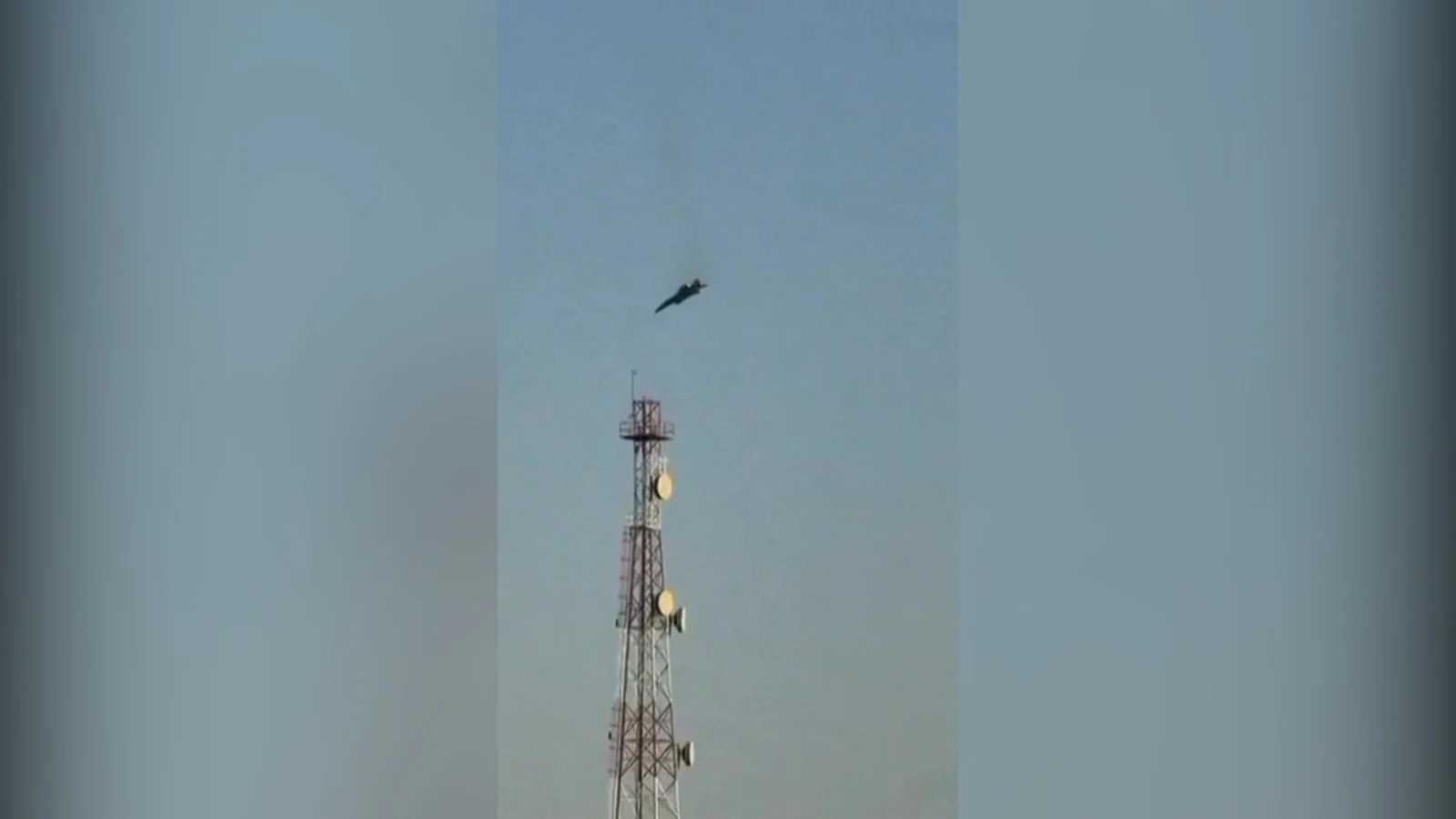
The clip appears before you: a streak of metal cutting the pale desert light, a burst of smoke, and then — impossibly — a parachute blossoming against the flat Kuwaiti horizon. For a country used to the hush of oil fields and the dignity of old palm groves, Al Jahra’s clear air filled with the physics of modern war.
What happened in those few, breathless seconds is being pieced together by officials on all sides. U.S. Central Command has confirmed a dramatic loss: three U.S. F-15E Strike Eagles came down over Kuwaiti territory during active combat operations. In the chaos — amid Iranian aircraft, ballistic missiles, and swarms of drones — CENTCOM said, Kuwait’s air defences mistakenly engaged the American jets. All six aircrew reportedly ejected and were recovered safely after a coordinated effort between Kuwaiti and U.S. forces.
Kuwait’s Ministry of Defence also acknowledged the crashes in a brief statement carried by the state wire. Iran’s state media, for its part, relayed a different line: the Islamic Revolutionary Guard Corps claimed Iranian forces had struck a U.S. plane that later crashed in Kuwait. In the fog of war, competing narratives arrive almost as fast as the ordnance.
What We Saw — And What It Means
Images of a pilot drifting under a parachute are arresting not just because of their visual drama, but because they condense a dozen uncomfortable truths about twenty-first-century conflict. First: crowded skies are dangerous skies. Add into that mix artillery, missiles, drones, and the rapid pace of decision-making, and the door opens for tragic mistakes, even among close partners.
“This is the kind of error that haunts air commanders,” said a retired U.S. Air Force pilot who reviewed the footage and asked to remain anonymous. “You have split-second identifications to make. Friend-or-foe systems help, but they are not infallible. Once missiles and drones are in the air, the margin for error evaporates.”
Friendly fire has been part of warfare as long as armies have existed. But the tools have changed. The battlefield is now three-dimensional, filled with autonomous systems and fragmented command-and-control networks. It is messy, and that messiness can have geopolitical consequences when mistakes happen in allied airspace.
Why Al Jahra Matters
Al Jahra sits west of Kuwait City, a place where desert meets the urban fringe — date palms and low-rise buildings punctuated by the hum of trucks and the occasional rooftop terrace. The sight of parachutes over its district is the kind of jarring image that transforms abstract reports into something local and immediate.
“I saw something falling,” a witness in Al Jahra told reporters in the hours after the crash. “At first we thought it was a drone. Then the parachute — it looked like a person. People ran into the streets. Children were crying.” The human scene is simple and scaled: an aircraft, a chute, neighbors offering water and a blanket to someone who had just come down from ten thousand feet.
Voices in the Storm
Officials on both sides moved quickly to manage the narrative. CENTCOM’s terse explanation framed the incident as an accident during “active combat” operations, noting the involvement of Iranian aircraft, missiles, and drones in the same airspace. Kuwait’s defence ministry confirmed recovery efforts and said it was coordinating closely with U.S. forces.
Regional security analysts are already parsing the account for deeper meaning.
“The incident underlines how tightly wound the region has become,” said a security analyst based in Amman. “Any engagement now risks cascading into something bigger. Misidentification in the air is an old problem made more dangerous by new tools. This could have been a headline about catastrophe; instead, it’s a near-miss with a lot of questions attached.”
And then there is Iran’s reaction. Tehran’s media lines — particularly those coming from the Islamic Revolutionary Guard Corps — framed the episode differently, asserting responsibility for hitting a U.S. aircraft. Whether that claim reflects on-the-ground reality, strategic posturing, or a mix of both remains to be seen.
Quick Facts
- Aircraft involved: U.S. F-15E Strike Eagles (three reported downed)
- Crew: Six aircrew ejected and reportedly recovered safely
- Location: Al Jahra area, Kuwait
- Actors in the airspace: U.S. aircraft, Iranian aircraft and missiles, drones, Kuwaiti air defences
Beyond the Footage: The Wider Questions
When a friendly system shoots down its partner, who answers the phone? Who takes responsibility? And how do allies manage the political fallout when the battlefield is also a diplomatic arena?
Military planners will comb through radar logs, communications tapes, and weapons-release data. They will look for the point at which identification failed, and for the procedural breaks that allowed a contact to be classified improperly. But the problem is not only technical. There are deeper policy questions about rules of engagement in complex, multi-actor environments — and about trust between partners.
“We need joint training and interoperable systems, yes, but we also need humility,” the retired pilot said. “Everyone assumes their systems are speaking the same language. They often are not.”
Humanity in the Middle of Strategy
For people in Al Jahra, the politics are secondary to the immediate scene: people coming down from the sky, helicopters circling, medics and soldiers coordinating responses. For families of the aircrew, there are phone calls, prayers, and long waits. For commanders, there is the calculus of escalation and the dread of unintended consequences.
And for the rest of the world, the episode is a stark reminder that regional crises are not abstract. They land in neighborhoods, they interrupt lunches, they produce images that travel faster than clarifications or apologies.
What Comes Next?
Expect investigations and statements. Expect regional capitals to parse the event for signs of intent, and for tactical adjustments: changes to identification friend-or-foe procedures, revised flight corridors, and perhaps stricter rules of engagement. Expect political leaders to talk about de-escalation — even as militaries on all sides prepare for the next time the sky fills with danger.
But one question lingers more quietly: as warfare becomes more technologically dense, how do we protect the basic human life at its center? How do we ensure that pilots parachuting into a neighborhood become less frequent images and not more?
We will be watching. Will you be watching too — not merely for the spectacle, but for the answers that must follow?