They came from a family car, and the morning never recovered
In Tammun, a dusty town that sits like a bruise in the fertile folds of the northern West Bank, morning routines are small rituals of habit: a father checking the engine, a mother calling children to breakfast, the rooster’s last lament fading into the call to prayer. This morning, those rituals were shattered by gunfire.
By the time the ambulance sirens arrived, a family of six had been reduced to two survivors and four bodies. The Palestinian health ministry said a 37-year-old man, his 35-year-old wife and two boys aged five and seven were killed after Israeli forces opened fire on their vehicle. Two other children, aged eight and 11, survived—gravely wounded—after what a young survivor later called “shots everywhere.”
“We were coming back from visiting a cousin,” said Khaled, the 11-year-old who survived and whose voice still trembled at the hospital gates. “I heard my mother crying and my father praying. Then there was silence. I tried to wake my brothers. No one answered.”
He described soldiers pulling him out of the car and striking him. “They said, ‘We killed dogs,’” he told reporters—an image of cruelty that has since reverberated through the town like a bell tolling grief.
A community under strain
Tammun sits in Tubas governorate, near the Jordan Valley, a landscape of olive terraces, grazing flocks and the slow, eternal hustle of markets. But for months now, that landscape has been scarred by operations, checkpoints and the anxiety that arrives before dawn. Since November, the Israeli military has said it was conducting operations in the north of the West Bank targeting armed groups; locals say those arrests and raids often come with violence.
“We are exhausted,” said Amal, an elderly woman who has lived in Tammun all her life and who stood watching the funeral procession. “Our children grow up learning how to hide, how to be silent. This is not living.”
The Palestinian Red Crescent reported that its teams recovered the bodies from the vehicle. The Ramallah-based health ministry said the four people arrived at the Turkish Public Hospital in Tubas with gunshot wounds. An AFP tally, drawing on Palestinian health ministry figures, has recorded at least 1,045 Palestinians killed in the West Bank since the Gaza war began—many combatants, many civilians—while Israeli government figures list 45 Israelis killed amid a backdrop of escalating attacks and counter-operations.
What happened — and why it matters
Israel’s military said its forces were operating in Tammun to arrest Palestinians allegedly involved in attacks on security forces. That explanation repeats a familiar script: an arrest operation, a clash, a claim of hostile fire. But the human calculus is often lost in the military timestamps and the statements that follow. Two boys are dead. Two brothers survive with injuries. A town mourns. International observers and local rights groups have documented a recent spike in deadly incidents in the West Bank, many involving settlers; the United Nations and Palestinian officials have warned of increasing violence across the occupied territory since the Hamas attack on Israel on 7 October and the subsequent war in Gaza.
“Whether it’s an operation intended to detain suspects or otherwise, the consequences on civilians are undeniable,” said Dr. Lina Haddad, a human rights physician who has worked across the West Bank. “We see repetitive patterns: raids at night, heavy-handed responses, and too often children and families paying the price.”
Even as a ceasefire in Gaza has held since 10 October, according to public statements and some international reporting, the ripples of that conflict have not stopped reverberating through the West Bank. Military operations, settler violence, and retaliatory attacks continue, creating a mosaic of instability that kills, wounds and displaces.
Voices from the street
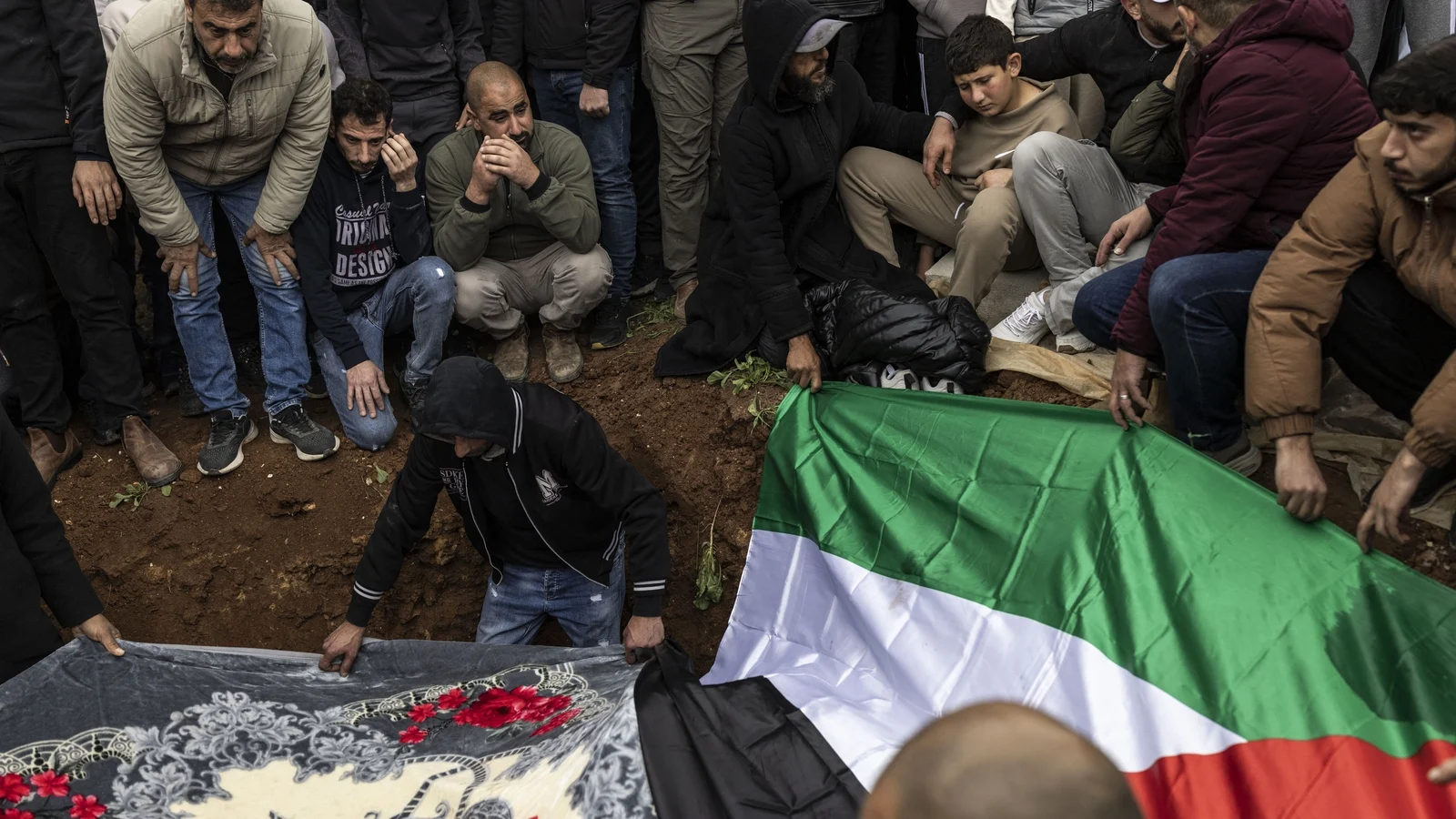
At the funeral, mourners chanted, palms raised to the sky. The scent of incense mingled with dust and the metallic tang of fear. “We did not deserve this,” a neighbor, Rami, shouted into the press swarm. “They came to our home, to our children. Who will answer for them?”
From the other side, officials offered a different script. “Our forces were carrying out lawful operations to prevent attacks and protect civilians,” a military spokesperson said in a terse statement. “Allegations are being reviewed.” Questions over rules of engagement, transparency and accountability hover like a storm cloud over each such incident.
“When the world reads another tally of the dead, it can feel like numbers on a page,” said Sarah Mendel, an Israeli analyst who studies the security situation in the West Bank. “But these are mothers, fathers, schoolchildren—people whose deaths ripple through communities for generations. That’s the real cost.”
The broader pattern: settlement expansion, law, and daily life
To understand Tammun’s grief, you have to look at the larger frame. The West Bank has been under Israeli occupation since 1967. Today, roughly three million Palestinians live there, alongside over 500,000 Israelis residing in settlements and outposts that international law considers illegal. The geography of checkpoints, the web of permits, and the daily economic burdens have been compounded in recent months by a spike in violence between settlers and Palestinians and between Palestinian armed actors and Israeli forces.
“You can’t separate the personal tragedy from the political architecture,” said Dr. Hanan al-Karmi, a sociologist in Ramallah. “When a family cannot travel safely to a hospital or a market, when a child cannot play outside without fear, those conditions seed both despair and anger.”
Humanitarian workers note that the casualties extend beyond fatalities. Hospitals strain under wounded children, traumatized parents, and the long-term psychological damage of repeated exposure to violence. “We see increasing cases of post-traumatic stress even among very young children,” a social worker from Tubas said. “The invisible wounds sometimes outlast the visible ones.”
Questions we must ask
When a family is killed in a car on a country road, what should the international community do beyond issuing statements? How does accountability take shape when each side provides its version and investigations drag on? Is there a path that prevents the recurrence of these scenes without plunging the region into endless cycles of retaliation?
Readers around the world might ask what they can do: follow independent reporting, pressure elected representatives to support impartial investigations, and, importantly, listen to the people on the ground—the mothers, the children, the medical staff—who are living the consequences of policies made far from their olive groves.
Closing images
The funeral procession moved slowly through Tammun: tattered posters of the deceased, women wiping tears with embroidered scarves, a boy clutching a toy perhaps unaware of the full meaning of absence. A neighbor recited a prayer for the dead. A child placed a stone atop the grave, an old custom, stubborn and tender.
In the weeks and months ahead, more investigations will be announced, more statements will be issued, and the larger geopolitics will continue to churn. But here, today, in Tammun, the story is intensely local: four lives extinguished, two children scarred, a family broken. It is a scene that asks us, urgently, whether our shared humanity can be protected in a land where the sound of gunfire has become, too often, part of the morning.