Lebanon’s president is heading to Rome this week with a high-stakes question on the agenda: what comes next in south Lebanon if the UN’s long-running peacekeeping mission is not renewed.
Lebanese President Joseph Aoun will travel to Rome for talks on Thursday centred on the future of the United Nations force in the south, according to a Lebanese official. UNIFIL’s mandate expires this year, and the mission’s next steps have become a diplomatic priority.
The trip follows a June announcement by Italy and France that they want to create a multinational coalition to take over from the UN Interim Force in Lebanon (UNIFIL).
Both Italy and France contribute major troop contingents to the current UN deployment.
During the visit, Mr Aoun is expected to meet Italian President Sergio Mattarella and Prime Minister Giorgia Meloni. The discussions will cover “the future of the international forces, particularly in light of the French-Italian initiative to set up a force to replace UNIFIL”, the official told AFP, speaking on condition of anonymity.
Mr Aoun will also travel to the Vatican for a meeting with Pope Leo XIV, the official said, and will brief him on “the contacts Lebanon has been making since negotiations began” with Israel.
Lebanon and Israel began US-sponsored direct talks after Hezbollah, the Iran-backed militant group, attacked Israel in March and drew Lebanon into the wider Middle East war. Israel responded with airstrikes and a ground invasion.
Rome has hosted the two most recent rounds of the negotiations.
Lebanon and other countries fear a security vacuum if UNIFIL pulls out without an alternative in place
Mr Aoun has repeatedly said Beirut’s first preference is to extend UNIFIL’s mandate — an option Israel opposes.
Yesterday, he said that “the second choice is adopting a formula that ensures the continued presence of international forces in the south” working alongside Lebanon’s army “and in coordination with it”.
A framework agreement reached in June between Israel and Lebanon sets out several steps: Hezbollah’s disarmament, a phased pullback of Israeli forces from south Lebanon, and the deployment of the Lebanese army to the area beginning in “pilot zones”.
Even with a lull in fighting that has lasted for weeks, Israel has continued intermittent strikes and major demolition operations in south Lebanon. Israeli forces are operating in a band of territory roughly 10km deep inside the Lebanese border.
Lebanon, along with several other countries, has warned of the risk of a security vacuum if UNIFIL withdraws without a replacement ready to take over.
In a report issued in June, UN Secretary General Antonio Guterres said some form of peacekeeping presence would still be required after UNIFIL’s mission ends, outlining three possible models ranging from almost 2,000 to more than 5,500 UN personnel.
Last month, 86 Lebanese politicians added their voices to the debate by signing a letter that urged the Security Council to maintain the peacekeepers.
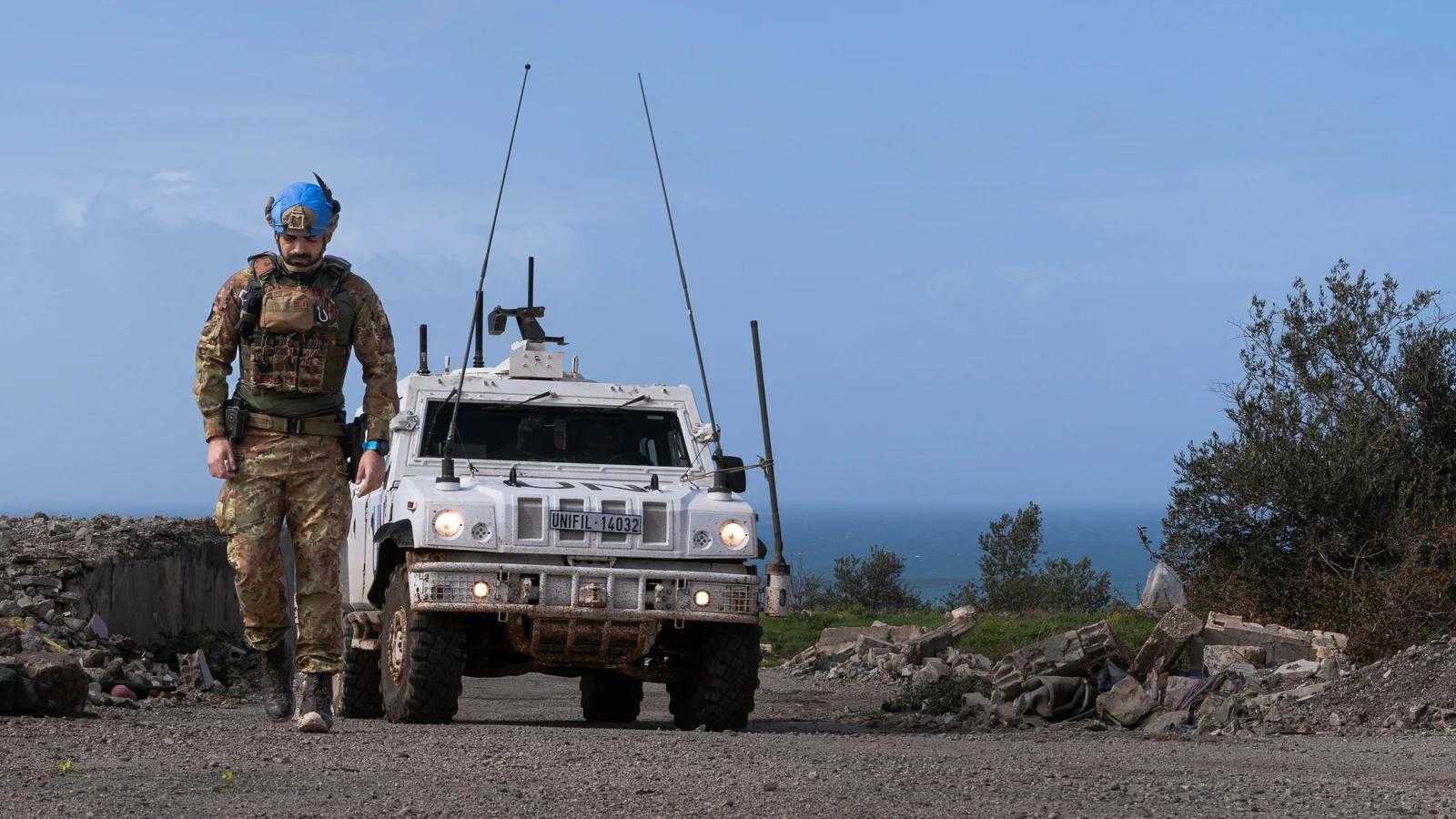
UNIFIL currently numbers about 7,500 personnel drawn from nearly 50 countries. The mission has operated since 1978, though it has not stopped repeated flare-ups of conflict.
Ireland’s contingent is also approaching a turning point. In May, 344 Irish peacekeepers were deployed to Lebanon under UNIFIL in what was described as their final mission in this form.
Members of the 128th Infantry Battalion on a training exercise prior to their deployment (Pic: Collins)
The deployment of the 128th Infantry Battalion was seen as closing a chapter that has lasted almost half a century.
Irish peacekeepers are expected to remain engaged in the region, but the shape of any future role has yet to be defined.
At home, the Government had indicated it wanted to drop the requirement for UN approval when sending more than 12 members of the Defence Forces overseas — the third part of Ireland’s ‘Triple Lock’.
It also proposed increasing the point at which a Dáil resolution is needed, so that parliamentary approval would be required only when more than 50 personnel are deployed.
But the legislation needed to enact those changes has not emerged, as backbench and opposition lawmakers raise concerns about the potential effect on Ireland’s neutrality.