When the Road Slowed: A Quiet Town, a Rollover, and Questions That Won’t Stay Parked
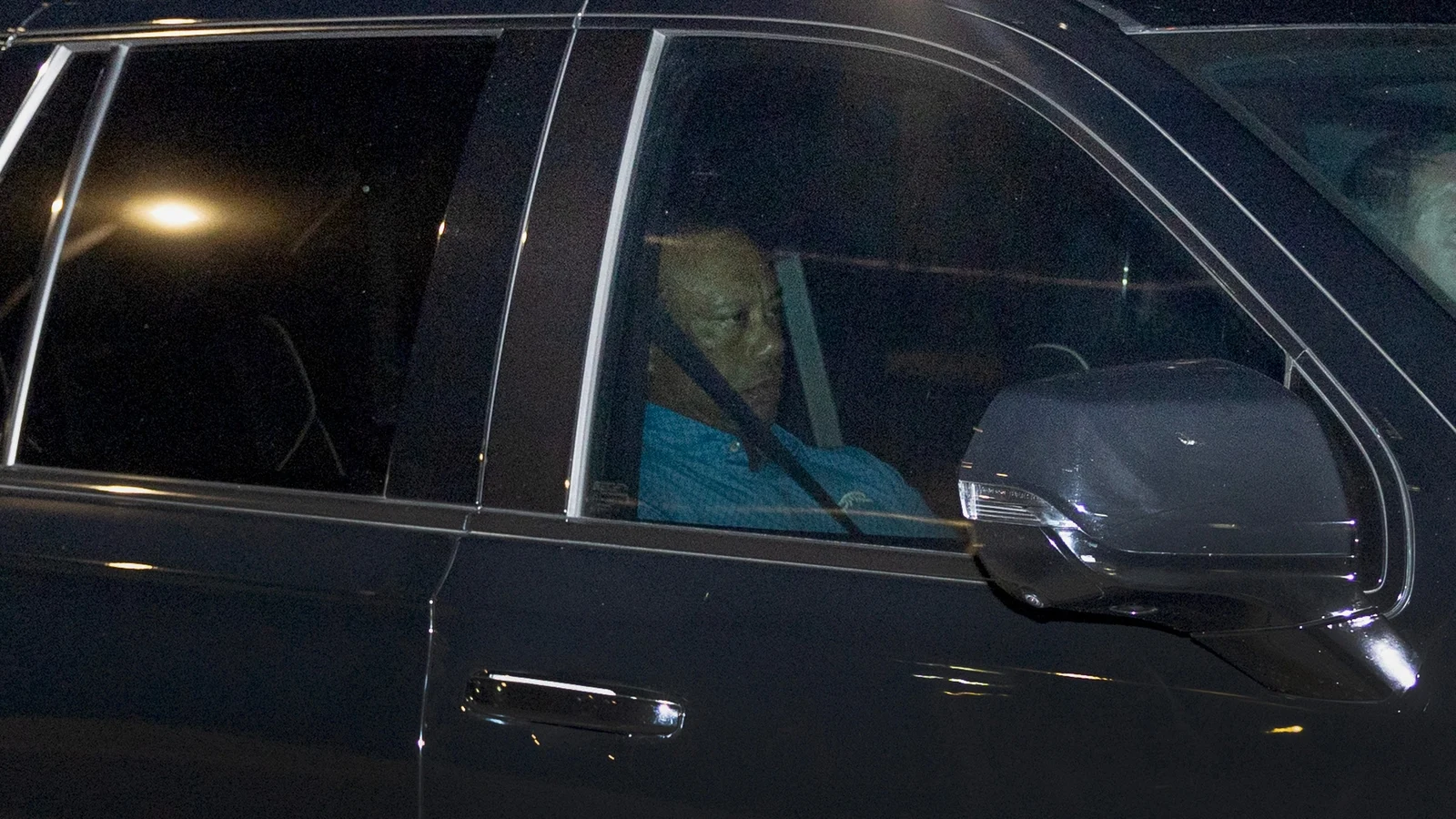
It was a soft, Florida afternoon when the roar of morning traffic on a two‑lane road near Jupiter Island gave way to an odd, quiet news pulse: the name everyone knows, attached to an accident that was, on paper, small. A Land Rover rolled. There were no fatalities, no dramatic firefights with flames, just shaken safety crews and a man who, to many, is the face of modern golf.
Tiger Woods, 50, was arrested last Friday after that rollover. The probable cause affidavit obtained by authorities and shared with reporters this week reads like a clinical chronicle—observations, tests, prescribed medications catalogued in neat sentences. But underneath the sterile language lies a more human story: a world-famous athlete coping with chronic pain, the perils of prescription medicines, and a community trying to make sense of an icon’s fallibility.
The affidavit, the scene, and a phone
According to the police narrative, Woods told deputies he had been looking down at his phone and fiddling with the radio when traffic ahead slowed. By the time he looked up, his Land Rover had rolled. A deputy noted he observed two hydrocodone pills in Woods’ pocket. The officer described him as “lethargic, slow,” sweating profusely, with bloodshot, glassy eyes and pupils that were “extremely dilated.” During the interview, Woods reportedly said, “I take a few,” when asked about prescription medication, and added he had taken some earlier that morning.
In small, stark moments of the affidavit—details that humanize and complicate—Woods is described as limping and stumbling. He reportedly told officers he’d undergone seven back surgeries and more than 20 operations on his leg. The deputy who administered field sobriety tests concluded that Woods’ “normal faculties were impaired” and that he was unable to safely operate the vehicle. Still, the collision injured no one, and Woods was released on bail that same night.
Neighbors, noise, and the island’s hush
Jupiter Island is a place where manicured hedges meet Atlantic breezes, where golf is not merely a sport but a neighborhood ritual. “It’s a quiet place,” said one neighbor who watched emergency lights paint the palms. “You don’t expect to see that in front of your driveway. He’s been part of the landscape here for years.”
Another local, who asked not to be named, leaned on the familiar juxtaposition of privacy and public life. “You get into the habit of seeing people you recognize,” she said. “When something like this happens, you feel oddly protective and strangely exposed at once.”
Pain, pills, and the modern athlete
Woods’ story is not simply a headline about a celebrity behind the wheel. It’s also a chapter in the larger narrative of how elite athletes manage relentless physical trauma. Orthopedic surgeons and sports medicine specialists have, for decades, grappled with the best—and sometimes the least risky—ways to keep elite performers on their feet.
“When you watch athletes who’ve had multiple surgeries, what you’re really seeing is a lifetime of managing pain and mobility,” said a pain-management physician familiar with high‑performance sports. “Opioids like hydrocodone can be effective for short‑term pain control, but they come with side effects that disrupt cognition, reaction time, and balance—things you do not want impaired if you’re driving or competing.”
Combining that clinical reality with the psychological burden of public expectation creates a dangerous pressure cooker. “Athletes are told to be resilient, to return, to tolerate,” the physician added. “Sometimes the help that gets them back on the course can make other parts of life riskier.”
Beyond a single incident: What the data tells us
Driving under the influence is often conflated with alcohol alone, but in recent years the role of prescription and illicit drugs has become more visible. Health and traffic-safety agencies have raised alarms about drug-involved driving, noting an uptick in cases where medications—licit or otherwise—impair drivers. Opioids, benzodiazepines, and certain sleep aids are repeatedly implicated because of their depressive effects on the central nervous system.
“We’ve seen an evolution in impaired driving,” said a traffic safety researcher. “It’s less often the simple model of drink-and-drive and more often a complicated mix: prescriptions, combinations of meds, older drivers with chronic pain. That complexity makes testing and policy more difficult.”
Statistics across the U.S. reflect a steady interest in tackling that complexity. Agencies track drug presence in post-crash toxicology screens more often than they did a decade ago, but interpreting what a positive test means for impairment remains challenging. In other words, presence does not always equal impairment, yet the observed signs—drowsiness, slowed reactions, poor coordination—are unmistakable and consequential.
Public reaction and the celebrity magnifier
When someone like Woods steps into legal trouble, every facet becomes magnified. Fans, critics, and casual observers all rush to judgment. Social feeds fill with interpretations, half-truths, and, occasionally, compassion. “People forget that being famous doesn’t erase vulnerability,” a long-time golf spectator said. “It just makes the vulnerability public.”
For some, the situation prompts questions about accountability. For others, it’s an opening to discuss how society treats pain, recovery, and the aging athlete. “He’s done more for golf than most of us can imagine,” said an amateur player at a nearby driving range. “But we have to ask: what supports do athletes have when their bodies literally break down?”
Where do we go from here?
The immediate legal process will play out in court and in reports. Woods’ manager did not respond immediately to requests for comment on the affidavit. As with any high-profile case, the facts will be parsed and repurposed: legal arguments, media cycles, fan reactions.
But the deeper questions remain: how do we balance effective pain management with public safety? How do communities support those who sustain careers on the edge of physical endurance? And what responsibility do the makers of prescription protocols, sports organizations, and fans share in preventing harm?
As you read this, consider the cramped anatomy of modern rehabilitation: the athlete’s body as both asset and liability, the prescription bottle as both relief and risk. Are we willing to confront the uncomfortable trade-offs we ask of our heroes? Or will we continue to celebrate their comebacks while turning a blind eye to the private costs?
In Jupiter Island, the palms keep swaying. The roads will be fixed. The legal papers will be filed. But the sight of a rollover near a quiet driveway—seen by neighbors who know every curve of the street—reminds us that fame is not shelter and that public life often masks private pain. The questions this incident raises are not just about one man behind the wheel; they are about how we live with pain, how we protect one another on the roads, and how, collectively, we respond when the road slows.