Miami on the horizon, Kyiv under the lights-out: a war between deadlines and drills
On a bitter evening in Kyiv, families descend the stairs into the hush of a metro station and become an island of warm breath and low conversation beneath a city that has learned to flirt with darkness.
Children play with a battery-powered torch. A kettle hums on a portable stove. A grandmother wraps a wool scarf tighter, her eyes on a phone screen that insists, in three languages, that the world has, once again, tilted toward a decision.
Far from that underground stillness, diplomats in Washington are saying they can host a meeting in Florida next week — an ambitious attempt to put Ukraine and Russia at the table and, astonishingly, to try to end a war that has scarred Europe for nearly four years by June.
It is an audacious timeline. It is also, to many Ukrainians, a disquieting race against artillery, cold, and an appetite for territorial concessions that Kyiv insists it will not accept.
What the US is offering — and why it matters
The proposal, according to Ukrainian government sources, is straightforward in its logic: bring negotiating teams to Miami, provide neutral ground, and push for a ceasefire and a political roadmap before the northern hemisphere’s summer. The United States — having already brokered two rounds of talks in Abu Dhabi since January, including a major prisoner exchange — is trying to break a hurtling stalemate.
Yet the sticking point remains the map.
Russia, which currently occupies roughly one-fifth of Ukrainian territory, is pressing to secure full control over Donetsk as the price of putting guns down. Kyiv says surrendering land would be not only a strategic disaster but an invitation to renewed aggression. “We cannot build a peace on the premise of giving up our soil,” one senior Ukrainian official told a reporter, summarizing the sentiment in Kyiv.
Free economic zone: compromise or capitulation?
Among the compromise ideas being floated is the conversion of parts of the Donetsk region — where control on the ground is mixed and tension is constant — into a “free economic zone.” Under the proposal, neither side would exercise military control, theoretically reducing the chance of immediate clashes while creating a buffer for reconstruction.
Experts are divided. “In theory, a demilitarized economic buffer could buy time for institutions to grow and for trust to be rebuilt,” said Dr. Miriam Alvarez, a conflict-resolution scholar based in Geneva. “In practice, buffers require robust, verifiable enforcement — often by third parties — and neither Moscow nor Kyiv seems ready to cede that level of oversight.”
For many Ukrainians the idea is simply unpalatable. “They want to put a fence around a part of my country and call it a solution,” said Olena, a 54-year-old schoolteacher who now spends nights in a subway car. “How can we live like that, knowing a future operation could strip us of everything again?”
The backdrop: energy attacks and the specter of a seized plant
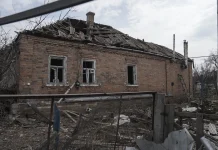
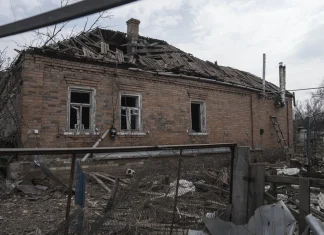
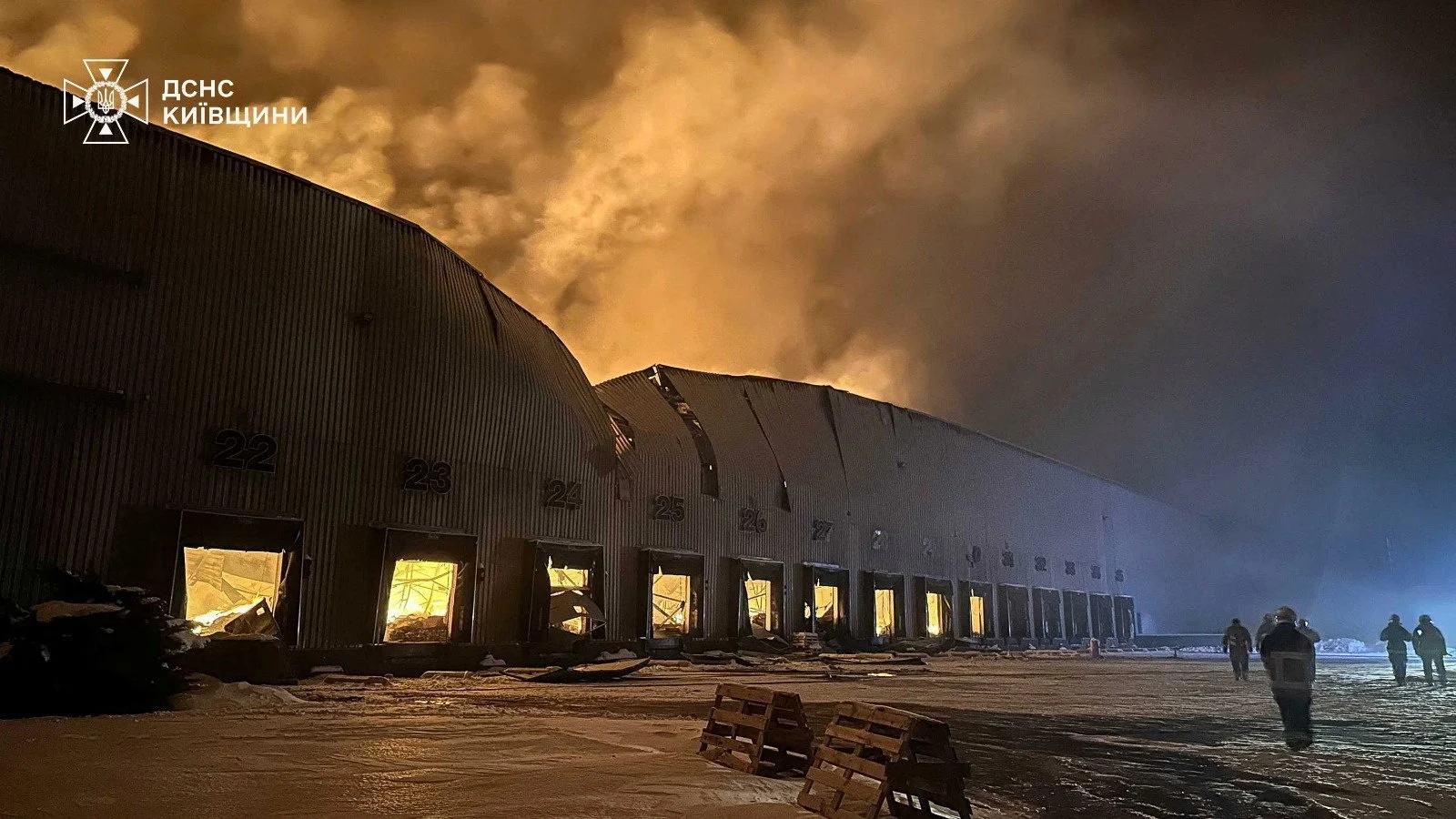
Talks are not happening in a vacuum. Over the past weeks, waves of missile and drone strikes have hammered Ukraine’s energy infrastructure. Officials say the last barrage involved well over 400 drones and approximately 40 missiles aimed at power stations, distribution points and generation facilities.
The strikes have left millions without heat and light as temperatures dip toward −14°C in some regions. The Burshtynska and Dobrotvirska power plants in western Ukraine were hit hard; Kyiv has appealed for emergency assistance from Poland to stabilize the grid.
“Energy workers are racing against the clock and against the next strike,” said Ilya, an operations engineer with the national grid operator, Ukrenergo. “We patch a line, a few hours later another barrage. The winter makes every outage a potential catastrophe.”
Worse still is the question of the Zaporizhzhia plant — Europe’s largest nuclear power station — seized by Russian forces early in the conflict and still under occupation. Control of that site is not a sidebar; it is a geopolitical and humanitarian time bomb.
Voices from the ground
Inside the metro or on a snow-smeared street in Kharkiv, people speak with the bluntness of those who have lived through air-raid sirens and the odd grace that comes with endurance.
“We are tired of negotiations that feel like shopping lists,” said Mykola, a retired electrician who volunteers fixing heaters in his neighbourhood. “If they set a deadline in Miami, that’s one thing. But if the negotiations leave us colder than before, what was the point?”
Across town, a young mother named Svitlana cradles her toddler under a blanket. “Politics is a grown-up game,” she said. “We count our calories and our candles. We want peace, yes. But we want it on terms where we can sleep without dreaming of explosions.”
From Brussels to Beijing, and in halls of power in Washington, officials insist that any agreement must provide guarantees that an invading neighbour cannot simply reassert control. That insistence — of enforceable security provisions and robust monitoring — is the axis on which any deal will turn.
Can diplomacy outrun the missiles?
That is the question that hangs over the talks. Throughout history, ceasefires have been fragile things when they arrive without justice, without accountability, and without the scaffolding of livelihoods and institutions to hold them in place. Here, those scaffolds are frayed.
The toll of the war is brutal in scale: tens of thousands of lives lost, entire cities reduced to rubble, millions displaced and a European security architecture breached in ways many hoped never to see again after 1945. Those are not just headlines — they are reasons why a map cannot be redrawn on a handshake alone.
And yet diplomacy offers an exit that bullets cannot. A negotiated end — even an imperfect one — could restore power to hospitals, reopen supply lines for grain and energy, and pull apart the daily logic of siege that governs many lives now.
What would any deal need to hold?
- Clear security guarantees: international monitoring, perhaps a neutral force or an expanded OSCE-like mission with teeth.
- Territorial clarity: an agreed timeline and mechanism for returning land, if applicable, or permanent arrangements acceptable to Kyiv.
- Energy and humanitarian corridors: protections for civilians and infrastructure from attack, with rapid repair provisions and external funding.
- Nuclear safeguards: full, verifiable neutralization of facilities like Zaporizhzhia with international oversight.
What do you think should come first?
End the killing and then argue the borders, or secure the borders and then risk a fragile peace? It’s a question with no easy answer, and your stance may depend on whether you stand in Kyiv’s cold metro, in a refugee camp on the Polish frontier, or in a capital where the war is a policy file rather than a nightly fear.
Whatever happens in Miami — if the meeting goes ahead — the debate will be about more than geography. It will be about dignity, deterrence, and the kind of world order we will accept: one in which force redraws maps, or one in which rules and accountability hold sway.
And if you are reading this with heat in your home and lights on, spare a thought for the millions who do not take that for granted. This is not abstract. It is a negotiation with human bodies and battered cities at stake — and a reminder that the urgency of diplomacy is measured not only in deadlines but in the moments it buys people to survive until peace, however imperfect, takes shape.