A bright young filmmaker gone: a Dublin neighbourhood, a Thai road, and the suddenness of loss
Cabra woke up like any other morning — the clatter of buses on the Navan Road, the smell of porridge and strong tea through half-open windows, the patter of children heading to school. But the rhythm of the north Dublin suburb was interrupted by a single, dreadful piece of news: Max Hendrickson, a 20-year-old from Cabra, and a Czech woman with whom he was travelling, were killed in a scooter crash while in Thailand.
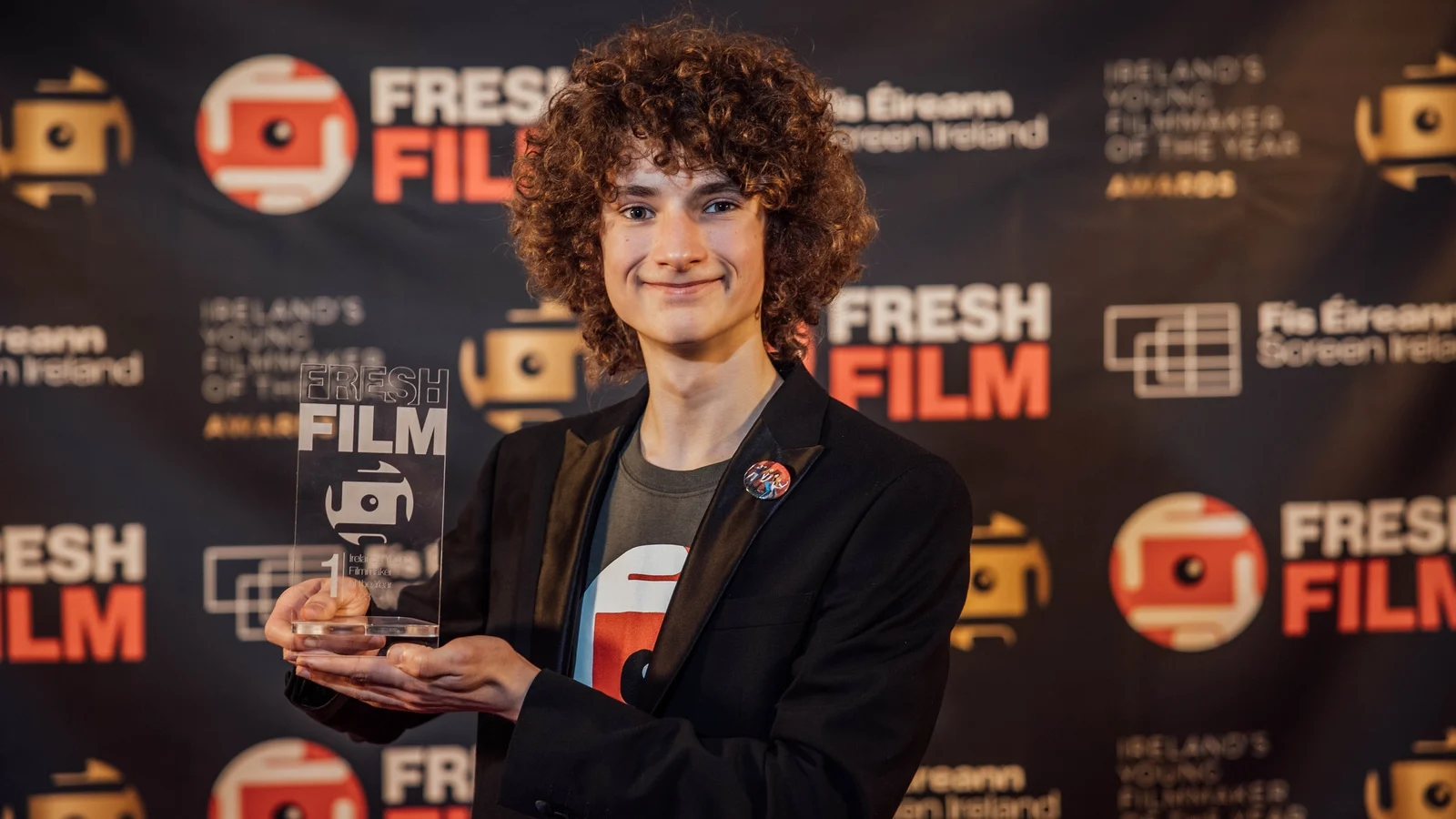
It is hard to translate a headline into the small, precise language of grief. Families learn to try: names, photographs, awards and student IDs become tiny, sharp beacons, too small for the loss they now mark. Max was not just a name on a travel police report; he was widely known locally and creatively — last year he was named Ireland’s Young Filmmaker of the Year at the Fresh International Film Festival. He was in his second year at Dún Laoghaire Institute of Art, Design and Technology, a young man with a camera and a whole future in focus.
Cabra remembers
“He had that spark,” said one neighbour, pausing over a mug at the kitchen table as if the words might steady the world. “You could see it in the way he talked about stories. He’d be out with his camera on the Green on a Saturday. He wanted to tell things.”
Neighbours describe Max as a familiar figure: a hoodie, a battered backpack, the stray enthusiasm of someone who had already decided the world was a canvas. In the shop on the corner, an owner who declined to give his name placed a bouquet of wildflowers against the register — a quiet, local ritual that said simply: we see you, and we are sorry.
Labour TD Marie Sherlock, speaking after she was informed, echoed the community’s sense of stunned loss. “I have just become aware of this tragedy today — my heart goes out to the family,” she said. “I understand that he had an incredible future as a filmmaker ahead of him, and our thoughts are with the family.”
Far from home: what we know about the crash
Details are still emerging, and official accounts are cautious. What is understood is this: the pair were riding on a scooter in Thailand when a crash occurred that left both dead. The Department of Foreign Affairs in Ireland has confirmed it is providing consular assistance to Mr Hendrickson’s family as they cope with the mechanics of an unimaginable loss — the sorting of papers, the careful logistics of repatriation, the negotiation with foreign authorities in an unfamiliar legal language.
For many Irish young people, a trip to Southeast Asia is almost a rite of passage — a chance to stretch into independence, to make cheap meals with other backpackers, to chase sunsets and stories. But those journeys carry risks. The World Health Organization estimates around 1.35 million people die on the world’s roads each year, and in many places, motorcycles account for a large share of those deaths. Vulnerable road users — pedestrians, cyclists and motorcyclists — make up more than half of the fatalities globally.
Thailand, in particular, has long wrestled with a high rate of traffic deaths, with motorbike accidents forming a significant portion. That collision of youthful mobility and hazardous infrastructure, sometimes made worse by crowded tourist routes and inconsistent helmet use, is a repeated grim motif in travel advisories and emergency rooms alike.
Faces behind the headlines
To humanise the statistics, think of Max’s films: short, earnest pieces that tried to capture ordinary life — the way light cuts through a Dublin kitchen, the awkward geometry of teenage conversation. “He wasn’t making art to be pretentious,” said one college friend. “He wanted to make things that felt true. He would say, ‘I just want people to feel less alone.’”
A former lecturer at the Institute, asked to reflect on students like Max, pointed to a class of storytellers shifting the shape of Irish cinema. “The new generation,” she said, “blend personal narrative with a visual confidence that’s rare. They travel, they absorb, they come back with new eyes.”
That appetite to travel, to gather textures and voices, is part of a wider cultural movement. Irish creatives have long gone abroad — historically, to London or New York; now many travel further afield, to Asia, to Latin America — looking for experience and images. That global curiosity enriches their work, but it also exposes them to new hazards on roads that were built for different speeds and different traffic flows.
What the community does next
Grief here will be practiced in very Irish ways: there will be cups of tea, stories that loop and grow more tender with repetition, music brought out and shared. Neighbours will keep an eye on the family. The college will likely set up supports for students. Local film clubs will remember the work of one of their own. And online, a quiet stream of tributes will build into something that looks like a digital memorial.
“We’re rallying around them,” said another friend. “You have these rituals in small communities: you cook, you bring the bins in, you sit. It’s what people do when the future suddenly seems raw and split.”
Questions for the rest of us
What does this loss ask of a global community that urges its young people to see the world? How can governments, travel operators, universities and host countries collaborate to make travel safer without dimming its promise? If we champion mobility as a form of learning, what responsibility do we accept for the conditions that make that mobility precarious?
These are not rhetorical questions only for officials. They touch classrooms in Dublin and hostels in Chiang Mai; they reach into living rooms where parents scroll the newsfeed and try to reconcile wanderlust with worry. Practical steps exist: better road safety campaigns, improved enforcement of helmet laws, traveller education tailored to local hazards, and stronger consular support for families caught in emergencies far from home.
For now, Cabra mourns. For now, images of Max’s films will be watched through watery eyes. For now, two families — in Ireland and in the Czech Republic — will feel the slow, precise ache of absence.
When headlines collapse the human into data, it’s worth remembering names again: Max Hendrickson, a young filmmaker. And beside him, a Czech woman whose name is not yet public. Two people who woke one morning with plans, with playlists, with hopes — and who now have become a quiet urgency for us to think about safety, responsibility and the fragile arc of life that travel so often reveals.
If you travelled with Max, knew him from school, or can offer help to his family, consider reaching out. Share memories. Offer practical support. Turn the shock of this story into the soft, steady work of community care.