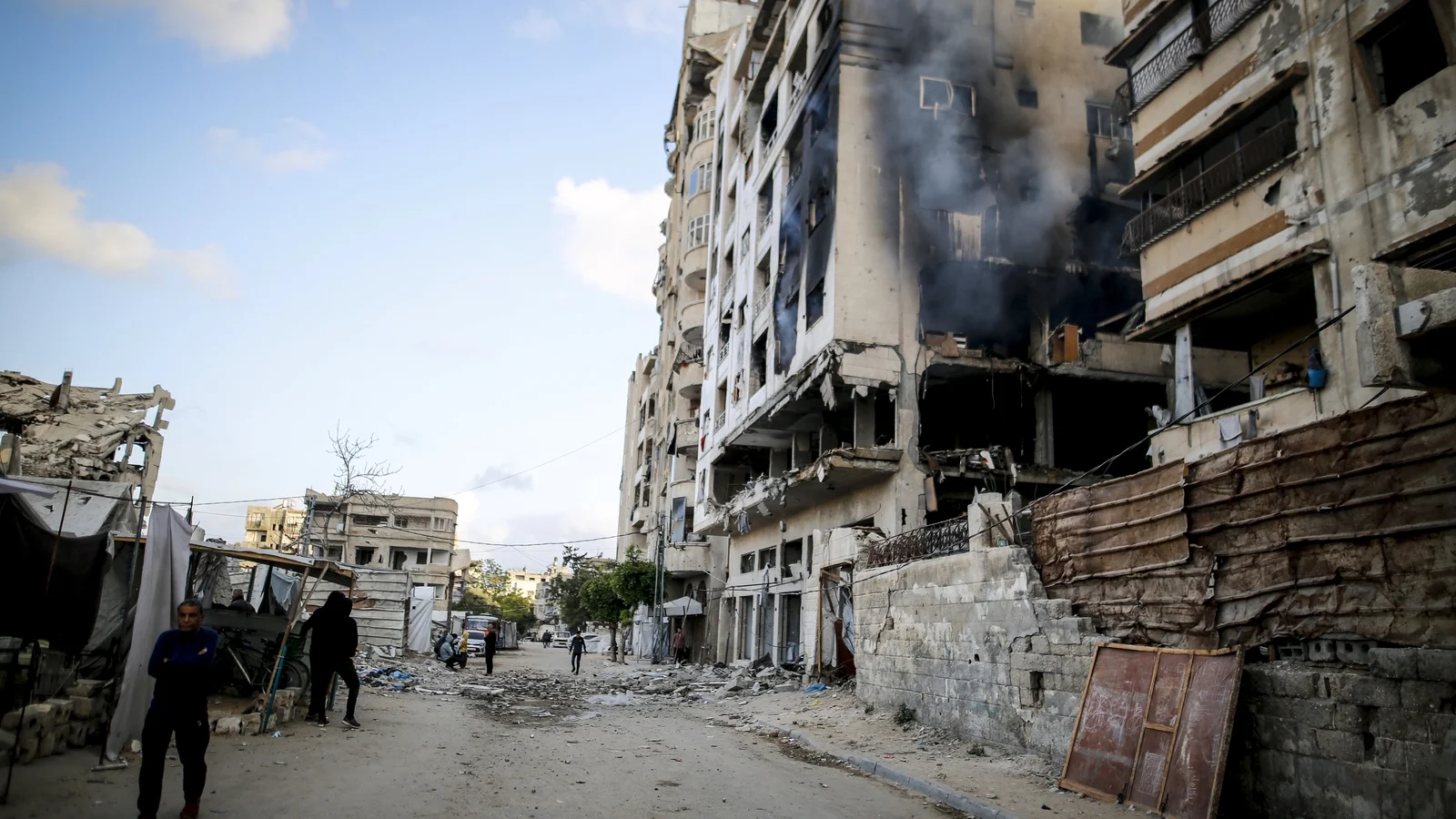
In the shadow of the minarets: Gaza wakes to news of a deadly blow
The sun had barely climbed over Gaza City when the first murmur moved through the streets — not the ordinary hum of vendors or the metallic clatter of deliveries, but announcements from mosque loudspeakers that froze people mid-step. Men, women and children stopped where they were, some clutching shopping bags, others already carrying infants, as the words rolled over the alleys and apartment rooftops: a senior commander was said to be dead.
By midmorning, those murmurings hardened into a sharper reality. A senior Hamas official, speaking privately to journalists, said the group’s military chief, Izz al-Din al-Haddad, had been killed — a claim that followed an Israeli declaration a day earlier that it had carried out strikes targeting him. Local witnesses told reporters that the calls to prayer in several mosques had been used to relay the news before any formal statement from Hamas itself.
Conflicting accounts in a fast-moving morning
The scene was chaotic but familiar: ambulances weaving between cars, shopkeepers lowering metal shutters, and clusters of people gathering in courtyards to exchange a single, terrible question — who had fallen this time? “We heard it on the loudspeaker and then everyone started crying,” said Laila, a 32-year-old mother, as she balanced her toddler on her hip. “You pray for peace, and then you wake up to more names.”
On the other side of the Israeli political spectrum, Prime Minister Benjamin Netanyahu and Defence Minister Israel Katz issued a terse joint statement the previous day saying Haddad had been targeted. Their message was stark and unambiguous: Haddad, they said, “was responsible for the murder, abduction, and harm inflicted on thousands of Israeli civilians and soldiers,” and the strike had been aimed at preventing further attacks. They did not explicitly confirm his death.
Hamas itself, however, remained formally silent. In the fog of war — where information becomes a weapon and each side measures the impact of a statement — official confirmations can lag behind the stories being told in streets and hospitals.
What this means on the ground
There are quick and obvious consequences: mourning in one neighborhood, anger in another, escalatory rhetoric from hardliners, and more fear among civilians who have already endured more than two years of war. But there are also subtler ripples. When a figure said to be a key military architect is removed, combat dynamics shift, networks scramble, and civilian life jostles again for balance.
“Killing a commander is not a neat, surgical fix,” said Dr. Miriam Halabi, a Beirut-based analyst who has followed Gaza’s militant networks for years. “Leadership decapitation can fracture chains of command — sometimes that reduces violence; other times it hardens resolve and leads to retaliation. In a densely populated territory like Gaza, the immediate cost is almost always borne by ordinary people.”
Medics working in Gaza’s damaged hospitals reported more blood and more bodies. Doctors said at least seven people were killed and around 50 injured in strikes that hit an apartment building and a nearby vehicle — including three women and a child. It remained unclear whether Haddad was among those killed in that specific strike.
Voices from a city under strain
“We don’t know who survives these days — only who is next,” said Hasan, a paramedic who has been volunteering at a makeshift clinic since the conflict expanded. “We run on adrenaline and rationed supplies. We have enough to keep people alive for the day, not for the next siege.”
Street vendors, who sell small comforts like boiled corn and strong tea, described a market with fewer customers and more checkpoints. “Business is not about profit now,” said Abu Omar, a vendor in a shuttered strip of stalls. “It’s survival. People come and ask for milk or baby formula. We trade what we can.”
Politics at the highest level — and the international backdrop
This reported killing occurs against a fraught diplomatic canvas. The October 2023 offensive and its aftermath have left the region gripped by cycles of violence, multiple rounds of ceasefires and intermittent negotiations. An October US-backed ceasefire had at one point seemed to reduce open hostilities, but the quieter intervals have done little to resolve the deeper grievances or the catastrophic humanitarian reality in Gaza.
Indirect talks — mediated by foreign powers and regional players — remain stalled. According to officials involved in the process, Israel and Hamas have been deadlocked over a US-proposed post-war plan, the contours of which remain politically toxic in many quarters. International mediators say the key stumbling blocks are security guarantees, prisoner exchanges, and the eventual political status of Gaza. “Without a credible, enforceable plan that addresses security and humanitarian needs, the cycle will continue,” one diplomat said on condition of anonymity.
Meanwhile, regional dynamics are shifting. Israel recently scaled back joint operations it had been conducting with the United States against targets in Iran, refocusing its military attention on Gaza — a move that analysts say has sharpened the tempo of strikes in the territory.
Wider implications: what the world should consider
What does the death of a single military leader mean for a conflict that has already consumed thousands? It’s tempting to view such moments as decisive. But history and current realities suggest otherwise. Leadership losses can change tactics, provoke cycles of retribution, and sometimes create openings for new, unpredictable actors to rise.
Ask yourself: when a city is reduced to fragments of routine — the sound of prayer, the queue for water, the sudden silence after an airstrike — what responsibility does the international community bear? And what responsibility do governments beyond the region have in preventing further civilian suffering?
Humanitarian agencies repeatedly warn of severe shortages in food, clean water, shelter and medical supplies across Gaza. Tens of thousands are reported displaced, urban infrastructure remains crippled, and access to basic services is intermittent. These are not abstract statistics. They are the daily realities of families who have lost homes, livelihoods and loved ones.
Looking ahead
For now, neighborhoods in Gaza will mourn and eulogies will be shared in living rooms and via loudspeakers. Israeli officials will likely present the strike as a necessary act of defense. International actors will call for restraint while consulting quietly behind closed doors. And the people living amid this turbulence will, as always, bear the brunt.
“We don’t want to be a headline in someone else’s crisis,” said a schoolteacher in Gaza City. “We want our children to learn without the sound of sirens. Is that so much to ask?”
Perhaps the most pressing question is this: will another strike be the drumbeat that paves the way toward a different future, or merely the latest note in a score that has been playing for far too long? The answer will depend not only on the combatants, but on whether the world chooses sustained engagement over episodic outrage.