The Island No One Thought Could Be Bought
Imagine waking to the scent of diesel and coffee in Nuuk, catching sight of a black government van rolling away from the parliament building, and hearing — on a crackling radio, or more likely on a streaming feed — that a distant leader is once again talking about buying your homeland. That was the surreal beat-feed in mid-morning Copenhagen and across the iced bays of Greenland: talk of tariffs, threats, and territorial ambitions that read like a plot from an alternate-history novel.
“It feels like watching a drama where the characters forget we’re not extras,” said Einar Olsen, a 41-year-old ferry captain who runs supplies between Greenland’s scattered settlements. “This is our home. You don’t buy my grandmother’s stories.”
Tariffs, Threats, and a Strange Real Estate Pitch
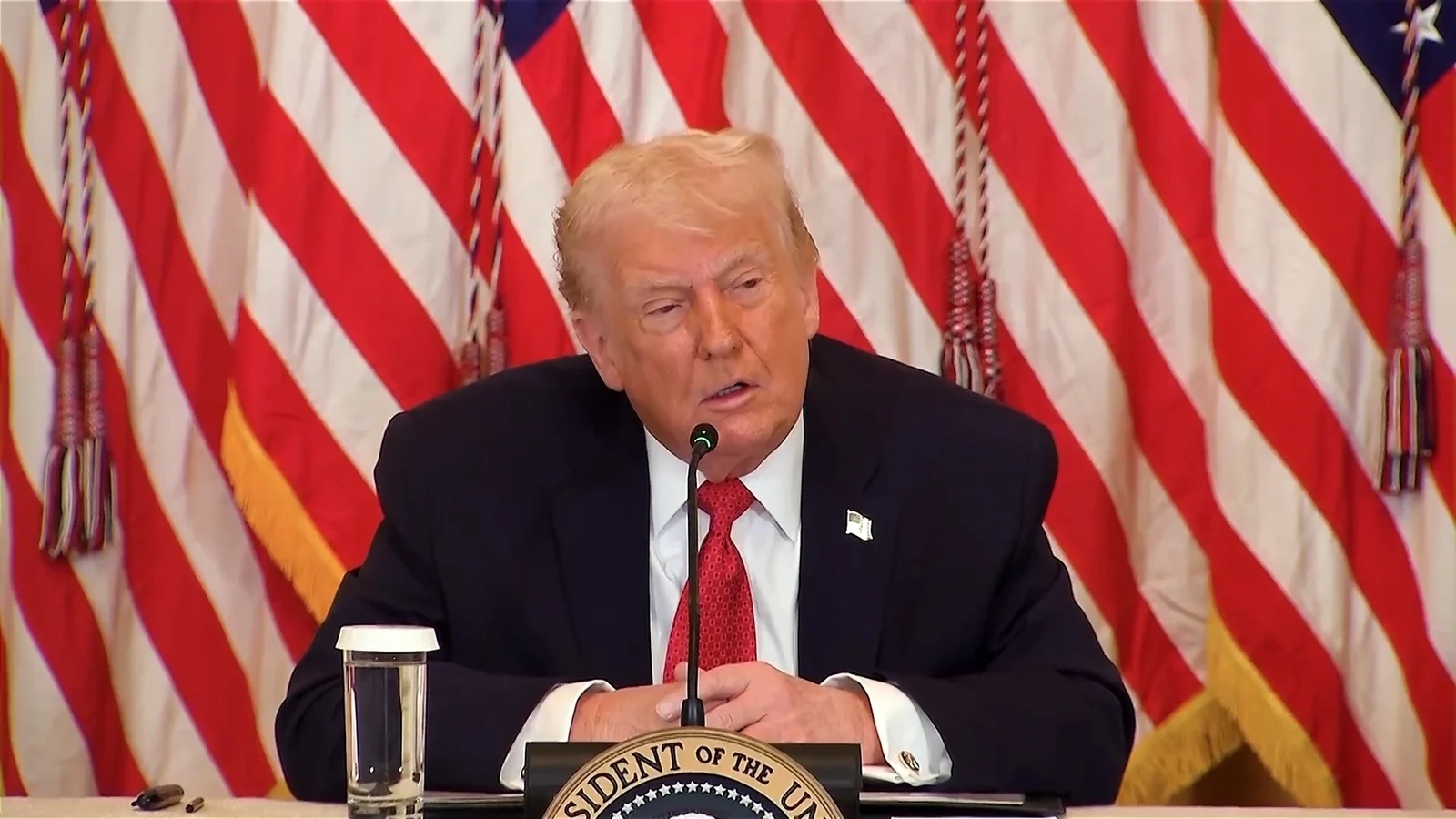
At the White House, the suggestion was blunt and transactional: if allies don’t back an effort to bring Greenland under U.S. control, tariffs could be used as leverage. “I may put a tariff on countries if they don’t go along with Greenland, because we need Greenland for national security,” the president said, tying trade policy to an island half a world away.
It was not the first time this episode played out. The idea of purchasing Greenland is odd in modern diplomacy yet not unprecedented: in 1946 the United States explored buying Greenland from Denmark. Today the stakes are different — minerals, new shipping lanes as the Arctic warms, and strategic military locations like Thule, a U.S. base that has long made Greenland a geopolitical interest.
How people on the ground see it
“We don’t lease our identity to the highest bidder,” said Aqqaluk Kaasik, a Greenlandic teacher sipping strong tea in Nuuk’s art café. “You can talk about mineral wealth, you can talk about bases, but you cannot buy centuries.”
Greenland’s population is tiny by global standards — roughly 56,000 people — spread across an island the size of Western Europe. Yet small doesn’t mean insignificant. The island is mineral-rich, with estimates suggesting vast deposits of rare earth elements and other strategic ores increasingly valuable to clean-energy and defense technologies.
Congress Intervenes — and Europe Responds
Within days, a bipartisan delegation of U.S. lawmakers boarded planes for Copenhagen. In an act of what politicians called solidarity, Democrats and Republicans stood with Danish and Greenlandic officials, making clear that an outright acquisition would face major political headwinds at home. “We are showing bipartisan solidarity with the people of this country and with Greenland,” said Senator Dick Durbin. “The statements being made by the president do not reflect what the American people feel.”
The visit coincided with a European military reconnaissance mission. Small contingents from the UK, France, Germany, the Netherlands, Norway, Sweden and Finland flew and sailed north to Greenlandic waters — a symbolic riposte: Europe would not sit idly by if sovereignty was threatened.
“We are sending a signal,” France’s defense leadership said, describing the deployments as exercises to protect sovereignty, not to provoke Washington. Yet the choreography on the ice — a quiet fleet, a reconnaissance plane tracing the fjords — felt like modern diplomacy at its most theatrical.
The human rhythm of resistance
In Nuuk, ordinary life continued with a stubborn normality. Children in bright parkas chased gulls along the wharf while elders sat on benches polishing sealskin boots. But there was energy, too: meetings, leaflets, and talk of mass demonstrations planned in cities from Nuuk to Copenhagen to Aarhus.
“We’ll shout, we’ll sing,” said Inga Motzfeldt, a community organizer, her hands warm against the cold. “Not because we’re anti-American — many Greenlanders have friends in the States — but because this is about self-determination.”
Politics, Law, and the Limits of Power
On both sides of the aisle in Washington, the response was immediate and complicated. Some Republicans privately fretted that a presidential drive to annex a territory could overreach presidential authority and run headlong into Congress’ constitutional war powers. Democrats, too, denounced the rhetoric as undermining NATO and playing into the narratives of geopolitical rivals like Russia and China.
A Reuters/Ipsos poll showed what many predicted: only 17% of Americans supported the idea of acquiring Greenland. Majorities across party lines opposed using military force to annex the island. “Saner heads will prevail,” said Senator Jeanne Shaheen, whose family history included service in Greenland, arguing that institutions and law would check presidential impulses.
Legal experts remind us that modern annexation is not a boardroom transaction. Under international law, sovereignty cannot be bought from one state in ways that ignore the wishes of the people who live there—and democratic checks at home make unilateral moves fraught and unlikely.
Geopolitics, Minerals, and the Melting Arctic
Why the fuss? Climate change has redrawn strategic maps. Melting ice opens new shipping lanes and access to minerals — rare earths needed for batteries, wind turbines, and electric vehicles — and that prospect has sparked a rush of interest from states big and small.
- Greenland’s land area: about 2.16 million km²
- Population: roughly 56,000 people
- Strategic asset: Thule Air Base, a U.S. installation in northwest Greenland
“Countries are recalibrating their northern strategies,” explained Dr. Laila Sørensen, an Arctic policy researcher. “It’s about resources, yes, but fundamentally it’s about control of new maritime routes and military positioning. Greenland sits at the hinge of the North Atlantic and Arctic — that’s why it keeps appearing in headlines.”
What This Moment Tells Us
This episode — midnight tweets, threats of tariffs, planes over icy fjords, lawmakers rushing abroad — is a microcosm of broader tensions: an age where climate change unlocks new geographies of wealth; where small communities find themselves bargaining chips in great-power chess; and where the rules of statehood are tested by the pace of change.
But the human element remains stubbornly central. For Greenlanders, this isn’t about geopolitics in the abstract. It’s about language, land, history, and the right to chart their own future. “We will not be a footnote,” said a 28-year-old nurse in Sisimiut, refusing to be erased by headlines. “We will be the authors of our destiny.”
Where Do We Go From Here?
Will tariffs, threats, or theatrics alter the arc of sovereignty? Probably not. Will the Arctic become ever more crowded with interest, investment, and tension? Almost certainly. The drama that briefly shook Nuuk and Copenhagen should force a question on all of us: how do we craft rules to protect small communities as global forces — economic, climatic, strategic — sweep across them?
As you read this, paused in a cafe or scrolling through your phone, ask yourself: when the earth’s maps change, who gets to redraw the lines? Who speaks for the people who live where the ice is melting first? These are not only Greenland’s questions; they are ours.