A New Year’s Eve That Became a Nation’s Wound
Crans-Montana, the postcard ski resort where cable cars thread between white peaks and chalets glow like lanterns at dusk, was supposed to ring in 2026 with music, laughter and the familiar clink of champagne flutes.
Instead, a basement bar named Le Constellation — a subterranean room where teenagers and young adults gathered to welcome the year — became the scene of an inferno that has now claimed 41 lives.
On January 1, a spark flew. On January 31, an 18-year-old Swiss national who had been fighting for life in a Zurich hospital died, bringing the official toll to 41, the Wallis canton public prosecutor Beatrice Pilloud announced. “The death toll from the fire at Le Constellation bar on January 1, 2026 has now risen to 41,” she said, adding that her office would not release further details as the criminal probe continues.
Counting the Loss — Names, Ages, Origins
The faces behind the numbers are young. Those killed were aged between 14 and 39; most were teenagers. Only four victims were older than 24.
Among the dead are 23 Swiss nationals — including one dual French-Swiss citizen — and 18 foreign visitors: eight from France (one of them holding French-British-Israeli nationality), six Italian teenagers (one an Italian-Emirati dual national), and one each from Belgium, Portugal, Romania and Turkey.
Across hospitals, the list of the wounded remains long. Authorities report 115 injured in total, many with severe burns. Swiss hospitals were treating 37 patients as of the latest count, while international burn centers cared for others: 44 patients had been transferred to four neighboring countries — 18 in France, 12 in Italy, eight in Germany and six in Belgium.
How a Celebration Turned to Catastrophe
Prosecutors say the blaze likely ignited when revelers lifted champagne bottles fitted with sparklers too close to the ceiling. The sparklers came into contact with sound-insulation foam, which can be highly combustible under the right conditions. Within moments, a sticky, choking smoke filled the basement and the jubilant crowd became trapped in a crush for narrow exits.
“It happened so fast,” said Camille Dubois, 26, who lives in Crans-Montana and arrived on the scene after the alarm. “One moment the music was loud and everyone was smiling, the next there was a wave of heat and a smell I’ll never forget. People were running, pushing, crying. I found my cousin outside, black on her face, shaking. We carried her to the ambulance.”
Fire safety specialists say the dynamics of nightclub and bar fires are unforgiving: dense crowds, limited exits, interior cladding that can burn, and toxic smoke that incapacitates faster than flames spread. In the most extreme cases — think of previous nightclub disasters around the world — hundreds of lives can be lost in minutes.
Legal Questions and an Ongoing Investigation
Four people are under formal criminal investigation: the co-owners of Le Constellation, the municipality’s current head of public safety, and a former local fire safety officer. The charges have not been made public, and prosecutors have cautioned against speculation.
“We are committed to a thorough, impartial inquiry,” a spokesperson for the cantonal prosecutor’s office told me. “This tragedy raises urgent questions about compliance, oversight, and the adequacy of safety regimes for venues catering to young people.”
Locals have been asking the same. “We love this town’s energy — the nightclubs, the people from everywhere,” said Hans Müller, owner of a ski-equipment shop. “But we also need to ask: were the regulations followed? Who is responsible for inspecting these places? The grieving families deserve answers.”
Wounds That Won’t Be Measured Only in Numbers
Hospitals are grappling not only with the physical injuries — severe burns, respiratory trauma from smoke inhalation, and crush injuries from panicked crowds — but with a tidal wave of psychological aftereffects. Burn units in Geneva, Zurich and beyond have reported upticks in admissions and long-term care plans for survivors.
“Recovery will be a marathon, not a sprint,” said Dr. Sophie Marin, a burn specialist from a Swiss university hospital. “Treating burns is complex. Patients need surgeries, skin grafts, physiotherapy, and psychological trauma care. Some will require months or years of rehabilitation.”
Families of victims are navigating an impossible landscape: the ritual of mourning under a microscope, the logistics of repatriating bodies or arranging extended stays for relatives who are critically ill abroad. Community centers have become centers of support; volunteers deliver warm clothes, food and assistance with paperwork.
Crans-Montana: A Place of Alpine Beauty and Now a Site of Mourning
Crans-Montana, set in the Valais (Wallis) canton, is a multilingual resort where French is commonly spoken and where mountain holidays mix with high-end hospitality. In winter, the town usually hums with skiers swapping stories over fondue, snowboarders crowding lifts, and families bundled against the cold strolling the main streets.
“It’s a place with big hearts,” said Amina El Idrissi, who runs a bakery on the main promenade. “People come to escape, to celebrate. This feels like a winter that never ends.”
Local traditions like DIY New Year’s celebrations — sparklers at table settings, bottles popped with fanfare — suddenly look more dangerous when paired with combustible materials and crowded, enclosed spaces. How do you balance revelry with safety? The question is as Swiss as it is universal.
Wider Lessons: Safety, Regulation, and Youth Culture
This tragedy forces a reckoning that extends beyond canton borders. Across Europe and beyond, venues that cater to young crowds face the tension between an informal, pulsing nightlife culture and stringent safety standards. Enforcement varies by place; oversight can be diffuse, divided between municipal inspectors, fire departments, and public safety agencies.
“We must ask whether safety culture kept pace with nightlife culture,” said Elena Rossi, a public policy researcher who studies crowd safety. “Young people are drawn to intimacy and authenticity — small basement bars, secret parties. Regulators must adapt without killing the culture, and venue operators must put lives ahead of aesthetics or profit.”
And what about the tools of celebration? Sparklers, cold fireworks, stage pyrotechnics — these are alluring and photogenic. But when used without rigorous risk assessments they can be lethal.
Where We Go From Here
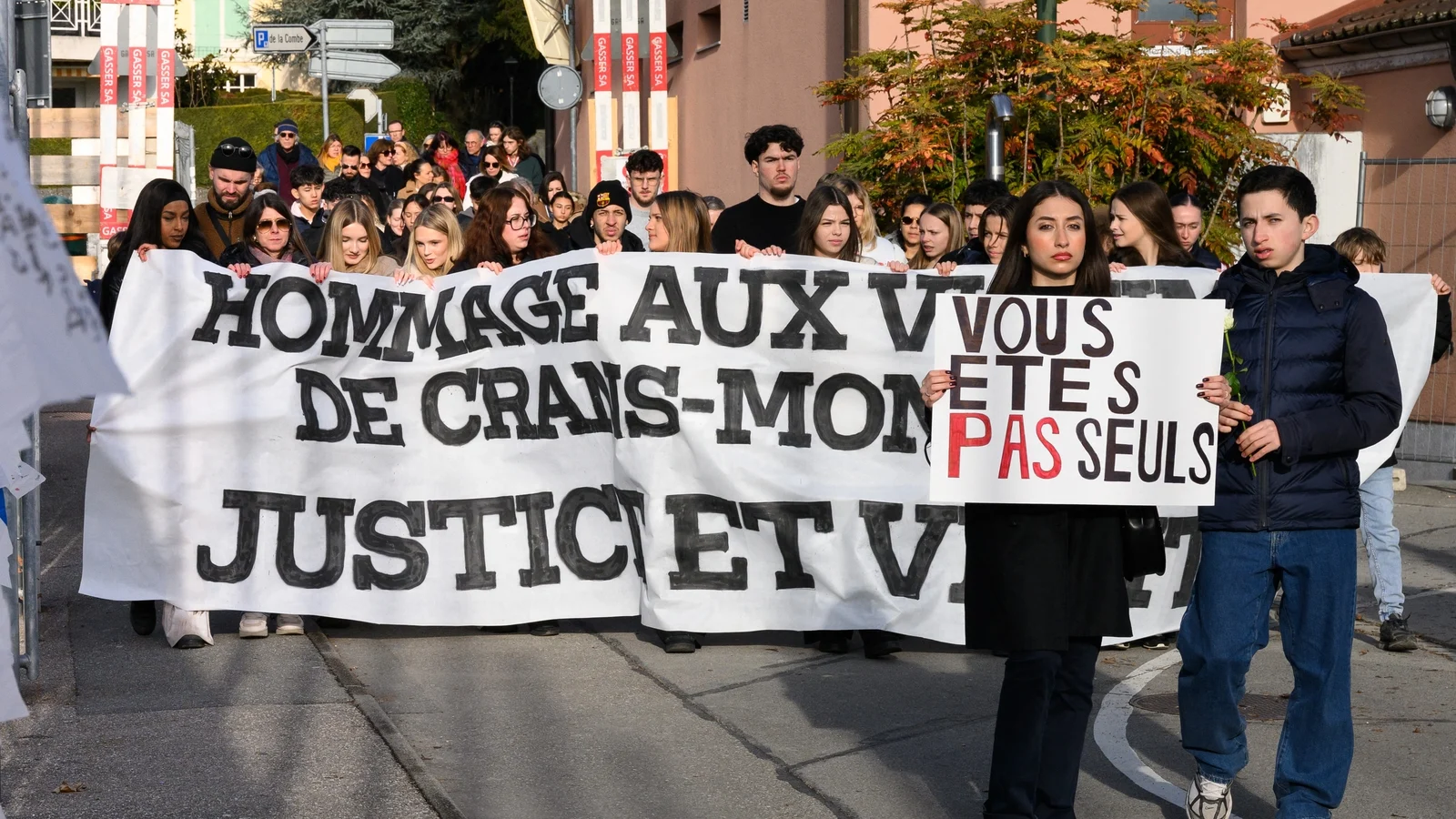
The investigations will take time. So will healing. For now, Crans-Montana and the broader Swiss community are in mourning, arranging vigils, lighting candles in windows, and trying to make sense of a loss that feels incomprehensible.
As you read this, think about the last time you celebrated in a crowded room. Did anyone check the exits? Did the venue have a visible safety plan? Would you know what to do if the worst happened?
These are uncomfortable questions. They are also necessary. In this moment of collective grief, authorities must balance compassion with accountability. Survivors need care, families need answers, and communities need to know how such a catastrophe can be prevented.
“We owe this to the young people who went out to celebrate and never came home,” said Marie-Claire Dubois, a teacher whose sister was hospitalized after the blaze. “We must change how we think about safety — not as a bureaucratic burden but as a promise to protect life.”
In the shadow of the Alps, with snow still falling and the smell of pine in the air, Crans-Montana’s lights have dimmed. But the questions this fire raises will shine bright long after the embers cool. The world is watching, and the answers we find will matter not only here, but everywhere people gather to celebrate.